As the village headman his father gave priority to the welfare of the community
Sohrab Dahmubed
As I look back over the first stage of my life in Cham I see my father Rustom in various poses, moods, styles and importance. He was a family man with three sons and two daughters and our home had no priority over anyone else as my father was of the view that society, community or groups come first, and individuals last. He used to argue with my mother Shirin but he was very patient and polite with others.
He was the Dahmubed of village Cham and the boiwalla of the Atashband also.
Every marriage in the village was arranged with the recommendation of my father directly or indirectly. My father was appointed Kudkhuda (i.e. sarpanch) of the village and any summons to the villagers or a call for military conscription would be routed through him. Disputes relating to the villagers would come to my father and he was wise and capable enough to settle matters to their satisfaction. Cases of fraud, theft of fruits or such other wrongs would be brought to him and he would solve them very easily; even marriage and divorce cases. He had studied upto second or third standard, but he could calculate and solve problems with ease. He was a foreman in building houses for others and registered the lands of every villager. Every one in the village and the area knew him.
The village had a Gesht on Jashne Mehregan when all the villagers would gather, play the saaz (flute) and araboona (tabla), and call at every house. When my father would say "Hay, Hay,” the instruments would stop playing. The beauty was that he knew the names of all those who had lived in that house and died and he would mention their names and the names of those who were abroad as also those who were there and bless them all. Then the occupants of the house would present us with a pomegranate studded with coins and a big tray of mixed dry fruits which would be distributed to all. Sometimes it would take three days to complete going to every house in the village.
In our house we observed Chahrah Gahanbars six times a year. Two or three days before the gahanbar days all the relatives, especially the young boys and girls, used to gather in our house to arrange tandoori bread and other foods to be served to the people, seven kinds of dry and seven kinds of fresh fruits, siro/sedov and various dishes which were common for consumption [and which the roovans (departed souls) also liked] used to be arranged for the priests to pray on, before it would be served to the people. Samples of all these different dishes used to be collected in one pot and given to the local dog. This was the old method of making sure that the foods were safe for human consumption.
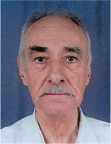
Sohrab Dahmubed was born in 1934 at Cham Taft, Yazd, Iran. Upto the age of 14, he did his studies in the Persian language and agriculture. He was then sent to India by his parents where he worked in a restaurant and stores during day time and in the evenings attended school where he studied Gujarati and English until he was 19 years old. Later he attended morning college while working for Asiatic Travel Service. He was the secretary of Sazeman Jawanane Zartoshty, Bombay, which celebrated all Irani festivals like Mehregan, Nowrouz, Jashne Sadeh regularly each year. At the age of 34, Sohrab returned to Iran and attended courses in sales and marketing in the aviation industry. After 20 years in Iran, Sohrab returned to India, working as consultant to tour groups sending Zoroastrians to Iran and started Dahmubed Travel Service.