Died: Sam Phiroze Rao (pictured), 89, well-known architect, engineer and surveyor who was considered an authority on property laws, valuation and assessment of taxes; on November 21, 2019 in Bombay following complications arising from a spinal fracture.
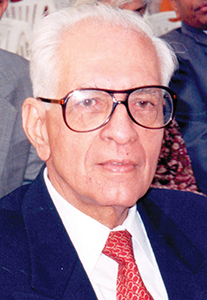
"He was ramrod straight, both in his physical deportment as well as in his character. His flair for architecture was coupled with a profound knowledge of Bombay’s complex building laws and regulations and of the laws of valuation. He was quintessentially ‘old-school’ and meticulous in his approach,” commended Darius Khambata, former advocate general for Maharashtra and additional solicitor general of India, in a tribute penned to the family. He remembered hearing Rao’s name for the first time as a teenager when his family was faced with an eviction suit and required the expert evidence of an architect. "In the complicated world of Rent Act litigation, by his expert intervention he saved many a matter and consequently touched the lives of so many for the better. Fearless and zealous of the truth, his opinions or evidence could never be bought… Judges invariably relied on his evidence, assured of its complete fidelity to the law and facts… Yet he would try his best, always within the bounds of law, to craft a case for his client,” attested Khambata.
Many other condolence messages that the family shared with Parsiana commended Rao’s principled practice. For a number of years Rao was the sole architect for the Bombay Parsi Punchayet (BPP). "Sam was a quiet, self-effacing gentleman who served the Parsi community and its various trusts for decades,” stated former BPP chairman Dinshaw Mehta who remembered him as "a man of the highest principles that I have ever met. To me, he was one of the finest human beings that I interacted with…” As an architect who required plans to be passed for new buildings or repair to old buildings, he had to interact with municipal employees of all hues, but "he refused to pay a single penny to any of the corrupt babus. He would strictly follow all the rules and regulations of Bombay Municipal Corporation (BMC) even if it caused delay or loss of FSI (floor space index)… He provided pro bono valuable defence testimony in many cases involving Parsi charity properties.”
Several charitable trusts and organizations, hospitals and educational institutions, whether Parsi or cosmopolitan, benefitted from his assistance. Chairman of the Cama Baug Agiary Trust, associate member of the Anjumanna Atash Behram and involved in the administration of the Kappawalla Agiary, Rao would willingly render his free expert guidance to several agiaries and atash behrams too.
"His acumen and brilliance could not be surpassed to the extent that his reports could hardly ever be challenged, much less set aside, and would be accepted without a murmur… As an architect and a professional there is hardly another who was more respected… He was truly a doyen of his profession,” declared Homa Petit, president of the B. D. Petit Parsee General Hospital. Having first interacted with the veteran when Petit was yet preparing for his solicitors’ examination, the youngster was impressed: "His painstaking study and research, dealing with the minutest of details and nuances, is an art which is now forgotten… His humility was such that even though I was a student just graduated from college, he would make me sit beside him and take me through his notes as also plans and maps and other material relating to the Hospital.”
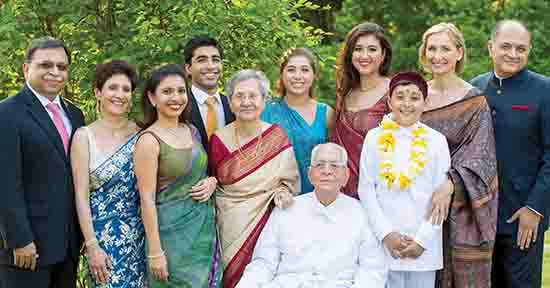
Sam Rao (seated) with family (from l): Adille, Armaity, Meherazade,
Daraius, Bachoo, Melia, Persis, Arman, Salome and Phiroze
"He devoted the same time, care and attention to charity as he did to other work,” appreciated Muncherji Cama, proprietor of Bombay Samachar and erstwhile BPP trustee, who was "full of admiration for his pro bono work and the time he spent on charity. It was mind-boggling.” Respected by the courts and municipal authorities alike, "He was an absolute mine of information on Bombay buildings and had encyclopedic knowledge of rules and regulations concerning the BMC,” added Cama whose family, from the time of his grandfather Muncherji Cama, had very close ties with the partners in the firm of Poonager Bilimoria and Company, starting with Nusserwanji Poonager and thereafter with Rao. "It was a pleasure working with such an honest, forthright person.”
"Every Parsi trust blindly turned to Sam for his invaluable help and guidance,” noted a condolence message from Sir Jamsetjee Jejeebhoy, Eighth Baronet. During their 35 years of interaction, Jejeebhoy had recollections of him "slouched over his desk in the evening with a mountain of files clumsily heaped all around him, often struggling to find the one he was searching for. On several occasions I would find him seated patiently at the rear end of a crowded court room in the Small Causes Court, waiting unwearyingly to render evidence as an expert witness. On a couple of occasions that he accompanied me to the municipal office he would constantly mutter under his breath about the rampant corruption and the sorry state of affairs in the BMC.”
Rao was conferred honorary life membership of The J. N. Petit Institute Reading Room and Library in acknowledgement of his gratuitous service rendered when the Institute was in "desperate straits.” As noted a condolence resolution passed by the Institute, "When a very serious problem which by a lesser intellect, if mishandled, would have meant possibly the closure of the Library owing to a crushing liability in the form of municipal, water tax and rates being levied... the Institute approached him.” Not only did he help to resolve the impasse with the Municipality, "with his persuasive advocacy backed by the authority and reputation of his knowledge and integrity” he approached the highest management of the bank occupying premises in the heritage Library building to ensure the Institute received a reasonable monthly compensation.
There were many socially relevant organizations to which Rao was committed. The Foundation for Medical Research (FMR) director and deputy director Drs Nerges Mistry and Tannaz Birdi described Rao as "a significant factor in the survival of FMR as a premier research institute. His wise advice gave us an avenue of sustained funding over 22 years.” Acknowledging the time and honorary services he rendered, they expressed their "implicit faith in his integrity and experience.” An active member on the advisory panel of Seva Sadan Society (SSS), he offered "valuable professional advice… (Even) when his health was failing, he still made it a point to attend our meetings and guide us appropriately. His help to Seva Sadan in all matters was priceless! It is rare to find a more philanthropic or helpful human being!” remarked SSS president Guddi Advani.
Over more than six decades of professional practice his clients spanned leading public and private organizations. "People of his character and caliber and generosity of spirit are few and far between,” stated Dilnavaz and Justice Sam Variava (Retd). They referred to his long relationship with Bharat Tiles, Dilnavaz being chairperson of the Bharat Floorings Group. "In many of the iconic buildings designed by Poonager and Bilimoria he used the art deco range of Bharat Tiles… He was the person to whom the directors turned whenever sound advice was needed on architectural or building development matters,” noted the couple who also had an occasion to interact socially with Rao’s family on their annual trips to Mahableshwar every December.
Included among his clientele were corporates like Air India, Shriram Mills, Kohinoor Mills, Bombay Dyeing, Capitol and Regal Cinemas, Johnson and Johnson, Hotel Leela Kempinski, Ahura Chemicals, Bharat Petroleum Corporation, National Insurance Company, according to a write-up from the family. He was involved in the restoration and conservation of landmark edifices like the Bharat Insurance Building at Horniman Circle and Esplanade Mansion, the former home of Jamsetji Tata. His work on Esplanade Mansion received the UNESCO Award. Consultant architect to the Mill Owners Association of Bombay which in turn recommended him to the Mill Owners Association of Ahmedabad he would make frequent trips to that city with renowned advocate D. V. M. Patel who practiced in the Small Causes Court.
Eminent tax titan Sohrab Dastur who had known Rao for 60 years recalled him as being "always kind and considerate… (He) unfailingly acceded to requests for help and guidance made by us.” Burjor Antia, senior partner of Mulla and Mulla commented, "Sam had made a name in the field of architecture and also in our community. Moreover he was a gentleman to the core.” Noshir Sethna, partner of Wadia Ghandy and Company, remarked that Rao was "highly respected in the legal profession and his valuations were accepted by the courts without question.”
Veteran theater doyenne and etiquette trainer Sabira Merchant remarked, "Sam was a talented architect of unimpeachable reputation with an extremely strong character. My husband Chotu and I had the good fortune of having him as our architect under the direction of Italian master Eugenio Mortuary. Sam was respected and admired and worked tirelessly and energetically on the project.”
Despite his busy schedule, he made time to serve on the board of governors of the Bombay International School as its chairman and trustee. Recalled Justice Sujata Manohar (Retd), "This was in the early seventies, at a time when we as parents were working hard to provide…an environment where original thinking, research and creativity in all its aspects were encouraged. Sam was a pillar of strength. His commitment and his integrity gave strength to the board. I had the highest respect for him. His sound professional knowledge was a great asset to the School. Above all, he was a gentle and caring person, willing to listen to others and give advice when requested.”
The eldest of three children born to Thrity and Phiroze Rao, Sam matriculated from St Theresa’s School and studied science at Wilson College in Bombay before gaining admission to the Engineering College in Karachi. He witnessed the tragedy of partition as a 17-year-old and with the assistance of the well-known benefactor and president of the Karachi Municipal Corporation Jamshed Mehta was among the Parsi boys fortunate to board the last refugee ship to leave Pakistan, reaching Bombay four days later as the ship’s engines had failed. The boys were then accommodated at the Poona Engineering College from where Rao earned a degree in civil engineering. Thereafter he joined the architectural firm of Poonager Bilimoria and Company, rose to become a partner and on the retirement of his senior partners Poonager and Manchershah Bilimoria, he took over as sole proprietor.
Culturally conscious, Rao is known to have enjoyed good movies, theater performances and western classical music concerts at the National Centre for the Performing Arts. He also loved to travel, even at an advanced age.
On more than one occasion he was requested to stand for election as a BPP trustee but he refused to get entangled in the quagmire of politics, being disappointed with the falling standards in the community. He belonged to an athornan family where for years the muktad ceremonies were held at their residence but any kind of bigotry was anathema to him. Advocating that change is inevitable and customs and practices must adapt to the times, he had chosen to be cremated and the obsequial prayers were held at the Worli Prayer Hall. Children of all mixed marriages should be welcomed into the fold, he believed, insisting it is not right that we close doors to people to come into the religion and open doors to expel them.
The meticulous architect is survived by his wife Bachoo, daughter Armaity Adille Sumariwalla, son Phiroze, brother Shapur and sister Khorshed Cawas Motiwalla.