An educative festival in Dahanu not only showcases this tropical fruit but also promotes its local lifestyle
Text: Mehroo Kotval • Photos: Feroze Patch
As you enter Dahanu town off National Highway 8, signage greets you to the The Chikoo Festival 2013. It makes easy the 20 kilometers drive to the camping ground on the beach at Bordi, the venue of this festival. These two towns and Gholvad are the lush chikoo growing areas of Maharashtra.
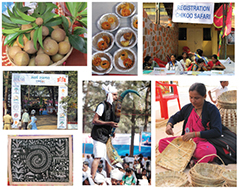
The festival showcased chikoo products — chips, chutney, pickle, the sweet chikki, halwa and powder for chikoo milk shake and even pakoras. The fruit itself was not on sale, but one could join a ‘safari’ to personally "pluck your own chikoos and take it at half price,” the invitation entices. This was on offer on both days of the festival on February 9 and 10, 2013. To market the ‘mud apple,’ a gross English term for the native chikoo, its nutritive value was prominently displayed on a board. The hardy fruit tree can survive salt spray, drought and even humid conditions as it does in its native Yucatán, Mexico. Its botanical name manilkara zapota is analogous to ‘sapota’ which is what the people in south India term the chikoo.
The festival also promoted "Dahanu’s social mosaic through their cuisine, traditional occupations, art and dance.” This included Warli tribal art, dance and culture; Kohli (native fisher folk) lifestyle; sale of local foodstuff — prawn pickle, amla juice, kothambir and aloo vadi etc; sale of photographs taken of the area by photographer Sanat Tanna; wicker basket weaving; chikoo wine tasting, which was only offered in the evening. Two of the 48 stalls were also selling coconuts and tadgola (ice apple, the fruit of the palmyra palm). There were also stalls promoting environment preservation of plants, natural fertilizer and agro tourism.
Shahveer Irani, a bio architect who had a stall at the festival, informed us that he is "from here” but the other four young bio architects with him were from elsewhere. They work under the banner ‘Put your hands together.’ They build homes with local materials only — whether sand, soil or straw which build homes. The homes with mud walls can support ground plus one storey structures. "We make a ‘milk shake’ of mud, clay and sand and pour it in a base of straw blocks made from wicker, straw and mud bales. The cost of material is far cheaper but as it is labor intensive and specialized, it is as expensive as regular construction,” but is environmentally friendlier, Irani observes.
Amongst the local heroes Ashok Shah is an "award winning international kite designer and flyer,” his visiting card declares. There were several kites on display and Shah was to unfurl his magnum opus of a 100-foot kite and others shaped as sailing ships, batman, comic strip characters and mythological beings. What started as a hobby is now a profession.
Sowing the seed
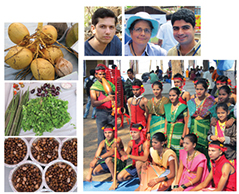
Ten years ago the Young Zoroastrian Association of Dahanu tried promoting the chikoo, and organized festivals. This petered out for lack of perseverance. Farzan Mazda, Percy Jamshedwala and Phiroza Tafti — all residents of Dahanu and other locals, desired to let this idea bloom again. Tafti and Mazda were the co-conveners of this fête whilst, Jamshedwala is joint secretary of the Dahanu Taluka Environment Welfare Association. Tafti is also convener of the Dahanu chapter of The Indian National Trust for Art and Cultural Heritage (INTACH.) Their zeal for their roots is evident from their desire to promote a taluka which is little known even among the chikoo-loving people of the country.
"In October 2011, we launched the first ‘Discover Dahanu’ festival,” Mazda says. "In 2012 the Maharashtra Tourism Development Corporation (MTDC) saw what Dahanu had to offer in terms of natural beauty, chikoo orchards, a scenic coastline and beaches, adivasi (tribal groups claimed to be the aboriginal population of India) culture and most importantly people from different backgrounds… MTDC realized Dahanu taluka’s potential to become the next tourist destination with a difference…” states the background history.
"Last year the INTACH Dahanu chapter decided to expand the festival beyond promoting chikoos,” explains Jamshedwala. This year the efforts have fructified to become more professional, riding the wave of past experience and efforts. " We wanted to involve youth, have bike treasure hunts with local cultural and educational intent e.g. how to cross train tracks with a load or how do you water crops or plaster with cow dung, etc. The clues were hidden in the tasks assigned,” he added.
INTACH also run rural camps for urban school children, trying to bridge the existing gap. "Students of seventh and eighth standards who study environment, organic farming and agro tourism stay on farms.” They are exposed to horticulture, floriculture, taken to nurseries to experience vermiculture and vermicompost.” Students see how huts are made, are given discourses on local environment, the properties of the flower karvi which blooms every eight years and is very durable. The stems are used for thatching by the Adivasis. Students are exposed to the effectiveness of cow dung as a cheap pesticide to keep insects and rats at bay, exposing the city-bred child to the other India. There is also a trek to Bahrot Caves and its foot hills, Jamshedwala fills in with little prompting.
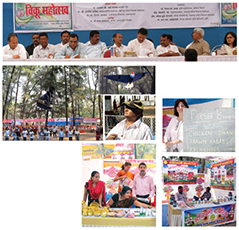
Seeing the fruits of their efforts, MTDC was willing to partner INTACH Dahanu chapter and went all out to make their first attempt a grand success. From designing the logo, to working closely with those with their ears to the ground, MTDC’s Kishori Gadre, general manager and Manisha Dhule, senior manager were specially lauded by Mazda and Jamshedwala for their dedication and commitment. Minister for horticulture, Rajendra Gawit inaugurated the festival. The itinerary mentioned "the formal inauguration of the Chikoo Festival will be as and when the chief guest will arrive.”
The fun, yet educational, element of the two days, was provided by "a sand castle competition and Shah conducted a kite flying workshop which proved popular. There was a kite show against the setting sun. Gliding was also on offer but due to poor weather conditions, this did not happen,” Mazda testifies.
The organizers expected 500 to 1,000 visitors for each of the two days. A ripe figure of 3,500 registrations left them satisfied, whilst there were about 5,000 footfalls. They are striving to annualize the event and commercialize the fruit. They have apparently not bitten off more than they can chew.