This is an ode to my kaki (paternal aunt), Armaity Jamshed Commessariat (pictured), who moved on to an astral plane in December 2018. Kaki was the doyenne of a joint family of nine, comprising two nuclear families living under one roof, and fui-fua (father’s sister and her husband) who lived separately, but having no children deemed us as their own.
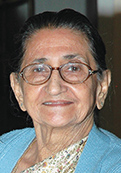 Kaki was born to Meherbai and Eruchshaw Ginwalla in Ahmedabad on December 30, 1930. She obtained her Bachelors in History and English from Gujarat College, Ahmedabad, and later completed her first year of Masters in History. She enjoyed the lectures of Prof Toos Vakil, a well-known Zoroastrian academic of that city.
Kaki was a voracious and versatile reader. She read anything that caught her fancy: newspapers, novels, theses, newsletters, magazines. She was fluent in both English and Gujarati. She would read the Shahnameh to me during the holidays. Her love for the Gujarati language was passed on to me, as she would read my lessons aloud and bring them alive for me.
Kaki was firm and held the family together through hard work and commitment. She had a certain command over the family through her position, values and integrity. She led by example. Despite mothering me for so long, I don’t think she ever needed to shout to make her point known.
She was meticulous and just. She managed the family household on a budget and ensured that our nutritional needs were met without compromising on taste.
She was a source of support to those who needed her, a confidante and guide to many. She was a signatory for bank accounts for those who had no family member to fall back on. Such was their trust in her integrity! She raised us to commit our efforts to the wellbeing of our community.
Kaki was courageous. Once, when she saw a robber crouched near our terrace in the middle of the night, she screamed loudly. He retreated, never to return again. She was moderately religious, prayerful and practised some of the Zarathushti rituals. A patient teacher, Kaki taught us cooking, smocking, stitching and knitting.
Kaki believed very strongly in family values, community and social ties. When my mother’s relative passed away, she sent food to the family for four days. She was contented, especially where money and materialistic things were concerned. She was also silently charitable.
Kaki faced life with equanimity and exerted a ‘balancing’ influence over me. The fire she fuelled lit our lives.
Kaki leaves behind a family of two daughters and a son, all married, and 10 grandchildren. SHAZNEEN LIMJERWALA
dr.shazneen@gmail.com