Probably the last compilation by community historian Marzban Giara (pictured), who passed away on November 3, 2022, The History of Holy Fire Iranshah and Udvada Gam was published jointly by the author and his wife, Bapsy, in March last year. 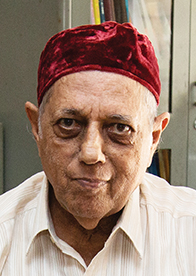 Sponsored by The World Zoroastrian Organisation (WZO) Trusts, the 60-page, illustrated, hardback book, printed on art paper, has been "dedicated to the athravans Parsi Zoroastrian priests who have for generations served the holy fire with discipline, dedication, devotion and sacrificed their lives” and is meant for free distribution.
Dastur Khurshed Dastoor, high priest of Iranshah in Udvada, writes in his Foreword: "The first part of the book is a reprint of Ervad Faramroze Phiroz Mirza’s The History of Holy Fire Iranshah… (it) highlights the difficulties and defines the… character of our ancestors, who were willing to give up their lives and persevere to hide, fight, protect and preserve the holiest of our holy fires… (It) will inspire you to live the Zoroastrian life after learning about the upheavals our forefathers passed through…”
Mirza retired as the panthaky of the Jamnagar agiary and settled in Udvada where he served as secretary of the Anjuman and later on the committee.
The second part deals with the town of Udvada where "I have spent the best years of my life,” Dastoor writes. The "book lends charm to my quaint and quiet village and at the same time enchants… You experience a feeling of revisiting Udvada while you sit elsewhere turning the pages of this book.” In his introduction, Dinshaw Tamboly, chairman of the WZO Trust Funds appreciates that Giara has "taken it upon himself to preserve for posterity the importance of Shreeji Paak Iranshah” and created "an illustrated record of various Parsi institutions and places of interest” in Udvada Gam.
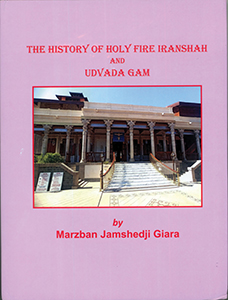 Mirza’s narrative, in the form of a series of 19 letters to his sister, traces the peregrinations of the sacred Iranshah fire from Sanjan (672 years) to Bahrot Caves (12 years) to the forests of Vansda (14 years) to Navsari (313 years) to Surat (three years), back to Navsari (five years) and on to Valsad (one year) until it was finally installed in Udvada 280 years ago. The section also contains stories of what befell the precious fire during its long journey, including miracles.
Read how Udvada got its name in the second part of Giara’s book along with the history of its railway station. There is a listing of dharamshalas, hotels and lodges, schools and dispensaries in Udvada. Check their locations on the map provided. View a portrait gallery of the high priests who served the holy fire over the centuries. Enjoy the songs and garbas in praise of the town and the Atash Behram. And take note of tips for pilgrims who venture to worship there.
SHERENE VAKIL