"Women are playing crucial roles in commerce and industry. Fifty percent (two out of four) of the WZCC (World Zarathushti Chamber of Commerce) Outstanding Zarathushti awardees for the year 2012 are women," stated Adi Siganporia, chairman of the WZCC Bombay chapter at the West End Hotel on February 24, 2013. "Our chief guest for the evening is a woman — Shernaz Mehta, vice chairperson, The Zoroastrian Co-operative Bank Limited. Today top banks like ICICI Bank and HSBC (Hong Kong and Shanghai Banking Corporation) have women at the helm. You must have read in today’s paper that Hillary Clinton will receive $200,000 for each speech. She has outsmarted her husband — Bill is paid 20 percent less!" he smilingly added. "It is no use having a spark of genius if you have ignition trouble. Think out-of-the-box and have a totally new, different approach," exhorted Siganporia, illustrating his words with the humorous story of how three ingenious Scots/Irishmen attending mass on a Sunday morning evaded dipping into their pockets for charity — as the lady with the collection box approached, one fainted and the other two carried him out!
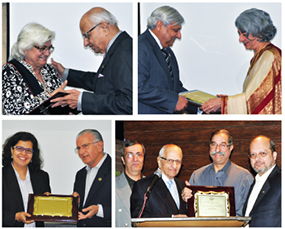
Though the Outstanding Zarathushti Awards had been announced and the recipients honored at WZCC’s global meet in Singapore in January, the actual gold-plated awards were not presented due to logistical problems (see "Ability and character," Parsiana, March 7, 2013). Present at the West End Hotel were Outstanding Zarathushti Entrepreneur of the Year Homai Engineer, chairperson and managing director, Industrial Boilers Limited (IBL) and I B Turbo Private Limited, co-winner Capt Percy Meher Master, founder chairman and managing director, Master Group of Companies and Dr Zuleika Homavazir, the Outstanding Young Zarathushti Professional of the Year who was honored for "achieving excellence in higher education and for various exemplary social initiatives in the field of HRD (Human Resource Development)." The Outstanding Zarathushti Professional of the Year award had been presented to Bomi Bhote, CEO (chief executive officer), Ruby Hall Clinic (RHC) on February 8, 2013 at a function organized by the Poona chapter at Hotel Panchratna in Poona.
"There is no greater satisfaction than recognition and applause by peers," stated WZCC president Minoo Shroff. He remembered the special feeling he had when he was felicitated by the Zoroastrian community on the vast lawns at a function in Sanjan after he had been awarded The Order of the Rising Sun, Gold Rays with Neck Ribbon by Japan.Shroff mentioned that one of the points to be emphasized while building businesses was whether personal resources were used for public good. "We need to ask: ‘Does he have a Parsi heart, at a time when I feel attachment to the community is declining.’"
Despite the lack of formal technical education, 71-year-old Homai Engineer handles production, among other things, at IBL’s Vapi plant and is the company’s driving force. The recipient of several awards, she had been honored way back in 1986 with the first Productivity Award for small scale units from the National Productivity Council. "Young women entrepreneurs must get support from banks and from the government. Traditionally women have been used to managing families and they can use their skills to run independent businesses. Even during the Independence struggle, women have stood shoulder to shoulder with men, as for example Madame Bhikaiji Cama did," declared Engineer in her message read out by her grandson Mehernosh. IBL has factories at Vapi in Gujarat and Noida near Delhi and offers complete energy and environment solutions through its boilers, turbines, pollution control equipment, water treatment plants and energy recovery solutions.
"There was much humorous argument in Singapore (where the outstanding Zarathushti Awards were announced) as to which is the better place for business — Singapore or Hong Kong. We came out and told them we should not forget India. There are lots of negatives but lots of opportunities too. There is corruption but if you are honest and go on the correct path, no one can stop you," stated Master. Unfortunately, baugs and colonies have created a cocoon. "Between the boy and girl, a young couple can earn Rs 50,000 to Rs 60,000, so there is no real incentive for out-of-the-box thinking. The WZCC must create an environment for youth. Parsis are not lacking in enthusiasm or education. We can be good, even brilliant in what we do," remarked the master mariner who has grown his business from very small beginnings. "The Master Group has revolutionized the marine cargo and survey business in India. It continues to set new benchmarks in the ship agency, logistics and supply chain sectors and has also diversified into the hydro-power industry in its quest for continued growth," states the WZCC commendation.
The Poona chapter is indeed proud that their vice chairman Umeed Kothavala has been elected director on the WZCC international board and that Bhote, who is a WZCC member from Poona, has been recognized for his outstanding professional accomplishments, noted Viraf Deboo, Poona chapter chair. Stating that he was "humbled and proud" to receive the honor, Bhote declared that though he has received many awards in his career so far, this one meant the most to him as it was from his community. Bhote joined RHC as CEO in 1997, working side by side with RHC’s founder chairman Dr Hector (Keki) Grant till the venerable doctor passed away in 2011 at the age of 90. From the original small nursing home on Sassoon Road, RHC has expanded into becoming Poona’s largest private hospital, with an ultra modern cancer center, a boutique hospital at Wanowrie and new projects at Hadapsar and the IT hub of Hinjewadi, as per hospital data. Last year RHC won the Best Medical Tourism Facility in India-2012 award from the Government of India and the Best Energy Conservation and Management Award from the Maharashtra Energy Development Agency among several other recognitions.
Young, vivacious and thrilled to be recognized, Homavazir expressed her appreciation: "Allow me to share this award with the teaching fraternity. To my amazing parents Firdosh and Shernaaz what can I say other than thank you. They have given me the greatest gift of all — education and the freedom of choice." Everyone has a transferable commodity and that is knowledge. Wisdom is knowing what to do next but virtue is actually doing it. "This salient recognition goes out to our Parsi society and to all the Zoroastrian luminaries and mentors who have inspired my outlook on life…thanks to you all for making my career so worthwhile," she declared. Homavazir has a doctorate in management and heads the department of management studies at Wilson College in Bombay. Her brainchild HOPE (Help our People Elevate) is a philanthropic event which seeks to uplift the unfortunate. Homavazir is in the process of initiating a trust named Fervour Foundation to aid students with limited resources achieve higher education, states her bio data. She has also been working with Jeevan Asha, an old age home, and Bal Bhavan, a girls’ orphanage to help ameliorate their difficulties.
Are entrepreneurs born or made, the chief guest asked the audience. "A few lucky ones are born into business, but I’d like to give you some examples of young first generation Parsi entrepreneurs known to me who have made it good and mind you, they were not even highly educated," said Mehta. She was not undermining the value of education, she added, but just pointing out how passion and drive can lead to success. "There was this lad from a family working in an agiary who had schooled only up to standard four. He was so hardworking and eager to learn that he bought books in English and requested people to speak to him in that language. Being of an artistic bent of mind, he would go to people’s homes to put up floral torans and make beautiful rangoli designs and his business grew from there. This is entrepreneurship in a small way," she related. Mehta gave several more examples — of a colony boy from a broken family who moved from bad attitude and whiling away time to diligence on the dance floor. "Starting with small roles in TV ads, he is now physical trainer to TV and movie stars and follows his passion. A lady who used to make chocolate brownies for neighbors and friends now has a boutique outlet and big restaurants source their products from her. A small loan was given to someone for a private taxi service. Today he is the owner of a fleet of vehicles and does roaring business because of his USP (unique selling proposition) — punctuality, well maintained cars and well-mannered drivers, etc. If you specialize, the sky is the limit."
Mehta also touched upon the way the Zoroastrian Bank, founded by Sir Hormasji Dinshaw Adenwalla in 1927, has grown. "Its brand image includes transparency, trustworthiness, strong in commitment and fair in dealings. Our net NPAs (Non Performing Assets) are nil. We are ranked at highest level by statutory rating authorities," noted the honorary vice chairperson. Zoroastrian Bank has been consistently helping the WZCC, not only financially (as sponsors) but also intellectually, stated Siganporia who has taken over as Bombay chapter chair from Pheroze Kharas who has been elevated to the WZCC international board.
Enterprising energy
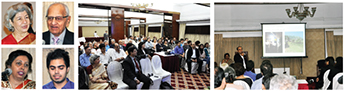
The WZCC also provides a platform for young entrepreneurs. Zaraan Engineer and Burgis Bulsara brought out the contrasting shades of sun and shadow in powerful presentations at the awards function at the West End Hotel on February 24, 2013 on the harness and use of solar energy. While Engineer spoke on "Solar thermal for micro industry," Bulsara’s subject was the commercial application of solar energy and its social implications, particularly in rural and underprivileged areas.

Doing his PhD from Aston University, Birmingham, Zaraan’s thesis involves research with IIT (Indian Institute of Technology), Delhi and Industrial Boilers Limited where he develops the prototypes and carries out the experiments. "My family has been very active in promoting energy efficient technologies in heat and power. We are at present developing a Solar Biomass Hybrid System, which will run on solar energy and biomass to produce steam which will be used for power generation (co-generation) and further be used in any process industry," Zaraan (who is Homai Engineer’s grandson and the third generation in the business) told
Parsiana.
Bulsara has been in the solar field for four years and set up Avesta Solar Private Limited two years ago. Avesta provides sustainable solar solutions for villages, rural electrification, agriculture, households, hospitals, small businesses and factories, where problems from unreliable power from the grid or from polluting diesel and kerosene can be circumvented by clean and renewable solar energy. The enterprising young man also partners with NGOs (non-governmental organizations), social enterprises, corporates and individuals, visiting remote and backward areas. Bulsara’s factual presentation and pictures on how the poorest of poor live and work in abject poverty in places not far from maximum city (Bombay) touched many a heartstring in the affluent audience. He narrated the tale of an indigent rural family who returned to their hut after work. In the pitch darkness of their surroundings they did not realize, till daylight arrived next morning, that their ailing daughter had passed away.
"Currently 400 million people in India do not have access to electricity, adequate clean water supply, primary healthcare and other basic services," Bulsara stated. "They are not in some remote places. They exist near the metros. In fact, three hours from this very hotel, in the tribal belt near Manor there are people with no access to electricity." The sun provides us with enough energy in one hour that mankind would require during an entire year, he told Parsiana later. Favorable pricing, upfront subsidies, accelerated depreciation benefits and rising diesel prices have made solar power a viable alternative. "People who have no access to electricity or unreliable source of power really appreciate our (Avesta Solar’s) products and services. Health improves due to elimination of kerosene, education becomes possible with lighting, solar (pumps) can be used for irrigation, small businesses like machine shops, bakeries, etc can have extended business hours, cottage industries in rural areas can run completely on solar," Bulsara elucidates with enthusiasm.
"If you combine solar PV (photovoltaic), solar thermal and wind turbines, all of which are derived from the same source (the sun), we are already generating more than five percent of India’s electricity from solar energy. If you add renewable energy from biomass and hydro, India is generating almost 50 percent of electricity from these sources. So you can say that we are using our natural resources fairly well. Solar energy is already big business in India," Zaraan Engineer informed Parsiana in an e-mail response to our queries. There are a lot of problems associated with coal and nuclear power plants which will not allow further capacities to come up, he asserts.