The total number of Covid-19 deaths in the community is not known but the figures sent to Parsiana by Dinshaw Tamboly from the Prayer Hall Trust in Worli shows 12 from April 17 to July 18, 2020. Two others who reportedly died from Covid appear to have been cremated elsewhere, bringing the total to 14. A few more in Bombay may have also died from Covid and being consigned to other crematoria. Parsiana is unable to access this data. According to the Bombay Municipal Corporation (BMC)rules, those who died due to Covid have to be cremated or buried. The Bombay Parsi Punchayet (BPP) does not permit burial at Doongerwadi for humans, only pet dogs.
Assuming 14 deaths in a Bombay Parsi population of approximately 35,000, the percentage of deaths works out to 0.0004 (The Government of India census figure for 2001 put the Bombay Parsi population at 46,000 while the 2011 census did not release any figure for the city. But the excess of deaths over births was around 600 a year. The BMC has not released the Parsi birth figures for the past several years.)
The total deaths in India attributed to Covid was around 35,000 as of July 30 and the total number of cases is 16,00,000. The percentage of deaths to the total population of around 1.3 billion works out to 0.00000269. The national figure for deaths is believed to be substantially higher but is unknown due to the low level of testing in India.
A statement sent to Parsiana by Bombay Parsi Punchayet (BPP) trustee Kersi Randeria notes four have died from the virus in their BPP colonies with a total of 60 being infected. The remaining eight deaths may have been from other colonies, trusts or cosmopolitan housing. The breakup of the BPP figures show the highest number of Covid cases in Rustom Baug (13), followed by Godrej Baug (10) and Captain Colony (nine).
Details are as follows: Captain Colony (9 cases, 0 deaths); Gamadia Colony (1,0); Godrej Baug (10, l); Khareghat Colony (3,0); N. C. Baug (2,0); Bharucha Baug (6,0); Panthaky Baug (3,0); Goregaon Complex (1,0); Hongkongwalla Building (1,1); Dhunbaiwadi (0,0); Bai Mahal (2,0); Cusrow Baug (2,0); Ness Baug (0,0); Jer Baug (3, 1); Nowroz Baug (4,0); Rustom Baug (13,1). Total (60,4).
With those Parsis dying of the Covid-19 virus not being permitted by the BMC the use of Doongerwadi, the crematorium adjoining the Worli Prayer Hall has come into community focus. WhatsApp messages have been making the usual rounds inquiring about and criticizing the Hall charges, prayer costs and so on. Allegations have also been levelled at the Prayer Hall Services and Maintenance Trust (PHSMT) that manages the facility for claiming on the one hand the Hall is reportedly available for free but on the other hand charging Rs 6,000 for its use.
Blogger Jamshed Irani posted a telephone conversation he had with the Hall coordinator Ervad Framroze Mirza about the charges, formalities, trustees, etc. The normally testy Mirza replied patiently and directed Irani to the PHSMT website where he said all the charges, list of trustees and other particulars are posted. Irani, however, persisted with inquiring if a particular lawyer was a trustee (he is not) till Mirza finally had to cut the conversation short stating he had two uthamnas (funerary prayers recited usually on the third day after death) to make arrangements for, plus he had other duties.
Community activist and BPP critic Arzan Ghadially in an email to Mirza noted while "It was my parents’ wish to be cremated...if you recollect we had a massive argument...when we asked you for a receipt...You refused...You were also very rude.” He wanted to know why Rs 6,000 was being charged for the Hall, "while (PHSMT chairman) Tamboly states the Hall is free.”
In a five-page letter to Ghadially dated August 3, 2020, Tamboly replied that while Mirza was appointed coordinator by the Trust, "He is by no means the only panthaky entitled to organize prayers.” Tamboly noted the charges of Rs 48,000 that included use of the Hall were the "maximum” that could be charged. Mirza notes he has charged less if parties were economically disadvantaged. "We are satisfied that the rates put out by our Trust are on the lower side as compared to the rates charged at Doongerwadi,” Tamboly pointed out.
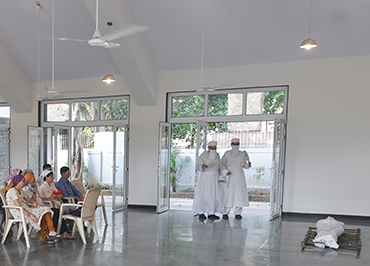
Representational image of geh sarna at the Worli Prayer Hall
From above l: Ervad Framroze Mirza; photo of mourners conveying corpses
to the crematorium; parking lot on left
Noting the PHSMT "has very limited funds,” Tamboly said they relied "on donor support” to maintain the property which is owned by the BMC. He also noted it is incumbent on the community to support priests, "A large percentage...who are not attached to any agiary or atash behram.” Tamboly noted the compulsion to pay for all four days of the funerary prayers was introduced only during the Covid period. The BPP and the high priests had permitted the remaining three/four-day prayers of the Covid dead to be performed at any fire temple, a relaxation not permitted earlier for those who opted for cremation.
Tamboly noted that family members could opt to perform the geh sarna prayer in the parking lot of the Prayer Hall and the subsequent ceremonies elsewhere without paying anything to the coordinator or the Trust, which anyway does not receive any of the payments made by the family to the coordinator.
He added "families of deceased are free to bring their own priests to have the geh sarna done at the crematorium if they do not wish to have the four days’ ceremonies performed at the Prayer Hall.
"Like the mobeds attached to agiaries do not perform the four days prayers for those cremated based on religious injunctions, the mobeds at Prayer Hall have taken the stand they would do prayers for all four days or none at all. In such circumstances if the families of deceased wish to have geh sarna done at crematorium and other ceremonies at agiaries their mobeds should be ready to perform even the geh sarna at the crematorium.”
In a statement on August 5, Tamboly further clarified "The WZO (World Zoroastrian Organisation) Trust Funds has permitted gratis use of their office at Opera House to the PHSMT for administrative purposes, including as their mailing address for the purpose of receiving letters. The WZO Trust Funds also offers gratis administrative support to the PHSMT from time to time.
"Two of the current trustees of The World Zoroastrian Organisation Trust, The WZO Trust Fund and The WZO Trust for Women and Children are also trustees of the PHSMT (which) has a total number of nine trustees.”