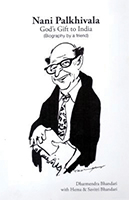
Nani Palkhivala: God’s Gift to India (Biography by a friend) by Dharmendra Bhandari with Hema and Savitri Bhandari. Published in 2016 by the author. The book is distributed by M&J Services, Bansilal Mans, opp Bombay House, 9/15, Homi Modi St, Fort, 400023; e-mail: Lawbooks@gmail.com Pp: 208: Price: Rs 3,000.
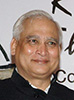
Dharmendra Bhandari (pictured) is a banker and former academic from Jaipur. In 1976, as a star-struck 19-year-old, he once jostled his way through the crowds that had thronged the Cricket Club of India in Bombay to hear Nani Palkhivala deliver one of his budget speeches and managed to shake hands with him. That, to Bhandari, was an unforgettable moment and one he would cherish all his life. The next step was to write to Palkhivala, which he duly did, and, like innumerable other admirers, he found a ready and obliging correspondent in his hero. In succeeding years, the two formed a friendship which was cemented by visits to each other’s homes and many meals together.
The result of that friendship is this coffee table book. Though titled a ‘biography,’ it is more a personal tribute — a potpourri of recollections, eulogy and nuggets from Palkhivala’s speeches and writings. It would be tempting to dismiss the work as an example of vanity publication, but that would be churlish, not least because the author’s sincerity and manifest devotion to his idol permeates every page.
The book is organized, some would say idiosyncratically, around 11 chapters dealing with various facets of Palkhivala’s life and career. The narration is competent, but just so. There are the occasional clichés and the odd patch of purple prose, but for the most part the author adopts a workmanlike approach to his task of explaining to his readers the remarkable qualities that made Palkhivala the iconic figure that he became and which endeared him to millions of his fellow countrymen.
Arguably, the most attractive aspects of the book are the highly evocative illustrations of R. K. Laxman (who, incidentally, was one of Palkhivala’s close friends) and some illuminating photographs, including a few that have not received extensive public exposure previously. No less eye-catching are the facsimile reproductions that Bhandari has chosen to include — of some letters to and from Palkhivala, confidential minutes of a board meeting of Tata Industries relating to the 1968 take-over of the software of the Tata Computer Centre by Tata Consultancy Services, and handwritten annotations by Palkhivala on the brief he held as leading counsel in the landmark Kesavananda Bharati case decided in 1973 (in which the Indian parliament was stopped from amending the basic structure of the Constitution).
Does the book tell us anything that we don’t already know about Palkhivala? Not really (although Nani’s brother, Behram, graciously says in a brief Foreword that a "few of the facts that the book reveals were not known even to me.” One nugget of information that has certainly not received wide coverage — outside possibly a small circle of lawyers — is that, for all the prominence that I. C. Golak Nath and His Holiness Kesavananda Bharati received in relation to their eponymously named cases, Palkhivala never met either of them!). But that need not detract from the worth of the work. It is, ultimately, a labor of love and should be viewed as nothing more or nothing less.