A first generation restaurateur in the eastern Indian city believes Parsi food appeals to most palates
Farrokh Jijina
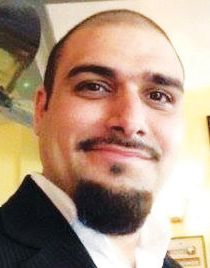
While three words, "I love food” sum up Varun Gazder’s reasons for his foray into the hospitality business, he says he was also "inspired by the old cliché about the food industry: ‘You may not earn much but you will never go hungry.’” The 33-year-old sole proprietor of Café Regal in Jamshedpur explained that he "envisioned running my own establishment since I was in school.” The four-year-old 900 sq ft, 30-seater eatery on the second floor of the 80-year-old Bharucha Mansions, partly owned by his family, is the only restaurant in the city that serves Parsi food. "A few other hotels tried to include Parsi food in their restaurant menus after we did, but they were not successful,” said Gazder while speaking to Parsiana over two phone calls in the first week of July, with a detailed email response to follow up questions. "I had a vision to create something new and unique, to retain bits of history, to recall the past glory of the building and more importantly, to do things my way,” noted the first generation entrepreneur.
Sketches of the interior of Cafe Regal and Bharucha Mansions
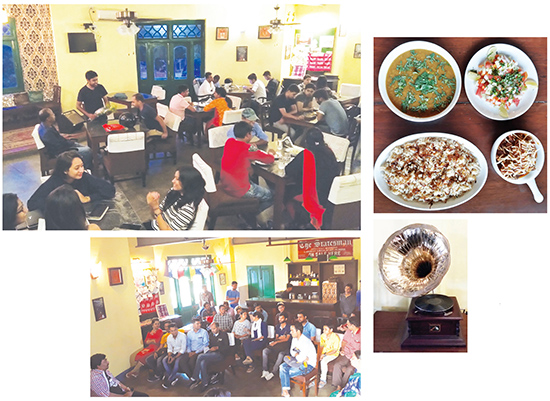
Clockwise from above left: Customers enjoying a "quaint vintage world;"
a sampling from the menu; restored gramophone; a live event
Located in the Bistupur commercial district of the city, Regal’s doors open into a quaint vintage world. With an "old-fashioned ceiling with steel girders with ‘Tata Iron and Steel Co’ forged on them, vintage wallpaper, posters and signboards, old style chairs, antique coffee grinders, warm yellow walls mixed with old style green doors, solid teak wood furniture, old fashioned lamps and restored vintage fan fixtures, all bathed in soft hues greet our guests making a plod up the two floors worth its while,” enthused Gazder. The balconies have become favorite haunts for coffee drinkers as they sip the hot beverages and watch the world go by.
An old-fashioned hat stand for bikers’ helmets, a book stand with magazines and travel books, chess and other table games add to the warmth of the place. "Live music on weekends, poetry reading sessions, book launches, a handicraft display from a nongovernmental organization are some ways of interacting and giving back to our well-wishers,” observed Gazder. "Notes scribbled on napkins by guests adorn the soft board and speak volumes about how well we are loved and appreciated.”
The menu is ever evolving, he noted. "Everything that is served has been tried, tasted and constantly checked for quality…The range of beverages, and vegetarian and non-vegetarian cuisines have been hand-picked to primarily deliver to young foodies.” Of the 100 plus clients who frequent the cafe daily, the majority are in the 20-25-year age group. Take away service is provided via a local phone application. A seven-member team assists Gazder in the running of the eatery.
Beverages include milkshakes, coffee and a variety of teas; mains include pastas, sandwiches and chicken and mutton delicacies. Vegans are not forgotten. "The most impressive item on the menu is the Parsi Bhonu Set Menu available on Sundays, which consists of dhansak with vegetarian and non-vegetarian side dishes and desserts. Both the vegetarian and non vegetarian versions are priced at Rs 650. The side dishes vary each week, he explained. Put together from recipes handed down through generations under the guidance of his mother Behroze (née Billimoria), accompaniments to the ubiquitous Sunday meal include Naoshakroo Chicken ("a secret recipe of my mother’s”), lagan-nu-stew, sali boti, jardalu-ma-gosh and khari marghi while desserts include lagan nu custard, ravo and caramel pudding. "There are many more dishes, like chapats, pan-rolls, topli-na-paneer, crisply fried Bombay duck, chicken farchas, ‘something-par-eedu’ and other Parsi dishes which I wish to introduce one by one to delight my customers,” stated Gazder. Parsi food can be prepared on any day of the week for a lunch or dinner party, if informed 24 hours in advance, he added.
Having passed out from Loyola School in Jamshedpur, Gazder enrolled into the International Institute of Hotel Management (IIHM) in Calcutta for his degree in hotel management. "During my years at IIHM, (with) the methods of constantly prodding and eliciting answers from students by a dedicated faculty, I knew I was in the right profession.” A three-year stint as assistant manager at the Shamiana, the all-day dining outlet at Taj Mahal Palace Hotel in Bombay followed. "I owe everything to the invaluable experience I gained at the mother ship of hospitality,” he acknowledged.
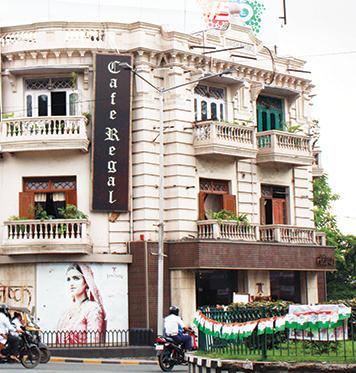
The 80-year-old Bharucha Mansions Photo: Yousuf Sarfaraz
Top: (seated) Varun and Madhuri, (standing, from left) Azdiar, Adil, Behroze and Jehaan;
above: Goolbai (l) and Khurshed Bharucha
Married since 2016 to Madhuri Singh, who owns and manages a salon and beauty parlor, Gazder stated that "it has been great fun to see Madhuri try to understand our Parsipanu... She is interested in our traditions and insisted we set up the Haft-Sin table for Navroz...She is welcomed by our community and participates in all our events and functions.” Passionate about gardening, Madhuri is responsible for the "colorful balconies of bougainvillea both at our residence and the Café.”
Gazder’s father Adil retired from the Tinplate Company of India, a Tata Group company, while mother Behroze was a senior manager at the Russi Mody Centre for Excellence. Both parents are alumni of XLRI - Xavier School of Management. Varun’s elder brother Azdiar has a doctorate in metallurgy and lives in Australia while younger sister Jehaan is an accounts director in a public relations firm in Bombay. Maternal aunt Amy Billimoria is principal of the J. H. Tarapore School in Jamshedpur.
The hospitality professional bemoans that from almost 1,000 community members two decades ago, "It is sad to see us dwindle to about 200.” He is all praise for the Jamshedpur Parsi Association and the Jamshedpur Parsi Stree Mandal that are making "great efforts to bring the community together organizing gahanbars, picnics, pani-nu-parab, Navroz dinners and various competitions in the two big halls in the (Cursetjee Manockjee Shroff) Agiary compound.” Navjotes and lagans are few and far between, "but when they do happen, the men in their daglis and ladies in their garas make a regal sight.” At one time, "the community represented the best in all walks of life — teachers, sportsmen, doctors, engineers, officers at the steel plant, but all this seems to have eroded... Beautiful Parsi buildings are giving way to small flats mostly because the elderly cannot maintain them and the young have migrated for greener pastures.”
Varun stated he is a "proud Zarathushti, (member of) a powerful, profound, all-encompassing religion.” The religion has "a universal appeal and relevance even in modern times because it believes in equality of race, gender, and religion… It is our choices that affect us and happiness can come about only when we are encompassed in good thoughts, good words and good deeds.” He noted that he would have his children navjoted, when the time came. "Of course children need to have an identity... I would like mine to have the best of everything... from both my wife’s and my heritage... Modern DNA tests prove that we have descended from different kinds of people and our claim to be a ‘pure’ race is no longer valid. The younger generation needs to bring about change (which) the religion so desperately needs.”
Gazder shares a recipe with Parsiana readers:
Naoshakroo Mutton
Potatoes (250 g)
Mutton (1kg)
Onions (3)
Garlic (10 cloves)
Cinnamon (4 small pieces)
Ginger (1 piece)
Cardamoms (6)
Cloves (8)
Coriander (150 g)
Coriander seeds (30 g)
Dried red chillies (6)
Cashews (70 g)
Poppy seeds (50 g)
Salt, pepper, turmeric (to taste)
Blanch the potatoes after cutting them into large dices. Lightly sprinkle turmeric, pepper and salt to taste. Deep fry in hot oil and keep aside. Clean the mutton and cut into equal cubes. Make incisions in order for the marinade to seep through.
Create marinade with the rest of the ingredients (except the onions, pepper and turmeric) by popping into a mixer. Blend well. Marinate the meat with the above ingredients for a couple of hours. Fry onions till light brown; add the marinated meat and wait for the marinade to be fully absorbed. Add water and cook till meat is done.
Bharucha beginnings
The building in Jamshedpur where Café Regal is located, Bharucha Mansions, was built by restaurateur Varun Gazder’s great-grandfather Khurshed Bharucha in 1935. "The building housed one of the city’s earliest theaters, the Regal Cinema, inaugurated a few years after it was built, and thus came to be popularly called Regal Building — a recognized landmark in the commercial center of the city,” he explained. Even today, cab drivers and auto drivers know the round-about as Regal. For a long time, a one room general post office, a thatched police station, the first school of the town and the Boulevard Hotel were the only structures in the large boulder-ridden area before it became the nerve-center of the city, he told us, based on stories heard from his parents.
Bharucha, the first Indian cashier of Tata Iron and Steel Company (TISCO, now Tata Steel), believed that young Parsi boys and married couples would flood the city to find employment in the steel factory and planned the building like a hotel with rooms and attached bathrooms, long corridors and common dining areas to provide cheap lodgings for them, narrated Gazder. "But unfortunately, the Bombay boys missed their baugs and Chowpatty and declined the offer to work the blast furnaces; so the idea to house them did not take off!” he revealed. Khurshed and Goolbai’s was the first Parsi wedding to be solemnized in Jamshedpur at the grand United Club. "Goolbai, was the first lady driver in town and people used to be amazed to see her whiz past in her car on errands and social visits,” revealed the great-grandson.
The venue for all R. K. (Raj Kapoor) Studio movies, "for many years, my grand-aunt Nargis Bharucha singlehandedly ran Regal Cinema,” stated Guzder. The family was compelled to shut the "iconic” theater in 1984 due to heavy taxation. Today the building hosts a few shops on the ground floor. The first floor is used as family lodgings while Café Regal is housed on the second floor.