The declining population of anjumans is
compelling them to turn to the Federation of
the Parsi Zoroastrian Anjumans of India
Farrokh Jijina and Parinaz M. Gandhi
At least three beleaguered anjumans offered to hand over their assets and affairs to the Federation of the Parsi Zoroastrian Anjumans of India (FPZAI) at the executive council meeting held at the Annexe Hall in the Banaji Atash Behram compound on April 29 and 30, 2017. On behalf of the Mhow Anjuman, its president Cyrus Mancherji recommended, "The Federation should take over the management of the Mhow Anjuman.” Parvez Khergamwalla of Khergam too realized that for the "very few Parsis” remaining in the area, maintenance of the dadgah building, the dharamshala land on which no structure exists, and the bungli that is "finished,” had become impossible. "We are in deep trouble,” he noted. Gandevi representatives Farrokh Shaher and Firoze Gandevia declared, "Today we are here to give our properties to the Federation.” Left with 24 residents, their assets include an agiary that was celebrating its 180th anniversary on April 30, mobed quarters, dharamshala and 14 acres of Doongerwadi lands.
The item listed on the agenda of the executive council meet read: "Discussion on specific situations and problems faced by individual anjumans and punchayets.” Member anjumans were given a pro forma based on which their representative was required to present a summary specifying their membership count, income and expenditure, assets, and issues faced. While many small anjumans with depleting human resources are struggling to raise funds for the upkeep of community properties, the larger pockets like Poona and Vadodara are striving to secure their Doongerwadi lands, portions of which are being requisitioned by the government or municipality.
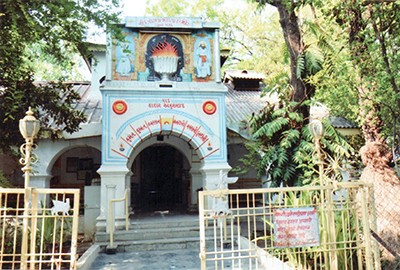
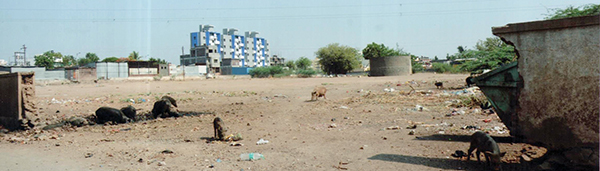
Top: Sholapur’s Seth Vicajee and Pestonji Meherji Dar-e-Meher and (above) dakhma lands
North and South Zones
With a resident population of 42, the Mhow anjuman’s properties total 16, with a book value of Rs 50 lakhs and an estimated market value of Rs 47 crores, said Mancherji. The anjuman’s income stood at Rs 24 lakhs and expenses at Rs 23 lakhs, he noted. The association maintains the 171-year-old adarian and 177-year-old dakhma. Mancherji stated that there was "continuous obstruction” from former Mhow resident Pervin Jehangir and her proxies who have declined to participate in a court advised mediation "on the ground that all trustees are illegal(ly appointed).” According to Mancherji, "Intervention without any participation is detrimental to our community and religion.” With over four lakh cases pending in the Indian legal system, "justice is delivered after a very long period of time. The purpose of litigation is lost. Meanwhile the numbers reduce and the properties are at risk of being used by antisocial elements. Among Parsis, we should sort out matters rather than go to courts,” said Mancherji.
Jehangir maintained that "mediation has taken place,” but "all solutions are non-solutions.” She insisted that she was "willing to mediate with persons who have the authority to mediate.” Bombay Parsi Punchayet (BPP) trustee Kersi Randeria urged her to negotiate in the interests of the Parsi community and properties to which all factions were committed. Jehangir stated that she was in discussion with West Zone B vice president Sam Chothia (who is also the chief executive officer of the Defunct Anjumans Committee) but he specified that it was in the context of Ilav, the anjuman that she was representing at the FPZAI.
Porus Debara from Agra reported that there were half a dozen Parsis in the city of the magnificent Taj Mahal. The dharamshala there generated an income of Rs 5,000 annually, against an expense of Rs 1.25 lakhs, which was met partially by earning annual rent of one lakh rupees from letting out a portion of the premises. The anjuman had recently spent Rs 1.70 lakhs on repairs to its aramgah and dharamshala. In the absence of a local priest they are dependent on a priest from Delhi to perform obsequies when a member expires. "We will keep on providing services,” he stated.
The Delhi anjuman caters to the needs of 200 Parsis in the NCR (National Capital Region) and has 600 members, including non-Parsi spouses of members who also have voting rights, reported Cyrus Engineer. Properties there include an agiary, dharamshala, a hall and two aramgahs. The anjuman’s annual income is Rs 50 lakhs. The committee that looks after the aramgahs has collected Rs 50 lakhs in donations in the last six months, he stated. A paramobed assists their resident priest. They are looking for a manager to run the 40-room dharamshala efficiently (see "Change of guard in Delhi,” Events and Personalities, Parsiana, April 7, 2017).
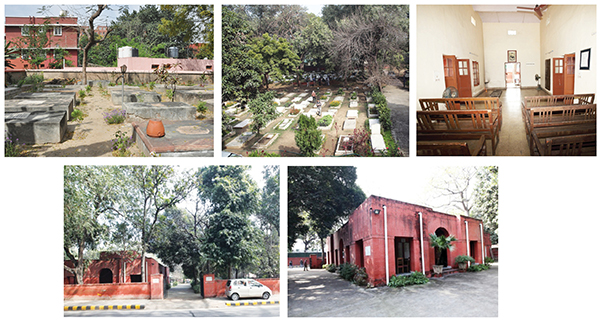
Delhi’s old aramgah, portion of new aramgah, prayer hall, entrance to new aramgah, bungli
Simla’s aramgah and structure
Nagpur’s Bai Hirbai Noshirwanji Mancherji Mulla Dar-e-Meher, Seth Bilimoria Brothers Dharamshala
Panchgani’s prayer hall and graves at aramgah
Badnera Amravati’s Parsi Anjuman Dar-e-Meher, mobed’s quarters in need of repairs; doongerwadi
Poona’s Bai Maneckbai P. B. Jeejeebhoy Buildings and Hall
Ratlam’s bungli and graves at aramgah
Belgaum’s Seth Pestonji Khurshedji Boyce Dar-e-Meher, front view and side view; path to the graves
Photos supplied by anjumans
Tehmton Anklesaria, vice president of the North Zone, representing the Ratlam anjuman, said that their annual income was five lakh rupees which was used to maintain the aramgah. The anjuman celebrates Parsi New Year, Jamshedi Navroz and Khordad Sal with its 15 local members – there are a total of 30 members on their membership list.
Belgaum, the sole anjuman from the South Zone in attendance at the FPZAI, was represented by Cmde Medioma Bhada (Retd) who informed those present that the anjuman had 52 members. An agiary, a two-room dharamshala and an aramgah were the sum total of its properties. Bhada also reported that the anjuman was able to obtain financial support for renovations to their property from the local MLA’s (Member of Legislative Assembly) funds. The association’s income tax (IT) returns for two years have not been accepted online. The trust is not permitted to enjoy rebates in tax under section 12 A of the IT Act since the organization does not offer its benefits to members of all communities. In the absence of this exemption, the trust has been charged tax at 30% as against the rate of 10% applicable to trusts. Since the staff members in employment are of sister communities, by extending privileges to their families, the anjuman can claim it is working for all communities, suggested experienced members of the FPZAI.
West Zone A
There are eight Parsi residents in Badnera-Amravati, said its representative Anahita Desai. Their agiary stands on about 1.28 acres which is fenced in. Their Doongerwadi stands on 9.36 acres. A full-time mobed in his eighties looks after the place of worship. Funds are needed for renovation of the agiary and the mobed’s quarters, she added, reporting that the anjuman had an annual income of around two lakh rupees. "Though it would be a defunct anjuman in terms of numbers, being below the threshold limit of 15, all properties are well secured,” she said.
With a membership of 230 families, the Borivli and Suburban Zoroastrian Association (BASZA) is in its 41st year of operation and caters to the needs of Parsis in the western suburbs of Bombay, between Goregaon and Dahisar. Perviz Khan said that against their annual income of Rs 80,000, their expenditure was about Rs 55,000, and in the current year, for "the first time had been able to show a surplus.” The association brings out a bimonthly newsletter. "We are grateful to (real estate businessman) Boman Irani and (his company) Keystone who regularly provide their school premises for the Association’s programs,” she mentioned.
The Iranian Zoroastrian Anjuman has 5,000 registered members of whom 1,800 are voting members, said Pervez Irani. [At the September 2014 elections, less than 200 cast their vote (see "Excitement at IZA elections,” Events and Personalities, Parsiana, October 7, 2014).] With property of 963 acres in Palghar, a building in Lonavala, the Association has an annual income of Rs 62.80 lakhs, and expends Rs 36 lakhs on education aid and other assistance.
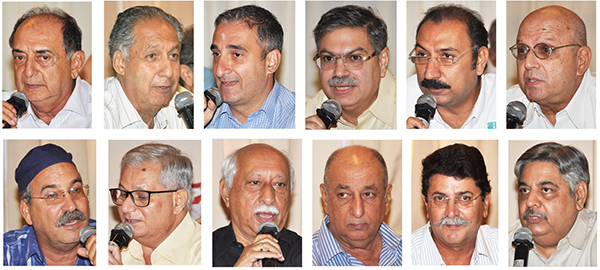
From left, top row: Cmde Medioma Bhada (Retd), Tehmton Anklesaria, Adil Nargolwala, Cyrus Engineer, Porus Debara,
Cyrus Mancherji; bottom row: Mancher Mubarakai, Cawas Panthaki, Polly Patel, Farokh Irani, Pervez Irani, Navroze Daver
Above (from left): Percy Karani, Zarsis Udhnawala, Gita Choksi, Anahita Desai, Vishtashp Munshi,
Khurshed Pastakia, Perviz Khan
Pearl Mistry (left) and Ayesha Mehta
"We don’t give help to anyone, we ask them to get up and help themselves,” Mancher Mubarakai, vice president of West Zone A, also representing Dahanu Road, reiterated his message from the 2016 FPZAI meeting. The anjuman has stock of bawal for three years, he said. Against an annual income of Rs 3.5 lakhs, expenses were Rs 4.8 lakhs, he noted, mostly on maintenance of the adarian and the community hall. A part of the hall has been rented out to a bank, he said. "The trust has no money for gahanbars,” he said, but they do have contributory meals in that location.
"We do not have any major problems,” stated Gita Choksi of Panchgani, reporting that the local residents are 35 in number. The agiary there stands on half-an-acre of land, and the aramgah on three-fourths of an acre, she said, adding that "neither properties are encroached.” With financial assistance from the State Minorities Commission office, the association has been able to build a wall in the front of the aramagah. The anjuman has a corpus of one crore rupees, Choksi stated, and added that they have added two new trustees — Dr Tuheed Irani and Behram Bajina, sons of existing trustees, to augment the board. The association is looking to appoint a caretaker-couple for the upkeep of their agiary and aramgah. She requested the FPZAI to circulate frequent news updates and not only annual communiques.
On behalf of the Batha School in Panchgani she sought to clarify that free education is not offered to all Parsi students but the trustees will use their discretion to extend scholarship and boarding to select students. At the request of FPZAI president Yazdi Desai, Choksi provided details behind WhatsApp messages claiming the Batha Trust that runs the boarding school in the hill town had purchased property at "a grossly overvalued” amount of Rs 50 crores. The 7¾- acre property "purchased from my family” is being used to augment the school’s playground and facilities for new applicants, Choksi said. The school now has 50 boarders, she added noting that "the Batha sanatorium under the same trust is in dire need of repairs.”
Of the approximately 300 flats owned and managed by the Poona Anjuman, 20 are vacant, stated Farokh Irani. Polly Patel invited "Parsis who want to move to Poona to apply (for housing),” adding that they would not provide flats to people who wanted to use them as second homes. People want larger flats as their incomes increase, said Patel, giving this as the reason for the vacant flats. The boys’ hostel in Poona also has a lot of vacancies, as the engineering colleges have moved away to the expanding suburbs whereas this establishment is in the heart of the city. The anjuman now provides bachelor accommodation to those who move to Poona on a temporary basis for work, or are transferred there.
Against an income of Rs 1.08 crores, the anjuman spends Rs 1.02 crores on medical and poverty relief, besides holding "felicitation events.” With a population of 8,000, the Panchayat has a membership of 1,700, said Irani. (The Government of India census figures put the count between 3,000-4,000 – editors) While the municipal corporation of the city wants to take over some land near the Patel dakhma for a road widening project, Irani lauded the gesture of the Poonawalla family in donating Rs 50 lakhs for the renovation of a bungli at the Doongerwadi and two crore rupees for building a wall there.
Recently renamed Nagpur Parsi Punchayet (from Shree Nagpur and Kamptee Parsi Zarthosti Anjuman) the association there caters to 416 local residents and an outstation population of 73, according to Navroze Daver of that anjuman. Properties in the central India city include an agiary, dharamshala, five buildings with 65 flats, and 19-acre Doongerwadi lands. Against an income of Rs 26.61 lakhs, the anjuman expended Rs 25 lakhs last year on financial assistance for medical purposes and housing. The bungalow in the agiary compound there "has been split and three medical rooms have been added,” for the convenience of convalescing patients, stated Daver. Nursing services are also provided free, he added. This has been possible with a donation from Dinshaw’s Ice cream, whereas the dharamshala has been air-conditioned thanks to a gift of three crore rupees from the estate of the late businessman and philanthropist Dady Bulsara. "We only have a problem for a substitute mobed when ours goes on leave,” he concluded.
Behdin pasbaan Vishtashp Munshi of Sholapur reported that there are 65 Parsis in that city, of whom 75% are over the age of 60. The dakhma, agiary and residential Boyce Blocks are in a bad condition. He urged the BPP trustees to disburse a previously agreed donation of five lakh rupees for the upkeep of their property. Desai sought more details. Reporting that the city is now becoming an educational hub, Munshi exhorted FPZAI representatives to send their wards to colleges there, stating "we will take care of your children.” He ended with a plea to the BPP to re-start the monthly doles to mobeds.
Thana reported a strength of 574 members and an income of Rs 25 lakhs, mainly from leave and license fees. Their property adjacent to the agiary is encroached upon for the last several years, reported representative Percy Karani. Farrokh Rustomji, honorary secretary of the FPZAI, suggested that the court order which was in their favor and which could not be implemented due to the clout of the Shiv Sena, the body that had encroached, should be modified to include police protection whilst attempting to free it from encroachment. President Zarsis Udhnawala mentioned that consent terms between their anjuman and the trust of the agiary there had not been given effect to. "Negotiations are still on, and we seek the Federation’s assistance,” he said.
Cawas Panthaki, chief executive officer of the BPP stated that during the financial year 2015-16, they had spent Rs 5.04 crores for religious purposes (maintenance of two agiaries, Doongerwadi and payouts for the mobed schemes); medical relief accounted for Rs 1.58 crores, poverty relief Rs 2.75 crores, education Rs 82 lakhs and other projects accounted for Rs 78.44 lakhs. Panthaki explained that the scheme for payments for the second and third child accounted for an expenditure of between Rs 32 and 35 lakhs per quarter.
On behalf of the Holiday Programme for Youth that is being held under the auspices of the BPP for the last 31 years, Ayesha Mehta gave the highlights of their month long program for students who had completed their schooling. They have now set a precedent of inviting an outstanding member from their alumni as the chief guest. In the current year, the Best Bawa/Bawi contest has been reintroduced. Participants are now invited to design badges and certificates for the succeeding batch. As part of their media presentation module, the best video/photos of the Programme will be shown at the valedictory function.
Rustomji offered to take a session on educational and financial scholarship schemes available for higher education. Baman Cama of Vadodara enquired: "Do you take them around fire temples? I think you should.” He was further concerned that one of their students from Baroda housed in the Parukh Dharamshalla had picked up a skin infection some years ago. "We normally have a debugging program twice a year” at the Dharamshalla, mentioned BPP trustee Armaity Tirandaz.
Another community program that is making inroads is the Jiyo Parsi project, the first phase of which is about to get over, announced counselor Pearl Mistry referring to the 90 babies born to the community since the program was introduced in 2013 and 16 more expected very soon. With financial assistance of five lakh rupees given to couples undergoing fertility treatment, Mistry clarified, "There is no issue of non-fertility among men or women. The problem is late marriage” and conception being deferred until couples have passed the optimum child bearing age bracket of 25-35 years. After creating awareness through a lot of advocacy in the first phase, they will now pursue "a holistic approach, focus on health, education, practical issues like babysitting facilities, support system” for the parents. She also announced the Jiyo Mobed workshop planned in May (see "Mentoring mobeds,” pg 28).
Whilst their team has visited colonies in Bombay as also the anjumans of Navsari, Surat, Ahmedabad, Baroda, Poona, Calcutta, Jamshedpur, she was awaiting an invitation to go to Madras and Bangalore. Debara suggested that they should make a short clip and circulate it on WhatsApp. Mistry mentioned that they are already active on Facebook. Marazban Wadia of Davier was enthused to sing Parsi, O Parsi, jug jug jiyo.
To those who choose "material achievements over personal happiness with the family,” Mistry counseled, "It is better to have a family around you than an ayah waiting for you to pop.” According to her, "The community is at the crossroads. We can be like ostriches and bury our head in the sand or soar and be fighters like eagles.”
The final report on the West Zone B anjumans will appear in the next issue of Parsiana.