The tenacious endeavors of Zoroastrians in Iran to preserve, copy and disseminate religious and secular texts, in the face of Islamic persecution, were responsible for the survival of the religion
Farrokh Vajifdar
Among some Parsis the penchant for glib, superficial explanations for their arrival in western India has masked the sober reality behind their wilder fantasies. Abrupt claims that it was mass conversions to the new-fangled Arab religion — "at sword-point!” with desecration of religious institutions and cultural values — leading to the post-Sasanian emigrations from 652 CE onwards, are vaguely factual with grains of half-truths scattered amidst such assertions. Yet they fail to explain the steadfast presence of Mazdayasna in Iran across 13 full centuries.
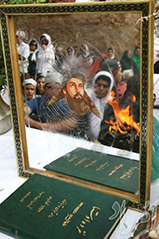
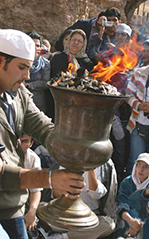
The year 642 CE was marked by Arab victories on Iranian soil. The last Zoroastrian monarch, Yazdgard III Shahryar, was to be foully murdered in 652 CE by a disgruntled provincial governor, his body unceremoniously dumped into a nearby millrace, and the rescued remains given a reverent Christian burial.
Zoroastrianism did not die with Yazdgard’s death, nor had its devotees fled en masse to safer eastern lands. The Arabs settled in the prosperous areas of the Iranian comity; Arab comity initially coveted Iranian lands and assets. Emerged from desert environments, and organized along tribal allegiances, the uncultured Arab usurpers lacked the administrative knowledge to effectively run the affairs of an ancient land whose tripartite base had long ensured the continuity of state functioning. They had perforce to look to the Zardushtis to arrange progress and stability of their newly Iranized social and economic expectations.
In the west, the Caliphs viewed the situation with alarm; they retaliated with demands for harsh taxation burdens on the subjugated populations to fill Arab coffers for military expansion, ensuing in the hated jizya poll-tax and the demeaning dhimmi "client” (!) status for Zardushtis, Jews and Christians.
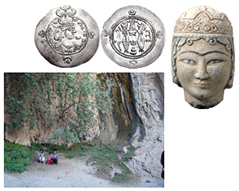
From the memorable times of Khosro I Anushirwan (r.531-579) Iran had witnessed a revival of Mazdayasna after the acute social disruption created by the heretical priest Mazdak. The rich religious and secular oral traditions were collated under the supervision of his famed prelate Weh-Shahpuhr, and set down as the 21 Nasks. The former had included the 72 Yasnas enshrining the precious Gathas and the proto-Vandidad chapters augmented by scholar-priests whose ritual practices had become adjusted to urban life. An abundant commentarial and encyclopedic literature was redacted in Pahlavi, the learned language of the sacerdotal class.
Traces of that vast secular literature, dating largely from Parthian times are noticed in the extant sources. Firdausi’s Shah-namah embraces many a Parthian name and ancient legend. The Parthians indeed were doughty Zoroastrians: the niggardly account by the quasi-historical Denkard IV of that remarkable dynasty and its Achemenian predecessors cannot diminish their renown and religion. Firdausi, himself a pious Shi’a and staunch nationalist, stops his history at Yazdgard III. Disregarding the Arabs and the north-eastern Turks, his sonorous 11th century epic contains a mere four per-cent of Arabic words.
With the irruption of the Arabs and their vindictive destruction of Sasanian cities, priesthood and fire temples ruthlessly accomplished, the Zoroastrian religion suffered serious setbacks. The proudly nationalistic Iranians despised all Arabs as "snake-eaters of the race of wrath!” Islam brought in its wake a sustained program of oppression, extortion and suppression, with its denigration of the Iranians as ajam, or ignorant idiots who refused to accept Qur’anic teachings. Rebellions against the Arabs and their Qur’an broke out in region after region and were brutally put down with wholesale massacres and enslavement of men, women and children. Sweet-sounding Iranian was banned in favor of guttural Arabic: administrative posts became restricted to those who had publicly abandoned their Indo-Aryan tongue and embraced Islam.
The terms "holocaust,” "genocide,” "ethnic cleansing” and other vile expressions of hatred for humanity, all testify to what actually occurred in Iran from the earliest times of Islam. Yet the good religion of the ancient Iranian sage and his devout followers survived and was vigorously maintained. The fourth Caliph ’Umar had in his desperation and short-sightedness decreed that the Qur’an was the fount of all knowledge, and everything Iranian that rejected or disparaged it was to be destroyed, which it duly was under the supervision of Arab officials. It cost ’Umar his life at the hands of an Iranian convert to the new creed.
It became clearly impossible to bridge the widening chasm between the consistent, predictable Aryan deity of wisdom, Mazda, and the embittered Iranian perception of a capricious alien Abrahamic god whose murderous injunctions in the name of peace fuelled the "race of wrath.” The tip of the newly whetted Arab sword was unswervingly poised; yet they were not alone in their brutal proselytizing and extermination programs.
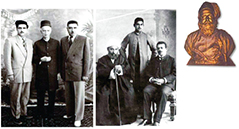
A brief 9th century respite for the Zoroastrians occurred when the Caliph Al-Ma’mun, the son of Al-Rashid (of "1001 Nights” fame) by an Iranian concubine, vanquished his full Arab half-brother Al-Amin during their power struggle for the Caliphate. For the Zardushtis it was a fruitful renaissance when two hudenan peshobadhs (leaders of the good religion), Dastur Manushchihr and his younger brother Zadspram taught, reasoned and extensively wrote on Mazdayasna in fluent, if breathless, Pahlavi. The Iranian nobility, anxious to preserve their power bases, voluntarily converted to Islam; yet, conscious of their illustrious Zoroastrian ancestry, many lessened with individual kindnesses the Zardushtis’ burden inflicted by vindictively functioning Islamic régimes.
Zoroastrianism bravely held on until the 12th century when insecure Caliphs resorted to their accustomed oppression methods — both jizya and jihad — against the practitioners of the good religion. The terrible 13th century inroads of savage Mongols further decimated their numbers.
Turkic tribes from Central Asia who had settled and toiled alongside the Khorasani Mazdayasnians rebelliously seized power whenever the Arabs were distracted by sporadic Zoroastrian uprisings in the provinces. As they gained ascendancy, they too indulged in terrifying massacres of defenceless minorities. Zoroastrians had further dwindled in numbers, many in desperation having gone over to the Arab religion.
Succeeding centuries and alien régimes saw continuation of oppressions and exterminations of Zardushtis. European travellers bore witness to the low, impoverished condition of those forced into internal exile by overbearing Muslim rulers and corrupt officials. Assaults, murders and abductions — for enslavement and forced conversion — increased, and minority populations were butchered in their tens of thousands, particularly during régime and dynastic changes. A few brave Zardushtis made their hazardous way from a hostile fatherland to the madar-vatan of India to apprise Parsis of the deplorable existence of their co-religionists.
The actuality of these persecutions is too harrowing to detail here. Sadly, today’s Parsis seem unaware of the unbelievable suffering continuously inflicted upon the hapless Zardushtis. Indignities were heaped upon the deprived and the destitute — from wretchedly dilapidated housing to atrocious dress norms. The exchange of 15th to 18th centuries’ Rivayats brought compelling attention to the downtrodden condition of Mazdayasnians in the fatherland to Parsi notice.
Selfless Parsi activists bravely ventured into Iran to negotiate ameliorative measures for their co-religionists — the memories of Manekji Limji Hataria, Ardeshir Reporter and Peshotan Dosabhai Marker have never been forgotten by the grateful Zardushtis. From outside Iran the determined labors of several Parsis continued unabated, among them Naoroji Fardunji (Vajifdar), Dadabhai Naoroji (Dordi), and Sheriarji Dadabhai (Bharucha). Unwarranted accusations today of Iranian failure to acknowledge such Parsi endeavors, arising from deep-seated ignorance, petty differences, and an inappropriate sense of superiority, are to be deplored.
The Iranians’ contribution to the knowledge and furtherance of Mazdayasna among the Parsis cannot be understated. Had it not been for their painstaking efforts, at great risk to themselves, of preserving, copying and disseminating our religious and secular literature, nothing of Zoroastrianism would have survived among the Parsis. It is historically proven that without such tenacious endeavors among the Zardushtis, we Parsis would never have had the Yasna, Vandidad, Visparad and lesser liturgical texts to substantiate the ritual knowledge of our anciently venerable religion. Likewise unknown would have remained the encyclopedic Bundahishn and Denkard embodying the sciences and philosophies of pre-Islamic Iran, of which we had heard nothing before.
In Gujarat, Bahman Kaikobad (Sanjana) was to lament in his 1599 Qisse: "In those times there were deeply spiritual people who wisely observed the religion and its precepts; in these days the Lord alone knows what true religion is, for men do not!” Numbers alone convey little of the sharp contrasts between the condition of the Zardushtis (in Iran) and the Jarthostis (in India). For the former, "quality of life” simply did not exist! It was nevertheless the proud distinction of the Zardushtis that they stayed on amidst the gravest civic disabilities and carnage, and somehow transmitted the Vanhui Daena — the good religion — against tremendous odds.
Hinduism’s well-attested laws of absorption would otherwise have ensured the wholesale disappearance of Mazdayasna from among the Parsis. That process had already begun in 15th century Gujarat when, had not the concerned davar Changa Asa the foresight to despatch Nariman Hoshang to Iran (1478) to ascertain the condition of our co-religionists there, that Hinduization process would today have been complete.
 Farrokh Vajifdar was former vice president of the Royal Asiatic Society of Great Britain and Ireland. An author and editor, he is an independent researcher into Ancient Indo-Iranian culture, history and religions.