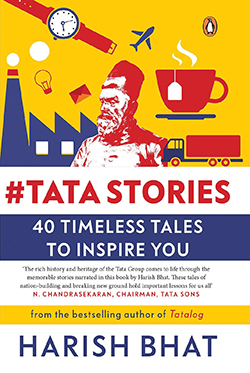
#Tata Stories: 40 Timeless Tales to Inspire You by Harish Bhat. Published in 2021 by Penguin Random House India Private Limited, C, Infinity Tower, 7th Floor, DLF Cyber City, DLF Phase 2, Sector 24, Gurugram 122002.Pp: 304. Price: Rs 599.
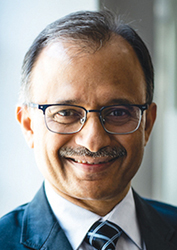
The Tatas have a legacy of nation-building stretching over 150 years and are widely considered to be an exemplar of business at its best. Harish Bhat (pictured), a Tata veteran and currently the brand custodian of Tata Sons who gave us the very readable Tatalog now presents #Tata Stories, a collection of little known tales of individuals, events and places from the Tata Group that have shaped both the Group and the India of today. A sequel to Tatalog, which elaborated on how the company emerged victorious from various challenges, this new collection offers tales of individuals, events and places from the Tata Group. This is not a book about strategy or business triumphs but about the humanness that has been such an essential part of the Tata ethos.
 There is no historic continuity in the stories; they are arranged in a delightfully random manner but are all bound together, in the words of the author, "by the same distinctive Tata glue.” These 40 stories, the author tells us, were ones which appealed most to his imagination based on his current knowledge.
Many of the stories are well-known to most Parsis but there are a few which many would not be familiar with. Among them are the role played by Sir Ratan Tata in the excavation of the ancient city of Pataliputra. For this, Jamsetji’s younger son agreed to provide funds to the tune of Rs 20,000 a year for an unlimited period of time. The excavations were led by the American archaeologist D. B. Spooner whose most important discovery was the location of Emperor Ashok’s 100-column throne room.
The chapter on Dr John Matthai is also important because it rescues a distinguished economist and leader from collective amnesia. Matthai was a director of the Tata Group for many years and a close associate of J. R. D. Tata. India’s first railways and transport minister, Matthai also served as India’s finance minister. The first non-Parsi to serve as chairman of the Sir Dorabji Tata Trust "Honest John” also served as chairman of the State Bank of India and the first president of the National Council of Applied Economic Research. Matthai described his years in the Tata Group as the best part of his life.
 Another endearing anecdote is about how astronaut Kalpana Chawla carried an old photograph of J. R. D.’s inaugural mail flight on her first mission into space. She had always admired the aviator whose pioneering effort had captured her imagination.
Written by one of their longest-serving employees, the book is couched in glowing terms and is saccharine in flavor. But Bhat’s style is lucid and very readable. As he says, "Perhaps the best reason to lose yourself amongst all these stories is the magic that they can create in your mind and heart. The magic of emotions that stir your heart, of a penny that suddenly drops in your mind. We seek some magic in our lives, don’t we, and that’s what beautiful stories are all about.”
BAKHTIAR DADABHOY
Dadabhoy is a Bombay based bureaucrat and author.