Piles of neatly stacked color coordinated application forms were an indication of the quantum leap in charitable work undertaken by The Bandra Parsi Convalescent Home (BPCH) which has emerged among the community’s largest charitable organizations. The white ones denoted applications for financial help under relief of poverty, yellow for medical reimbursement and green for those in need of educational assistance.
Monetization of its one-acre plot on which stood the dilapidated building where founder Shirinbai Cama had started the sea-facing facility in Bandra in 1903 for overworked women to rest and recuperate with their children had fetched the trust Rs 234 crore (USD 27.95 million). The interest from the investments has resulted in the BPCH extending nearly Rs 24 crore as aid in the last two years. The second sea-facing convalescent home, at a walking distance of five to 10 minutes from BPCH, was established by Shirinbai nearly three decades later to provide similar opportunities for men and boys. This institution continues to function as a convalescent home for the community.
"The trustees meet two to four times a month to decide on the amount to be sanctioned to each applicant,” stated managing trustee Sam Choksey when interacting with Parsiana representatives in the boardroom at The Shirinbai Cama Convalescent Home for Poor Parsi Men and Boys. The operations of both the trusts, BPCH and the Shirinbai Cama Convalescent Home, come under the purview of the same trustees: Choksey, Bomy Dabhoiwala, Farrokh Kavarana, Farokh Banatwalla, Xerrxes Master and Zerick Dastur. The two trusts continue to function independently, one focusing on charity and the other on convalescence.
In the last financial year ended March 2024, BPCH extended Rs 13.25 crore aid to 1,572 Parsi/Irani Zoroastrians plus 22 community institutions all over India as financial aid and reimbursement of medical and education expenses. This was a 15% increase over the preceding year’s total of Rs 10.65 crore when 1,335 individuals were helped with Rs 7.91 crore, and 32 institutions with Rs 2.73 crore.
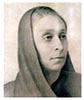
Top: Shirinbai Cama; above: convalescent home founded by her
Photo: Laila Bacha
The paperwork for BPCH having increased considerably in the last two years, an administrative team, headed by the chief executive officer Phiroze Tarapore with his managers, assistants and support staff, ensures that financial help is continuously extended and funds generated to perpetuate Shirinbai’s dream to see the disadvantaged lead a healthy and honorable life. On the day of Parsiana’s visit on June 20, 2024, manager Firdosh Bhamgara was interacting with a father-son duo, checking the documents they had brought for verification. On a parting note he advised them to apply to other trusts too.
Giving to the deserving was the credo guiding the manifold charitable activities of Shirinbai and it is the same principle adopted by the trustees of BPCH. As per the trust requirements, an applicant has to first send a letter specifying the reason why financial help is sought. Letters have been received from nonagenarians as also a young chasniwalla in his late teens. If the appeal seems deserving, the trustees issue a five-page form seeking to ascertain the financial condition of the applicant’s family. "Except in a few rare cases, assistance is not repeated to the beneficiaries in the same year,” clarified Tarapore. The trust’s aim is "to see that the beneficiaries do not become dependent on one charity.”
In the year ending March 2024, towards relief of poverty the trust sanctioned financial aid of Rs 5.76 crore to 956 individuals. On an average the trust receives 120 applications every month under this category. Most of these are from seniors or super seniors. Those qualifying for help may include widows, the infirm or individuals suffering from some disability.
An almost equal sum was sanctioned as reimbursement towards medical and educational expenses. Towards medical expenses, Rs 3.29 crore was paid to 342 individuals. "This is by way of reimbursement; not advance payment although there have been occasions when the hospital is paid directly to take care of a patient,” specified Choksey. Medical reimbursement is sanctioned "not only to the poor but even to those who fall in the category of deserving” for such unplanned expenses may wipe out a family’s savings, stated co-trustee Dabhoiwala. Reimbursement for education expenses, amounting to Rs 2.30 crore, helped 274 students. While most of the grants are for studies within India, a few do seek aid to support their overseas studies.
The total of Rs 24 crore extended by BPCH in two years corresponds to a similar amount disbursed by The WZO (World Zoroastrian Organisation) Trust Funds (WZOTF) in the 12 months ending March 2024. Since not all community/family trusts that aid Parsis share their financial figures, there is no knowing which renders maximum help or which has the highest corpus. For WZOTF, 80% of their funds come from overseas, revealed managing trustee Dinshaw Tamboly. "Poverty in the community is increasing because the dependency ratio (calculated as a percent of non-earning to earning members in a family) is rising,” he reminded. It is inevitable when the community numbers keep shrinking and seniors constitute the largest segment of the population.
Dilapidated structures that once served as The Bandra Parsi Convalescent Home
From l: Sam Choksey, Bomy Dabhoiwala
Photos: Laila Bacha, Farrokh Kavarana,
Farokh Banatwalla, Xerrxes Master, Zerick Dastur;
above: Phiroze Tarapore Photo: Laila Bacha
Since BPCH is exclusively for Parsi/Irani Zoroastrians, to ascertain the genuineness of applicants, the trust occasionally seeks the inputs of others active in community welfare like Tamboly or the Liaison Committee, an arm of the Bombay Parsi Punchayet. With the Punchayet’s resources drying up, in the financial year ended March 2023 their spend on "other charitable objects” had fallen from Rs 3.59 crore in 2021-2022 to Rs 1.38 crore. Out of a total income of Rs 43.34 crore in 2022-2023, Rs 3.38 crore was spent on maintaining Doongerwadi, Rs 2.17 crore on medical aid and Rs 3.71 crore on education.
Government imposed mandatory bureaucratic procedures make it laborious for charities to operate in India. "We have to learn to live and work with them,” stated Choksey. Thus when BPCH extends aid to institutions, every beneficiary trust is expected to issue a utilization certificate signed by their majority trustees/chartered accountant/statutory auditors specifying the names of Zoroastrian individuals to whom the donation was given.
Even though many community institutions continue to face problems of funding, protecting and maintaining trust properties, the BPCH trustees succeeded in overcoming opposition and completed the sale transaction with Rustomjee Builders, while retaining its rights on 12,000 sq ft of the one-acre plot. Five years ago, the then trustees had issued a joint statement: "Holding on to a property at any cost with all its liabilities and encumbrances is not in the best interests of the trust. The trustees collectively thought it prudent to put the property for sale and use the proceeds to build up a larger corpus from which we can help many more of the less fortunate (see "Can do so much more,” Events and Personalities, Parsiana, August 7-20, 2019).”
Shernaz Bhamgara (l) performs birthday rituals for 95-year-old Rati Bhamgara (center)
Top: dining room at Cama Convalescent Home;
above: inmates with Shernaz Bhamgara (3rd from l) on the verandah
Photo: Laila Bacha
Idyllic staycation
Meanwhile at the Shirinbai Cama Convalescent Home, 95-year-old Rati Bhamgara from the Petit Widows Chawl at Fort and 94-year-old Meheroo Khambatta of Parel Tank Road were among the ladies seen relaxing on the sea-facing verandah when Parsiana visited the premises. As soon as they saw Choksey they rose from their seats as a mark of respect and gratitude for permitting them this free, idyllic staycation in a Parsi ambience.
"Kaibi complaints hoi tau evanné boli dev (if there are any complaints express them to the Parsiana representative),” he jested. Of course, there were none. Their main request for an extension of stay was voiced on their behalf by the genial manager Shernaz Bhamgara. "Aapré joisu (we will see),” Choksey gave a non-committal reply. "To me, this place is like a second home. I come here three to four times a week,” smiled Choksey.
On the ground floor is a dormitory with 28 beds with a curtain partitioning the men’s section from the women’s where free boarding and lodging is offered to Zoroastrians from low income families. The first floor has three private rooms with two beds each and one room with three beds for which occupants are expected to make a nominal donation.
In addition to celebration of special days in the Zoroastrian calendar, if birthdays coincide during their stay in the Convalescent Home, sagan ni tili, sev/ravo are organized to make the inmate feel special. Besides books, indoor games and a television, the inmates have the option of joining in a yoga session conducted every week. A medical practitioner also visits regularly and, in case of need, free medicines are provided to the inmates. Last year a day trip was organized to Udvada for the convenience of inmates who had not been able to visit the Iranshah for decades. "During Bahman mah the inmates request that no non-vegetarian food be served,” stated Choksey.
On an average there are 10-15 occupants residing in the Convalescent Home but vacation months and certain weekends are fully booked since the facility is made available for youngsters visiting Bombay for the All Parsis Annual Athletic Meet and for the ZoChild event. The premises have been particularly popular with some Zoroastrian families who have not only been regular visitors over the years but have had three generations enjoy the care and comfort here!