A Short Account of the Karkaria Family with Full Genealogical Tables by Cavasji Pestonji Karkaria. Translated and edited in 2014 by Ervad (Dr) Ramiyar P. Karanjia and Havovi R. Karanjia. Printed for private circulation from family funds. Pp: 150. Price: Not mentioned.
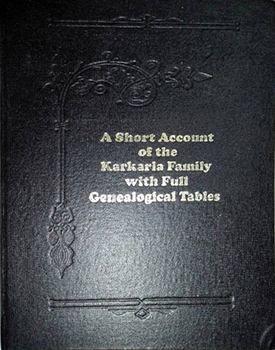
Only a few families among the Parsis have published their history in the form of a book. Although not very comprehensive, A Short Account of the Karkaria Family with Full Genealogical Tables is no doubt a noteworthy addition to such family compendiums.
The strength of the book, translated into English by Havovi and Ervad (Dr) Ramiyar Karanjia, lies in presenting the ecclesiastical history of the Parsis. The founder of the Karkaria family, Meherji Chandna (1601-1681) was appointed a hereditary panthaky in 1672 by the behdins of Navsari. Over a period of time this popular athornan family engaged in various priestly activities in Navsari and Bombay.
To preserve and propagate the essence of the Zoroastrian faith, some members of the Karkaria family studied Avestan scripts, Pahlavi and Zend literature. The author Cavasji Pestonji Karkaria highlights the contribution of Ervad Darab Ervad Bahman Karkaria (1789-1853) alias Dadabhai who came to Bombay along with his brother Edulji to run his panthak there. Having learnt Zend, Pahlavi, Persian and Avestan, Dadabhai wrote books like Fravashi and Bajdharna and Afrins in Zend in 1833. He also translated several well-known Avestan, Pahlavi and Farsi books, like volumes of the Vendidad plus books on yazashne, baj dharna, nirangs and afrins into Gujarati that helped convey the meaning of the prayers.
The author also offers a perspective on the priestly activities in Navsari and Bombay when the family settled in these places in the latter part of the 18th century. Members of the Karkaria family served as panthakies and played a vital role in the consecration of fire temples in Bombay as also the one constructed by Jamsetjee Jejeebhoy in Navsari. The book is dedicated to Sir Jamsetjee Jejeebhoy, first Baronet.
Ervad (Dr) Ramiyar (left) and Havovi Karanjia
The founder’s sons, Ervads Noshirwan and Kuka played a prominent part in the great religious schism of 1686-1687 that separated the laity from the clergy in Navsari and created two groups: the Bhagarsath and the associates of Minocheher. The book contains some interesting information on this important episode and incorporates several original documents which have been carried in facsimile.
Although many family members were primarily engaged in priestly activities, few prominent family members ventured into business or enterprise. Among those who contributed to the urbanization of Bombay was Pestanji Behramji Karkaria (1841-1890), a well-known contractor who built and managed the big Parel based G.I.P. (Great Indian Peninsular) railways workshop and many related structures. Following this, he started a business with a British engineer, Mr Moor and named it M/s Pestonji and Moor. They constructed many factories, buildings and bungalows in Virar, Akola and Shegam. He also engaged in the construction of the Victoria Docks from 1884-1887.
Another prominent member of the family is Osta Rustomji Ervad Pestonji Karkaria. A prolific writer he has written books on Indian history and politics, on topics like Shivaji, Akbar, besides essays on English history and the Hindi press, during the reign of Queen Victoria.
A noteworthy aspect of the book is its lucid presentation of genealogical tables. The initial part of this genealogy has been taken from a book on the Geneology of the Bhagarsath group and the names of the deceased (namgharan) listed therein. The latter part of this book is culled from Pahlan Ana (Kaka Pahlan) and the Karkaria family’s Disha Pothi (list of the deceased /death registry). Names which were originally missed out have now been added or rectified if reported inaccurately in Parsi Prakash (volumes containing historical records, mainly from newspaper reports).
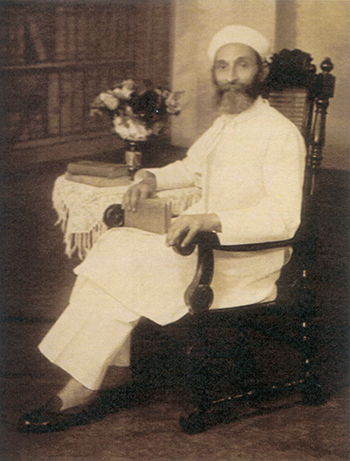
Methodologically, this book needs to be neatly structured and contextualized in the light of change and continuity. A variety of sources still need to be tapped to gain further information on this family. Women have been completely left out from this family lineage and so has their contribution. A few photographs of the eminent priests and personalities could have been published in this book. Although the sources haven’t been mentioned in the form of a bibliography, the inclusion of glossaries and addendums have undoubtedly enhanced the prestige of this book which should be highly useful to future researchers.
Dr LOUIZA RODRIGUES