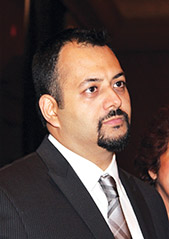
 "Thinking with Zoroastrianism in the 21st Century," was the subject of the Khorshed F. Jungalwala Lecture delivered by Dr Yuhan Sohrab-Dinshaw Vevaina at the XVI North American Zarathushti Congress in New York in August 2012. With the permission of the lecturer and FEZANA Journal that published the contents in its Fall 2012 issue, Parsiana is reprinting this paper that addresses the issues of conservatism and changes that have been embraced by modern Zoroastrians in their march forward.
To find an amicable solution to divisive socioreligious issues like interfaith marriages and disposal of the dead, members of the community need to study the past for only then would they be able to appreciate the present and prepare for the future, believes Vevaina. Till recently scholars have failed to provide the community with readable books and attractive websites, making members depend on inaccurate, misleading information in circulation, regretted Vevaina in the first instalment that was carried in our March 7 issue. In this second instalment he cites historical instances of interfaith marriages, conversion and sharing of religious duties between males and females during different eras to show the prevalent diversity. The final instalment will address the distinct practices amongst the Zoroastrians of India and the Zarathushtis of Iran and the different modes of disposing the dead to reinforce that Zoroastrianism is primarily a religion that has historically experienced a great deal of diversity in terms of both beliefs and practices.
This lecture series was instituted by the Federation of Zoroastrian Associations of North America (FEZANA) to honor the memory of Jungalwala who was a member of the FEZANA Historic Research and Preservation Committee, a director of the Zoroastrian Education and Research Society and the chair of the FEZANA Publication Committee. Active in organizing conferences and seminars, Khorshed and her husband Dr Firoze were founders of the Zoroastrian Association of the Greater Boston Area (ZAGBA). The Jungalwala Lecture Series is administered by the FEZANA Education, Scholarship and Conference Committee chaired by Dr Lovji Cama.
• • •
I would now like to showcase for you what a professional scholar focusing on the history of Zoroastrianism can add to some of the hot button present-day issues and debates. What I hope to show the younger people in the community is that there are so many varied and diverse ways to understand and appreciate our heritage than what they typically read and hear from the older, more ideological and dogmatic crowd who are, in many cases, ill-equipped or unwilling to provide a rich and nuanced view of historical Zoroastrianism. Instead, they inevitably invent a "usable past," cherry-picking facts and manipulating historical data to suit one rigidly ideological position or its opposite neither of which does justice to the complex historical developments that Zoroastrian communities have experienced over four millennia.
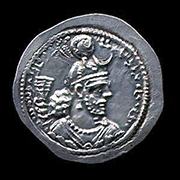 Let me now turn to some of our favorite controversies. Increasing numbers of intermarriages strike many as the most profound change for Zoroastrian identities and I often hear from conservatives that it is unprecedented in history. It might interest you to know that the Sasanian kings intermarried with both Christians and Jews. So, for example, Yazdegird I, the 13th Sasanian monarch who reigned from 399-421 AD, married the daughter of the Exilarch, the leader of the Jewish community in the Sasanian Empire. In a geographical text in Middle Persian or Pahlavi called the Shahrestānīhā ī Erānshahr which lists the various cities of the Iranian world and their founders, it states that: "The city of Susa and Shushtar were built by Shishinduxt, the wife of Yazdegird, the son of Shapur, since she was the daughter of Resh Galut, the king of the Jews and also was the mother of Behram Gor."
The name Shishinduxt meaning "daughter of Shishin" is probably a Persianized pronunciation of the common Jewish girl’s name Shushan or "lily." Since Jews practice matrilinearity they probably saw Shishinduxt’s son, Behram V commonly known as Behram Gor (r. 421-438 ACE), as a crypto-Jew, just like many Parsis claim that the late Prime Minister Rajiv Gandhi was a crypto-Parsi due to having a Parsi father, Feroze Gandhi, himself a member of Indian Parliament, the Lok Sabha. Though, unsurprisingly, we Parsis don’t tend to claim Rajiv’s brother Sanjay Gandhi and his forced sterilization campaigns; that no doubt being the Indira effect! I do want to add that before liberals and progressives get too excited, it is worth mentioning a couple of caveats. One of the most striking aspects of Sasanian diplomacy is that they seem to have been willing to marry elite women from other religious traditions, presumably as a form of kinship diplomacy, thus ensuring the loyalties of these two important minority communities. Yet they didn’t seem to have been willing to marry their daughters to other groups. This suggests some form of patriarchy or patrilineality that typically male, modern conservatives especially in India, now seem so invested in protecting even when every out-marriage by a Parsi man means one less potential partner for a Parsi woman who might then be forced to marry out, thus penalizing women at both a social and a demographic level.
Well ladies, I don’t wish to dwell exclusively on the patriarchal side of Zoroastrianism. I would like to share a personal anecdote from 15 years ago. In the fall of 1997 I attended the 1st Avestan Conference in Framingham, Massachusetts and Dastur (Dr) Firoze Kotwal spoke at length about why women could not possibly be priests. His primary reason being that women’s menses render them ritually impure for almost a third of every month. An old lady thrust her chair back, stood up and loudly declared: "I’m in menopause, where’s the problem?" Dastur Kotwal’s jaw dropped and the liberals and progressives in the audience burst out in laughter and clapping! Gender equality is often claimed by many progressives as an essential part of Zoroastrian belief structures going back to the Gathas but then we are faced by the long history of an exclusively male, hereditary priesthood. So what are we to make of all this? In Chapter 22 (22.1-3, 5) of an Avestan text with its Pahlavi translation and commentary called the Nērangestān, edited and translated by Dastur Kotwal himself and Philip G. Kreyenbroek (University of Göttingen, Germany), we actually find a debate between various Zoroastrian priestly authorities on whether women can publicly perform the prayers and rituals — a classic battle between the liberals and conservatives of those days! The Avestan text is found in italics and its later Pahlavi translation is found below it with its glosses (i.e. added explanations of a word or phrase not in the original) in square brackets:
22.1) With the performance of the office of zaotar by any one of those who are pious, a person satisfied the Ratus,
Any man of the pious ones may authorisedly perform the office of zōt.
22.2) Even (with) that of a woman or a minor child,
And also a woman [at her own (fire)], and a child [at a public (fire)].
22.3) if (s)he knows the end and beginnings of the sections.
If [that is], (s)he is aware of the cutting-off [at the end] of the sections of the liturgy, and their taking-up [beginning], …
22.5) [ … Ādurfarnbāg-Narsē said: "except if a woman has recited Avestan on an occasion when it is allowed, it is not permissible (for her to recite Avestan)."
(*Wehdād) the son of Ādur-Ohrmazd said: "except if she recites when it is not allowed, it is permissible."
Gōguš(n)asp said: "if she recites those Avestan (texts) which are not allowed, then it is ‘chattering’." That is, he explains this as follows: "the propitiation of the sun should not be performed and they should not pray the Niyāyišn to the moon, and they should not recite the words belonging to those who hold the khūb, and they have no fee-paying ‘clients,’ and they have no precedence (among the congregation)."]
We can clearly see here that the role of women as public ritual performers was not proscribed or forbidden in this particular passage in the Avestan original but it is in the later Pahlavi translation where we can see the attempts of the Zarathushti priestly scholars of Late Antiquity to simultaneously acknowledge the diversity of then contemporary legal rulings in Pahlavi and yet attempt to uphold the centuries old privileges of the male hereditary priesthood by interpreting the Avestan texts in a far more restricted manner. The reason I cite these examples is to demonstrate just how much more diverse pre-modern Zoroastrianism was than is often acknowledged today. I also want to emphasize that there has been a long and distinguished intellectual tradition amongst the Zoroastrian priesthood who were the great thinkers of their times and who continually negotiated the tensions between keeping Zoroastrianism relevant for the people of their era by adapting the faith to current circumstances all the while affirming the time-honored and long-cherished values and beliefs of the past, just like what we are all experiencing and debating now! In my opinion, our current demographic predicaments tend to make us a little schizophrenic as a community but it is useful to have the perspective of the past to realize that these tensions are not unprecedented and that the Zoroastrian world did not come to an end when the values and practices of different social and political contingents differed or were transformed and evolved through the centuries.
As for the equally controversial topic of conversions, we find numerous references to how damaged the faith had become with the Arab conquests of Iran and the steady conversions to Islam in the following centuries. During the first four centuries or so after the fall of the Sasanians in 651 CE we find rare but fascinating glimpses of the social realities experienced by Zoroastrian communities who were now becoming a demographic minority after a millennium of having the support of their imperial overlords — the Achaemenids (559-330 BC), the Parthians (247 BC-224 CE), and the Sasanians (224-651 CE). There is a common belief that all Zoroastrians were treated as second-class citizens under Islamic law and yet we find references in the late 9th or early 10th century CE Pahlavi text, the Rivāyat ī Emed ī Ašwahištān (Question 26), to both apostasy, i.e. converting out, which was common but also a mention of the possibility of Muslims converting in:
"(Assume) a Zarathushti has become a Moslem. Later he is regretful and repents and performs some meritorious deed. After his passing away, should the ceremonial rite for veneration of the soul be offered to him or not? If he is born a Moslem (but) performs all the benefactions and becomes a Zoroastrian (pad weh dēn ēstēd), what would be the religious declaration? Should the charity donation (ahlawdād) for the priest be given or not?"
The answer provided is equally revelatory: "Further, he whose being a Moslem is through heritage and not by his own deliberate confession, as long as through noble behavior he avoids the sins which are recognized in Zoroastrianism, and performs benefactions that are advocated in Zoroastrianism within his possibilities, it would be proper to give (on his behalf) the charity donation of the priests. It would not be a sin."
In the later medieval Persian Rivāyats or correspondences between the Parsi priests and their Iranian counterparts, we also find it stated by Kamdin Shapur: "A young (female) prisoner of war, bought (of another), if she has not menstruated (yet), should be fed for three nights in a public place and then her head should be washed with the bareshnum. If she has menstruated (already), she should be fed for 41 days in a public space, and then her head washed with bareshnum and then she should be married."
We also have a fascinating set of questions posed by Zoroastrian jurists about the sins committed by converts to Zoroastrianism. What was deeply concerning to them was not whether Zoroastrians could or should convert but rather they focused on the question of whether or not a person’s prior sins in their pre-Zoroastrian lives would count against them when they died and were being judged. Alberto Cantera at the University of Salamanca in Spain, the world’s leading expert on the Vendidad and its Pahlavi translation, has conclusively demonstrated that in the earlier Avestan version of the Vendidad every past sin or crime committed is remitted or pardoned when a person converts to Zoroastrianism. This was presumably done initially to attract converts in an earlier era when conversion was less dangerous. We do however find it stated that there are certain non-expiable — i.e. unpardonable (Av. anāpərəθa) — crimes such as narō.vaēpiia- "homosexuality" (Vd.1.11); nasuspaiia- lit. "throwing a corpse," i.e. inhumation or burial; and nasuspaciia- lit. "cooking a corpse," i.e. cremation. In Vendidad 3.40 and 8.28 we find it stated:
"‘Under which conditions (is it) so?’ ‘If (the sinner) is one who professes the Mazdayasnian religion or is instructed in the Mazdayasnian religion, (then it is so).
"But (if the sinner) is one who does not profess the Mazdayasnian religion or is not instructed in the Mazdayasnian religion, then (the religion) remits (the penalty) to those who convert to the Mazdayasnian religion and in the future do not do any actions that do not fit the ratu."
Meaning, Zoroastrians who commit these types of non-expiable or unpardonable crimes are not forgiven. But, crucially, the Vendidad then asserts that recent converts to Zoroastrianism were held to a less stringent set of standards, at least initially. This was presumably because as new converts they were excused for their ignorance of Zoroastrian moral codes, which might have been unfamiliar to them early on. The very act of their conversion is treated as an expiation or forgiveness of their old sins. You convert, your past sins committed while you were in your old religious community are not held against you!
This different standard between older and newer believers clearly bothered the Zoroastrian legal authorities in the Sasanian and early Islamic periods, many centuries later, and so they reinterpreted the same passages in their Pahlavi translations and commentaries of the Vendidad in a slightly different vein, focusing on the intentionality of the person committing the sin, old believer or new convert. As Cantera has shown, they put two conditions on the remission of non-expiable sins according to Zoroastrian law, committed prior to conversion: the awareness of having committed a sin; and the possibility of confession with repentance. So, in the Pahlavi Vendidad, the actions prior to conversion have to be adjudicated according to the previous legal system — presumably Judaism, Christianity, Manicheism, Islam, etc — but the actions that specifically are faults in common in both legal systems would get punished according to the Zoroastrian legal system even if the person had already been punished for the same crime in their old tradition. Double jeopardy if there ever was one!
As Cantera points out, many of the Sasanian and early Islamic era jurists were troubled by the possibility of new converts getting a free pass for violent crimes against third parties. The issue was significantly complicated by apostates, that is, those who left Zoroastrianism, typically for Islam, and who then wished to become Zoroastrian again! In general, people converted back in the early years of Islam in order to claim inheritances that were not available to them at the time of their conversion to Islam. Manuschihr, the High Priest of the Zoroastrians in Kerman in the 9th century, states in his Pahlavi work, the Dādestān ī Dēnīg (40.6): "As it (is said) in the beneficent law of the yazdān: ‘The Good Religion of the yazdān and the superior of the Mazdeans has decreed the atonement so that the atonement for this sin for which usually there is spaiiēiti expiation does not apply for him."
For Manuschihr, living under the Muslims and seeing people out-convert at an alarming rate made him far less charitable with regard to those who changed their minds and repented and wished to return. All this talk of sin might strike many of you as quite Catholic but it is important to remember that in a deeply moralizing system of beliefs like Zoroastrianism, one needs to know exactly what counts as a "good thought, word or deed," and just as crucially, what counts as a "bad thought, word, or deed" since the spiritual penalties after one dies are quite severe and rather long-lasting.
The point I am trying to make with all these examples is that many of the most deeply emotional identity issues related to boundary maintenance, that is — keeping people out or allowing them in or preventing them from leaving or pushing them out — have been with us for more than a millennium and quite frankly I find that the old Zoroastrians were far more principled about how they thought and discussed these issues than most of us tend to be these days. In my opinion, we moderns can learn a lot from these older Zoroastrian debates for understanding the particular era in question, for appreciating how we came to be as we are now, and even perhaps for finding solutions for our continued survival in their debates and interpretations of the Avesta. To be concluded
Dr Yuhan Sohrab-Dinshaw Vevina is currently a Lecturer in the Department of Religious Studies at Stanford University. He received his MA in 2003 and his PhD in 2007 from the Department of Near Eastern Languages and Civilizations at Harvard University where he served as a Postdoctoral Fellow in the Undergraduate Core Curriculum and as the Lecturer on Old Iranian from 2007-2009. He was a Fellow of the National Endowment for the Humanities from the National Council for the Humanities in 2010. He teaches a number of courses related to ancient and late antique Iran.