Residents from the twin cities relate their ties to the Khan Bahadur
Edulji Sohrabji Chenai Anjuman Dar-e-Meher on its centenary
Beyniaz Edulji
The original centenary celebrations planned for the recently renovated Khan Bahadur Edulji Sohrabji Chenai Anjuman Dar-e-Meher in Secunderabad included a grand jashan, a gahanbar, a celebrity or two for an afternoon event and the release of a commemorative souvenir and brochure. The Covid-19 restrictions, however, altered the July 14, 2020 program. With the number of attendees restricted to less than 20, the customary jashan prayers took place with only some committee members of the Parsi Zoroastrian Anjuman of Secunderabad and Hyderabad (PZASH), their spouses and a few visitors present in the agiary.
Roomie Vakil, managing committee member noted, "Our entire office staff, gardeners and daily wagers were given a token of appreciation for their services by our president Gulbanoo Yadgar Chenoy after the jashan. Utmost care was taken to maintain a distance of six feet between each person attending the jashan.” Saam Chinoy, another managing committee member commented, "All our plans for a grand celebration befitting the occasion have been put on hold but we hope to have these events later.”
Trustee Khoty Chenai has for decades looked after the flowers used during the muktads, the blooms (both their color and variety) being personally selected and ordered by her. She said, "My team of volunteers and I go over at 2 p.m. during the muktads to tend to the vases.” The result has been breathtaking and exquisite, year after year. She fondly recollects the good old days when her grandfather’s cottage was located opposite the Dar-e-Meher. She has visited the fire temple frequently from early childhood and always helped with the agiary’s work.
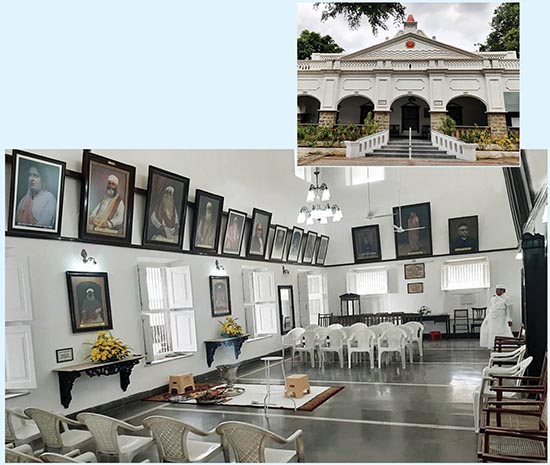
Interiors of Secunderabad’s Chenai Dar-e-Meher; Photo: Zubin Kapadia; inset: exterior view Photo: Arnaz Bisney
Muktad vase Photos: Zubin Kapadia
"Attending the jashan of our Dar-e-Meher on its centenary day, was a very serene experience, evoking so many memories. The fact that my late father Naval Vakeel’s birth centenary came soon thereafter, on July 16, made the week even more special for me. I hope we will be able to celebrate the centenary year later when the prevailing pandemic situation normalizes,” said Naushad Vakeel, managing committee member, PZASH.
Trustee Omim Debara noted, "We were planning a natak and wanted to publish and release a new directory but had to cancel these plans.”
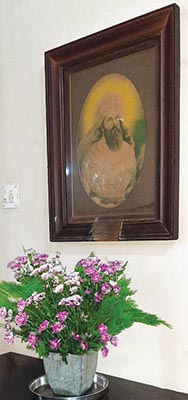
Secunderabad resident Arnaz Bisney prepared a 40-minute video about the agiary and its history titled "Where The Fire Burns Eternally” which she posted on YouTube and which has been well received and viewed. "Just before Navroz and the Covid-19 lockdown, the agiary was being renovated and I clicked photos of the 31 framed portraits of the people who are the minds behind the agiary. The lockdown was soon imposed and it became evident that the much awaited centenary of the Dar-e-Meher would not be celebrated. I felt that such a milestone should not go unnoticed, that it needed to be immortalized. I did extensive research on the 31 community members whose photos I clicked. I met elders from the Chenoy family and the community, spoke to them and sought valuable information. I took the Covid-19 lockdown as an opportunity, rather than an excuse. This video is the collective effort of an entire team.
"I took all the photographs myself, to avoid any copyright issues. Community historian Marzban Giara provided valuable information. Mehernosh Dittia, assisted by Jamien Rao of RPAS Aerial Solutions helped with the drone shots. We managed to contact all the five Vada Dasturs, as well as Ervad (Dr) Ramiyar Karanjia, principal of the Dadar Athornan Institute and Dinshaw Tamboly, chairman of the World Zoroastrian Organisation Trust Fund who sent congratulatory messages to the Anjuman. The cherry on the cake was the voiceover of (Bollywood actor) Boman Irani for the conclusion. Sudarshan Vig did an excellent job of video editing and Akram ul Haq composed the percussive guitar music exclusively for the video. The entire video is a voluntary effort and was done gratis by all team members.” She credited her father Jehangir, mother Hoofrish and brother Shayan for making the project possible. "Being a history lover, I believe that it must be protected and the stories of our forefathers must be told to the present generation. Today, when people walk into the hall where jashans are held they look up with pride at the framed portraits. I feel I have given life to these photos which otherwise looked down silently at us.”
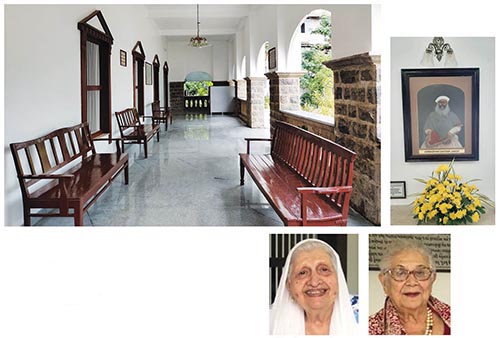
Clockwise from top l: Fire temple verandah Photo: Arnaz Bisney;
floral decoration Photo: Zubin Kapadia; Khoty Chenai; Gulbanoo Chenoy;
Tending the temples
The tiny, well knit Parsi Zoroastrian community of around 1,000 comprising 430 families, has two fire temples in Secunderabad and one in Hyderabad. The oldest fire temple, the Viccajee Meherji and Seth Pestonji Meherji Dar-e-Meher, located at 128,
Mahatma Gandhi Road, Secunderabad was built in 1839. The foundation for the Bai Maneckji Nusserwanji Chenoy Dar-e-Meher, at Tilak Road, Hyderabad was laid in 1904.
Seth Jamshedji Edulji Chenoy (son of Pirojbai and Khan Bahadur Edulji Sohrabji Chenoy), along with his brothers, built the Khan Bahadur Edulji Sohrabji Chenai Anjuman Dar-e-Meher in memory of their late father. It was consecrated by Dastur Khurshed Dastoor Behram Jamasp Asa on August 8, 1920, roz Ardibehest, mah Asfandarmad, Yazdegirdi 1289, during the administration of Nizam Mir Osman Ali Khan under the reign of the British monarach King George V.
Ervads Kaikhushroo Sidhwa, Noshirwan Dastoor and Peshotan Patel served as panthakis. Ervad Darabsha Bhathela was the head priest from 1957 followed in 1991 by Ervad Aspi Patel. "It has been my privilege to serve our atash padshah for 30 years, first as a priest and then as panthaky since the last 19 years,” Patel said. "What I enjoy best is sharing knowledge with young children, teaching them the prayers and their meanings and performing navjotes.” He is currently assisted by Ervads Hoshang Karanjia and Minocheher Karanjia. Several other priests and chashnidaans (assistants) have served the holy fire over the last century.
The community in the twin cities, though minuscule, has played a prominent role in the city’s history. One of the most prominent families is the Chenoys. Gulbanoo, president of PZASH tells us that when the Hyderabad Contingent was transferred from the old cantonment of Jalna to Bolarum, Sohrabji Pestonjee Chenoy, son of Pestonjee Maneckjee Chenoy, along with 14 other Parsi gents came with them in 1803 and later became notable army shroffs or bankers of the said contingent. The history of the Chenoy family has been closely entwined with that of Hyderabad State for over 150 years. Several generations of the Chenoy family have occupied key positions in the courts of the Nizams and later continued to excel in medicine, finance, private service, social service and so on.
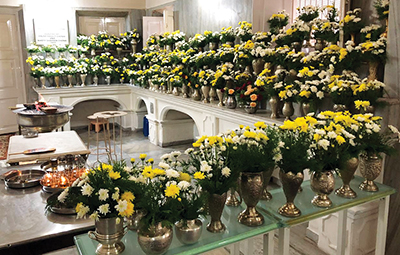
View of a previous muktad Photo: Zubin Kapadia
"It was my grandfather (given the title of Nawab Sohrab Navaz Jung) and other members of the Chenoy family who built this agiary on land donated by my uncle Shapurji Chenai,” Gulbanoo noted. "The cost of the agiary at that time was 28,500 Hali Sikka (116 Hali rupees equalled British Rs 100).” The agiary was designed by a young engineer, Ferozeshah Aibara, who had just returned from England, and was constructed by Burjorji Aibara, recalled the president. It was run by members of the Chenoy family until 1942 when the Anjuman association was formed comprising six members of the Chenoy family along with D. D. Italia and Tehmurus Parakh who was the then secretary,” she added. "Now we have five trustees and seven members of the managing committee.”
The present managing committee of PZASH which tends to the agiary is headed by Gulbanoo, trustees Khoty Chenai, Jehangir Bisney, Debara and Mehernosh Chenoy. The managing committee comprises Kerfegar Antia, Roomie Vakil, Kersi Patel, Hormusji Chinoy, Naushad Vakeel, Saam and Nadir Chinoy.
The Anjuman manages 40 flats for Parsis in the Agiary’s compound, all given at nominal rents. The premises also have a recently upgraded ruvan bungli for the departed. Jehangir informs us that "all three fire temples are very well looked after by their trusts and the community at large.”