The intricacies of the fifth century Sih-rozag text written around 2,500 years ago comprises 33 paragraphs, 30 of which are "dedicated to the entities after whom the days of the Zoroastrian month are named,” explained author and associate professor of history Prof Enrico Raffaelli (pictured) of the University of Toronto at a talk titled, "The Sih-rozag: An Avestan prayer-text for the 30 days of the month” on December 17, 2019 at The K. R. Cama Oriental Institute (KRCOI). The remaining three paras are named 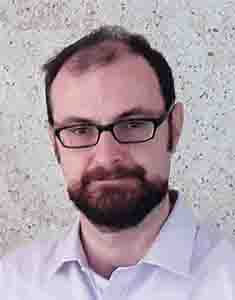 after "three spirits,” Apam Napat, Haoma and Dahma Afriti, he clarified. Thirty-three was considered "an important (auspicious) number in Zoroastrian texts.” The text has two versions (Little Sih-rozag and Great Sih-rozag), identical in content but different in length and word formation.
The 33 paragraphs invoke all the main entities and many of the secondary entities venerated in the Avesta. It can be assumed that the Sih-rozag was composed for the purpose of providing protection to the soul of the deceased. In fact, invoking all those entities provided the maximum possible protection to the soul of the deceased, wrote Raffaelli in his book The Sih-rozag in Zoroastrianism, A Textual and Historico Analysis.
The Sih-rozag "was recited by not only priests but also lay people,” he explained. Little known now, the invocation was popular about 1,000 years ago. The prayer is "part of manuscripts that contain other texts,” said Raffaelli. His doctoral dissertation in 2004 was on the Sih-rozag whose manuscripts he examined at the KRCOI and "various institutions in Paris.” The text is written in Avesta, "a dying language,” which many could not speak, let alone write "a long and structured text.” A Pahlavi translation was made by Sasanian priests. The academician noted the text was originally composed to be recited during funerary rituals, and in time it came to be used in other rituals as well. Zoroastrian Studies founder Khojeste Mistree, who was present in the audience, said the Sih-rozag is still recited in fire temples.
As the academician’s curriculum vitae (CV) mentioned that his first book The Horoscope of the World dealt with astrology in Zoroastrianism and allied matters, he was asked whether the Sih-rozag had any bearing on astrology. He replied in the negative but noted certain days were considered more promising than others. His CV notes his course in the history of Zoroastrianism comprises "the largest class on Zoroastrianism in any North American or European university.” But Raffaelli mentioned the number of students enrolling had been declining.