With his penetrating eyes, goatee, keen intellect and cheerful disposition, Prof Kaikhosrov Irani was among the best known faces and names recognized and respected by the Zoroastrian community in North America and globally. His long-standing association with the Zoroastrian Association of Greater New York (ZAGNY), the Federation of Zoroastrian Associations of North America (FEZANA) and the World Zoroastrian Organisation (WZO) inspired architects of these institutions who acknowledged his profound influence on his passing away in New York on June 29, 2017 aged 95.
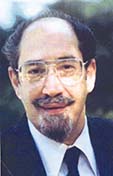
"He was our teacher and advisor and made us think what Zarathushtra really meant by our belief in good thoughts, good words and good deeds. His wisdom and guidance benefited us all. His lectures on Zoroastrianism and philosophy and his books instructed and guided us to be good Zarathushtis. His standing within academia helped with the recognition of the Zarathushti religion in North America,” reminisced ZAGNY founder member Dr Lovji Cama.
In a tribute specially penned for Irani at Parsiana’s behest, Cama wrote: "As a philosopher, one may have expected him to be an ivory tower type. Far from this, he as a true Zoroastrian, involved himself in the life of the community. During 1993-95 Irani served as president of ZAGNY and was on numerous boards of ZAGNY. He arranged seminars and conferences under the ZAGNY umbrella. From the time of the inception of the Arbab Guiv Dar-e-Mehr in New York, Irani conducted classes for adults on the subject of Zoroastrianism. His common sense and ethical approach to problems helped him shed light on many complex problems that arise within the North American Zoroastrian community.
"His knowledge of Zoroastrianism, especially the Gathas, his wit and sense of humor, and his ability to fit the subject of Zoroastrianism in the broader field of philosophy made him an engaging speaker and a great teacher. A person of great honesty and integrity, the professor was dedicated to the teachings of Zarathushtra. He had often trouble reconciling the social practices of Zoroastrianism when they were in conflict with these teachings.
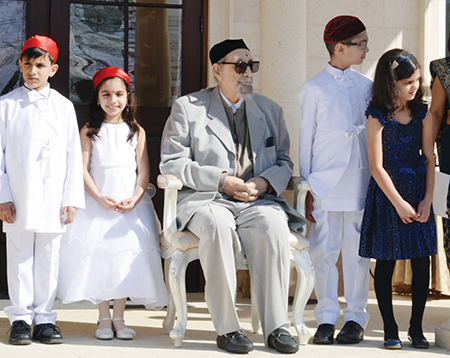
Prof Kaikhosrov Irani (top and above) at the inauguration of the New York Dar-e-Mehr
Irani (top row, left) with scholars at the Gatha Colloquium

"Irani’s academic standing and respect gave him the ability to successfully represent and explain Zoroastrianism convincingly at many interfaith meetings. His connections with the academic world provided the community access to some of the best minds who work in the field of religion and Zoroastrianism in particular.
"Irani arrived in New York in 1947, long before ZAGNY was formed. I first met Irani and his wife Piroja in the 1960s but I really started to know him when he was invited to give a talk on the Gathas, soon after the formation of ZAGNY and before the inauguration of the New Rochelle Dar-e-Mehr. I was immediately struck by his lucid explanations of the teachings in the Gathas, something I had struggled to understand. Since then, my family and I had the privilege of listening to his stories and his philosophy on many rides to and from the Dar-e-Mehr. These informal encounters with Kaikhosrov and his wife Piroja were priceless occasions for us. His logical approach probably came from his scientific background and as a fellow scientist, it resonated with me. My outlook on life and religion were immensely influenced by him.”
Erstwhile president of FEZANA Framroze Patel mentioned, "His influence was so overwhelming that by associating with him you would do what is right. As far as I know, he never dictated his views to others. Even though I prayed Zarathusti prayers every day, I was drifting away from the core message of the prophet. He did not once tell me what I should do or not do to be a righteous individual. A great teacher, he could talk to a five-year-old kid as he could to a scholar colleague. His language skills to explain the Yatha Ahu Vairyo to a young Zarathushti was superlative. Truly he was Ahura Mazda’s helper.”
"His passing away is a deep loss not only to the World Zoroastrian Organisation (WZO) but for the luster he brought upon the community. He joined WZO in December 1982 and subsequently became an international board member in 1984, continuing to serve throughout his lifetime. We had formed a bond at the very first meeting that lasted over the years,” stated WZO founder member Shahpur Captain, giving further insights on how Irani’s scholarship was valued.
"His lectures in London were a regular yearly affair, eagerly awaited by WZO members. With a memory like a sponge, he absorbed and retained all sorts of details on our religion and could easily draw on his retentive memory to deliver brilliant lectures. He had read extensively, starting with his father’s book on Zoroastrianism. His beautiful talks on our religion captivated the audience with his erudition and humor. We always had a question/answer session at the end of each talk and he really showed his professorial skill in answering the questions. The most pleasing aspect about him was his humility.
"It was Kaikhosrov who suggested holding a conference on the Gathas of Zarathushtra. This idea was immediately put into effect by WZO and the First Gatha Colloquium was held in London in 1993 and amongst the galaxy of international scholars who spoke at that Colloquium was Irani. He also arranged the second Gatha Conference in conjunction with ZAGNY/WZO and (independent researcher) Farrokh Vajifdar. His article on Conversion in Zoroastrianism, co-authored with Vajifdar is a must read for all Zoroastrians.
"The trustees of the Bombay Parsi Punchayet (BPP) found Kaikhosrov persuasive in arguments that we had with them to spread the message of WZO. After the meetings, Irani just shook his head in sheer disbelief at the ‘we know best’ attitude of the trustees.”
Yet another WZO stalwart and former BPP trustee Dinshaw Tamboly wrote: "Kaikhosrov was an outstanding human being who touched countless lives, including mine, in the early days of my tryst with community welfare, with his warmth, supremacy of reasoning and intellect. Individuals such as Kaikhosrov are a boon to humanity.”
"The community has probably lost the finest mind we had, sharing his wisdom and knowledge quietly with all those who listened,” stated Toxy Cowasjee in her editorial in Hamazor, Issue 3, 2017.
Born in Bombay, Kaikhosrov was the eldest son of Dinshah Jijibhoy Irani and Banu Mithibai Sethna. He graduated from St Xavier’s College in Bombay and obtained a law degree from Bombay University. He met Piroja who was a fellow clerk in the law firm where they worked.
He went to the United States and worked one summer at the University of Chicago and then at the Princeton Institute of Physics, where he had the opportunity to have many interactions with Albert Einstein. So impressed was Einstein with him that he wrote a letter of recommendation for a teaching position in philosophy at The City College of New York which helped him to obtain the position.
Irani became Emeritus Professor of Philosophy at The City College of New York, after teaching there for 41 years. He was chairman of the department for nine years; director and executive director of the Program for the History and Philosophy of Science; director of the Academy of Humanities and Sciences for 12 years. He retired from teaching at the age of 90, holding a 60-year teaching record. One of the greatest honors was the establishment of the K. D. Irani Chair of Philosophy at The City College of New York in 1999, through an anonymous contribution of $ 2,000,000 (Rs 12.8 crores) by one of his students. As observed a student: "Irani is an amazing professor; knows almost every major figure alive during his incredibly long lifetime; is lucid, precise, and has a fantastic memory. Be prepared for old, European pre-war teaching style. Take the class to learn, not to get a grade; he will not grade your work at all, but will give you a final grade from the gestalt of your performance.”
His original field of teaching and research was Philosophy of Science. In the last 30 years he worked in the area of History and Philosophy of Ancient Thought — Religious, Moral, Mythical, and Technological. He applied these philosophical analyses to Zoroastrian scriptures. His original analysis of forms of religiosity was applied to Zoroastrianism and the Indo-Iranian religions and the work was published in The K. R. Cama Oriental Institute Journal (1986) as part of the Government Fellowship Lectures in Bombay in 1981.
Besides receiving awards from The City College for distinguished teaching, the Outstanding Teachers Award, the Award of the Society of Indian Academics in America for service to the cause of education, Irani was also felicitated by WZO and FZANA with its Lifetime Achievement Award.
Dinshaw D. Mehta, a long-standing friend of Irani’s who had relocated to the USA around the same time, referred to their "weekly dinners prepared by Piroja who was well known for her special menus… Kekoo educated me on scientific subjects. He gave me financial help during my student days. He introduced me to western classical music and opera to which I became addicted.”
In the last article that he had contributed to the Congress Special issue of Parsiana (December 2013), Irani, who urged generations of Zoroastrians to comprehend the core concepts of Zoroastrianism and tread the path of "Asha — the quintessential right,” had written, "A religion without a vision of the world is blind, and a religion without a way of life is empty.”