Dr Homi Bhabha’s family values and upbringing
helped mold him into a cosmopolitan savant
Bakhtiar Dadabhoy
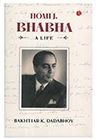
This extract from Homi Bhabha: A life by Bakhtiar Dadabhoy (Rupa Publications, 2023) has been reprinted in Parsiana with permission from the author and the publishers.
Dr Homi Bhabha’s father, the Oxford educated Jehangir, started his career in Mysore after joining the judicial service of the state. Later, he was legal adviser to the House of Tatas, serving on the board of directors of many Tata companies. He was a connoisseur of western classical music and painting and had an abiding interest in flowers, trees and gardens, an interest which the young Homi inherited. He had all the advantages of a privileged childhood. It is perhaps no exaggeration to say that the Bhabha boys studied in school but received their real education at home. It was an impressive pedigree, signaling elegance, wealth and membership in India’s academic and artistic elite. There is little doubt that it played an important role in Homi becoming a cosmopolitan savant later in life.
Jehangir married Meherbai Panday, the daughter of Ruttonbai and Framji Dorabji Panday of Bombay. Ruttonbai was the daughter of the famous Sir Dinshaw Petit, first Baronet, who was widely respected in Bombay for his philanthropic endowments. She died prematurely in November 1885, when she was only 31. Sir Dinshaw laid the foundation stone of the Bai Ruttonbai Panday Girls’ High School in June 1893 in her memory. The School building was declared open five years later in June 1898. In later life, Homi was very proud of the School, and referred to it as "my grandmother’s school.”
The Bhabhas were also connected to the Tatas through marriage — a connection that was to have far-reaching consequences for Homi in his adult life. His paternal aunt, Meherbai Bhabha, or Mehri, as she was generally called, was married to Sir Dorabji Tata, Jamsetji’s elder son. Jamsetji seems to have a hand in the selection of his daughter-in-law. He used to visit Mysore often from 1890 onwards since he thought the state had industrial potential. During one of these visits he met and befriended Hormusji Bhabha.
From l: Dr Homi, Meherbai, Jehangir and Jamshed Bhabha
Jamsetji was charmed by the 18-year-old Mehri, Hormusji’s daughter. He felt that she would be a good match for his son Dorabji who was approaching the age of 40 at the time. But he was wise enough not to make it obvious to his son, merely hinting that he should have a cup of tea with the Bhabha family the next time he was in Bangalore. Dorabji visited the Bhabhas and sure enough fell under the spell of the attractive young Mehri, who served the refreshments. He proposed to her in 1897, and it is said that a very pleased Jamsetji wrote to his prospective daughter-in-law, warmly expressing his great admiration for her. Mehri and Dorabji married on February 14, 1898. Tata historian and J. R. D. Tata’s biographer, Russi M. Lala, said that this incident was narrated to him by Homi’s brother Jamshed.
Homi’s family connections with the leading industrial houses in Bombay, and his familiarity with the ethos and culture of Parsi philanthropy were key factors that enabled him to garner support for his institution building later in life. Support also came from the Tatas — Parsi philanthropy is a story that is woven into the collective biography of this illustrious family.
After their marriage, the young couple, Jehangir and Meherbai Bhabha, relocated to Bombay from Mysore. Their house contained a large number of books, the joint collection of Hormusji, Jehangir and Meherbai. Hormusji had a large number of books on literature, education and the arts, to say nothing of scientific and technical subjects. To this rich collection, Jehangir added books on painting, which he had bought during his student days. Later, books on flowers, trees and gardens were added. When Homi’s talents in science and mathematics became evident, books on these subjects formed part of the collection. The house also had a garden and dogs. Homi’s precocious intelligence manifested from a very early age, and his parents did everything they could to stimulate his intellectual and artistic interests.
As a child, Homi used to sleep very little and the family doctor’s prescription didn’t help. Scylla Vatcha, whose mother-in-law was a first cousin of Homi’s mother Meherbai, narrated that when the Bhabha family visited Europe in 1913, they were told of a famous pediatrician in Paris. They took an appointment with the child specialist who started talking to the young Homi. After some time, the nurse informed the other patients that their appointments had been cancelled as the doctor wanted to spend more time with his young patient. The doctor told the concerned parents that their son fascinated him; he had an extraordinarily active brain, which was the reason he could not sleep. With uncanny prescience, he advised the parents that all they needed to do was to provide the right environment and their son would grow up to be a genius.
The Bhabhas provided a most congenial environment for Homi, not only in terms of education and culture but also through the closeness of their bond as husband and wife. Jamshed recounted that their parents had been very happily married to each other. The home environment had been very happy, which is crucial when one is young. He felt that it is very important to be brought up in an atmosphere free of anxiety, strain and hostility. Jamshed considered himself very fortunate to have had such a wonderful environment, especially as they had dogs, who were lovely.
Meherangir, the Bhabha family’s home in Bombay
The brothers also shared a very close bond and, if Jamshed is to be believed, Homi was like a second father to him. M. G. K. Menon, who became quite close to Jamshed after Homi’s death in January 1966, observed, "He spoke to me of the wonderful background at home in which they grew up, and the opportunity for both brothers to develop, particularly in their shared interest of western music, poetry, literature and drawings/paintings. Homi was regarded as a star by all. Jamshed never resented this or felt any insecurity. He truly loved Homi and, in many ways, revered him.”
Journalist and author Shyam Bhatia, writing in The Tribune, gave a somewhat different twist to the relationship between the two brothers. He said that Jamshed remained jealous of his elder brother’s success and the high regard he was held in by Pandit Jawaharlal Nehru and other members of the ruling establishment. One can only speculate about the extent of this resentment, if any, but Tata old-timers who worked under Jamshed testify to the fact that he rarely spoke of his elder brother which, if true, does not fit in with the image of a doting younger brother.
Homi himself noted the deep bonds of affection he shared with his parents. After his father died in 1942, he wrote to the physicist Wolfgang Pauli and paleobotanist Birbal Sahni about his love for them. However, it was his mother Meherbai who remained his emotional fulcrum throughout his life. After his father’s death, he took her on a vacation every summer. Even in her later years, Meherbai used to be impeccably dressed in a white silk sari and lacy Victorian blouse, with pearls and diamonds around her neck and fashionable pointy-toed fine leather shoes bought from abroad.
Homi spoke to her in English and Parsi-Gujarati, a kind of Gujarati that often causes great amusement among those who speak a more authentic version of the language. Homi Sethna, who was chairman of the Atomic Energy Commission from 1972 to 1983, and knew the Bhabha family personally, recounted that Meherbai was an extremely gracious lady who epitomized all that was noble. Homi made it a point to see her before he left for office every day. He also gave her a nickname: Twit. What led him to give her this name is not known, since Meherbai was anything but stupid.
To be continued