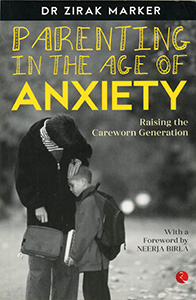
Parenting in the Age of Anxiety: Raising the Careworn Generation by Dr Zirak Marker. Published in 2016 by Rupa Publications India Private Limited, 7/16, Ansari Road, Daryaganj, New Delhi 110002. Pp: vii + 122. Price: Rs 195.
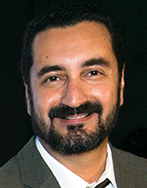 "There is no perfect child, no perfect parent and no perfect ‘parenting rules,’” states Dr Zirak Marker (pictured) in his book Parenting in the Age of Anxiety. This statement should be reassuring for couples and single parents beset with nagging doubts as to whether they will have the requisite wherewithal to raise healthy and caring children.
"This book is not meant to teach or preach. It hopes to create awareness, understanding and insight, through experiences which have taught me so much of life and living. It is meant to stimulate thinking and, in turn, generate more questioning and learning,” impresses the author, a renowned child and adult psychiatrist and psychotherapist with clinical training at the Westchester Medical Centre, New York University.
The foreword to the book is by Neerja Birla, founder of Mpower that strives to create a fulfilling life for persons with mental health concerns and their caregivers. She appreciates: "Written in a manner that is very simple to understand, this book can potentially alter lives and bring about a positive change across families.”
Each of the nine chapters of the 122-page book appeals to both, the emotions and the intellect. It starts with a personal experience, recounted in the form of diary entries, letters and conversations, to help the reader understand that even if we have caused or faced distress, expressing our pent up emotions serves a cathartic purpose of releasing ourselves from the fetters of the past. Once the reader is engrossed in the real-life experience, Marker’s subsequent information on different issues like academic stress, peer pressure, teenage crises, death and depression, is absorbed in a more meaningful way.
Among the most heartfelt letters are those penned by an adopted daughter to her "Dearest Mom” that covers the sensitive subject of adoption and single parenting. She conveys sincere gratitude: "You never allowed me to feel ‘different.’ How did you manage that, Mom? You never let me feel the loss of one parent. How did you take the place of both parents?... You gave me life. You gave me inner beauty and resilience… You have inspired our lives with such unconditional love that Anil and I have decided to adopt a beautiful baby girl… This is my tribute to you…”
 Although "Fatherhood” is the last chapter in the book, the practical advice proffered by a father to his son who is on the threshold of experiencing the pleasures and pains of parenthood is so well presented that even mothers will want to give Marker a well deserved pat on the back. After preparing the to-be father with the new sounds and smells associated with infancy, he adds, "What will be most terrifying is your new, hormonal, possessive, impatient, moody, sleep-deprived, volatile wife. She will want you to be the perfect, involved dad and yet won’t allow you to do anything independently… Always agree with your wife so that your relationship remains positive. Very importantly, when she is in a receptive mood, do express all that you feel…”
The longest, 20-page chapter in the book, "Coping with a difference,” is devoted to those who have to handle children with learning disabilities. Parents are advised, "Do not embark upon a blame game or make it your life’s mission to find the reason, cause or the treatment for the disability…Learning disabilities are not due to intellectual impairment. They are linked to genetic factors or congenital and/or neurobiological factors. They are not linked to cultural or language differences, socioeconomic back-ground, psychological, emotional or personality based factors.”
To those embarrass-ed by their children’s slow milestones, Marker who is the chief executive officer of The Aditya Birla Integrated School for children with different learning needs and additionally consults for various schools in Bombay advises, "There is almost always a hidden beauty and innocence in the imperfections our children possess… Irrespective of how many times they fail, fall or make mistakes, let them learn from errors and cope with them” instead of correcting them harshly or demoralizing them.
Woven into the narrative are stark statistics: Learning disabilities affect 10% of the world’s population, making this category the single largest disabled population today…Approximately 30-70% of schoolgoing children have experienced bullying in some form or another although only 20-40% report it... Nearly 20-25% of children and adolescents suffer from a disabling, psychological, emotional or psychiatric disorder… Suicide is the third leading cause of death amongst adolescents… On an average teens cry at least once a week… The highest incidents of depression, anxiety, substance abuse, eating disorders, sexual abuse and rape are amongst teenagers… When a child’s family rejects their offspring’s sexual preference, the odds of attempted suicide are nine times higher. Gay youths try to take their own lives four times as often as their heterosexual peers...
To deal with teenagers, Marker who conducts workshops for parents, students and educators recommends: "Be their friend first, then a parent with the mature balance of authority, discipline and permissiveness.” Noticing that teenagers have an amazing ability to calm down and introspect when the impulsive emotions have passed, he urges parents to accept their children’s individuality and give them freedom and space to make their own choices in religious beliefs, life partner, career, sexual orientations. While respecting their privacy, if a parent’s intuition tells him/her that a child’s health or safety is at risk, then walls of privacy should be brought down. He gives parents license in this careworn age when the new demon of the online game Blue Whale challenges young, susceptible participants to perform an increasingly difficult task assigned each day, ultimately daring them to take their life.
A victim of bullying in school, Marker is able to empathize with students who are traumatized by those who are manipulative and domineering. Since reporting such misdeeds to an adult would imply a child is unable to stand up for himself/herself, bullying comes to light indirectly. To rid this menace parents are advised to teach their children to be sensitive, vigilant, stand up for what is right and learn the importance of "collective responsibility” so that even as passive bystanders they do not isolate the victim.
Children who have undergone sexual abuse should never be told to try and forget everything for it would only lead them to use suppression as a defense mechanism which is detrimental to the healing process with a possibility of creating problems in adult life. Likewise when children have to face the death of a parent, it is not healthy to enshrine a parent’s room since it would not aid the process of moving on, states Marker. Cheerful, positive memories, photographs and videos would instead better help to cope with grief. "Your child deserves to be happy first, and then only will his/her potential and strengths accelerate and grow,” he counsels.
The author would like parents to prepare themselves for the day when they will have to let go of their child. And Parsis especially, known to produce mama’s boys and papa’s girls, would do well to remember Marker’s words: "We do not want our children to leave but it is necessary that they do. It is our duty to set them afloat… We conceal the sense of loss, loneliness… What needs to remain is the sense of pride, peace and faith, knowing that you have created a good human being who is perfect in your eyes.”