Sarosh Daruwalla, along with sons Aarish and Rehan, has
steered their multimedia venture into new directions
When the lockdown was first initiated, Sarosh Daruwalla discussed with his two sons, Aarish and Rehan, how they could "get connected to people.” The trio decided to move some of the audiovisual equipment from their Antop Hill studio to their Dadar apartment from where Aarish live streamed through his mobile phone musical sessions via his Instagram account. A self-trained professional disc jockey (DJ), the 29-year-old played retro, classic and party music. Pretty soon he had fans sharing their videos of family members and neighbors grooving to his music in their homes. Rehan, 25, monitored the positive feedback received from the viewers. The connect with the audience "was very gratifying,” says Sarosh, the founder of the Mazda studio brand.
This led the Daruwalla trio to brainstorm on other ways to relate to a larger audience. By Khordad Sal (August 21) 2021, their new venture, titled Mazda Multimedia, released on social media the first of their 10 episodes featuring individuals and institutions that work for the benefit of the community.
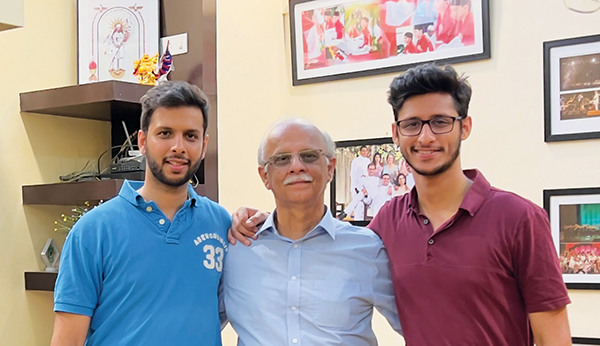
Top, from l: Aarish, Sarosh and Rehan Daruwalla
Spread over nearly 18 weeks from August 21 to December 25, the programs ranging in length from 15 minutes to over an hour covered personalities such as World Zoroastrian Organisation Trust Funds chairman Dinshaw Tamboly; Delhi based Parzor founder Dr Shernaz Cama; Xtremely Young Zoroastrians’ founder Hoshaang Gotla; Holiday Program for Youth’s mentor Diana Marfatia; Ervad (Dr) Darayus Bajan of the Mevawala Agiary at Byculla, a practicing priest and corporate professional; Ervad (Dr) Ramiyar Karanjia, principal of the Dadar Athornan Institute; Ahura Support center, the vocational day care center for the differently abled; the renovated and restored Iranshah Atash Behram in Udvada; the sports and cultural organization WINGS, founded by three teenagers, Zaara Dastur, Anahita Karanjia and Jeyhaan Carnac; and the traditional online publication The Parsee Voice’s co-editor Hanoz Mistry. Several of the organizations featured received not only positive feedback but even donations.
Their viewers were in the 30 to 70 age group and from 24 countries, including Norway and Kazakhstan, states Aarish. The episodes attracted around 5,000 views each. "Our programs will be there (online) for life,” says Aarish. "We want to be a one-stop shop for people to be able to understand the community and the persons behind the community… We talked to a lot of people. There is a lot of good work happening in the community, a lot of philanthropy.” Before each show they had shortlisted 16 to 18 people and organizations to feature and held "multiple meetings” with them. Interviewers are selected on the basis of theirs credentials, the time they can spare and willingness to participate.
"We did it all using our own resources,” notes Aarish. "We didn’t want to go for sponsorship…We wanted to give back to the community. Our community gave us a platform…showed us what we can do.” The Iranshah Udvada Utsav (IUU) in 2015 was "a mega event” that demonstrated to the trio and others what many were capable of managing. Rehan though admits that they "will require sponsors” for the upcoming season. Sarosh notes one lady had offered to sponsor a show or even make a donation. While they may not charge for their professional services and expertise rendered, the other costs are considerable: use of their equipment, hiring of special lights, extra cameras, microphones. "We incorporate the most advanced technology… new computer cameras, lens…” states Rehan.
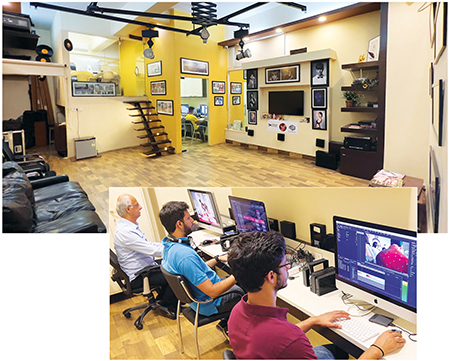
Top: Mazda Multimedia studio; inset: the Daruwallas at work
They have invested in their three concerns, Mazda Studios, Mazda Events and Mazda Multimedia around one-and-half-crore rupees (USD 197,420) in equipment. The charges for managing events can range from Rs 5,000 (USD 66) to Rs 5,00,000 (USD 6,581) a night depending on whether the requirement is for a solo disc jockey or an entire production, says Aarish. They have a staff of five with 12 other professionals who do assignments for them on a regular basis. Aside from photography and filming navjotes, weddings and other functions, the Daruwallas also undertake corporate functions, events that require sound equipment, DJs, etc.
The idea for the program clicked because "I was at the right time, at the right place,” says Sarosh referring to the lull in assignments during the pandemic. Earlier he "had the idea but not the time.” Prior to that he had toyed with making a presence in the print media but that did not work out. Audiovisual is where his expertise and resources lie.
"We would like to be storytellers,” says Aarish. "We have to put the right story out.” Rehan says he likes "creating stories.” The brothers were especially moved by the episode they did on the Ahura Support center situated at Masina Hospital. "We had tears in our eyes while making the episode,” say the duo. The two to three days spent filming there motivated them to create more such programs.
On community issues, when asked if they would accept an assignment for the navjote ceremony of a child of a Parsi mother and non-Parsi father, Aarish and Rehan are clear: "We walk in as professionals and walk out as professionals.” Sarosh says he would "avoid” such an assignment as far as possible. As for Parsis marrying outside the faith, Rehan indicates everyone has a right to choose whom to marry while Aarish replies, "To each their own. You should know what you’re getting into.”
Sarosh had started out in the field by assisting Mithoo Jesia, the doyenne of the Mancherji Joshi Parsi Colony in Dadar, when they were fighting the case to maintain the Parsi-only covenant for the Colony. He terms her his "godmother” and during the early days of his business he used her phone number as there was no telephone connection at his residence. A couple, Villoo and Ratan Bharucha, gave him money to launch his venture, which he returned when he was able. He terms Dinshaw and Bachi Tamboly as "constant guiding lights,” to him and his family.
The sons joined their father while still students, with Aarish describing himself as a "laborer” and the "official driver” of the firm.
The boys’ mother Percis who works with Tata Consultancy Services also takes pride in her lads’ achievements.
The youngsters passed out from the Dadar Parsee Youths Assembly High School located in the heart of the Dadar colony, as had Sarosh earlier. Aarish had also studied at the New Era boarding school in Panchgani. He had enrolled for a bachelors degree in Mass Media from Maharishi Dayanand (MD) College in Parel. Alongside he took an online course at the School of Audio Engineering based in Australia. Rehan initially enrolled at Jai Hind College but switched to MD because the principal allowed them leeway in attendance, knowing they were assisting their father in his business and often worked till late in the night. Both obtained bachelor’s degrees in mass media. Rehan also undertook a two-year photography course at Shari Academy of Professional Photography.
The Daruwallas intend to continue with the multimedia series but want to innovate a bit. "It may be a different style of show. We can’t put a date” on when it will start, says Aarish. "We’re brainstorming. It’s not an easy thing.” Sarosh says he wants the Bombay Parsi Punchayet trusteeship elections to be over before launching the second season. They want the programs to be "more connected, more relatable,” to the audience. They also want to restrict the time of each episode to 25 minutes at the most. "The average should be 18 to 25 minutes,” feel the sons. In the past viewers used to watch an episode over two or three sittings. They want people to watch a show at one go.
"We want to tap the youth” in the next season, says Aarish. Adds 60-year-old Sarosh, "There is a huge gulf between older people and youth.” Their next series may likely include sportspersons who are excelling, notes Rehan who contributes the creative inputs.
The Parsiana interview was initially set for January 3, 2022 but professional assignments and Covid resulted in all the three spending Holi, March 18, at their studio with Parsiana. They spoke enthusiastically about their work and their indebtedness to the community for giving them an opportunity to achieve their potential. "We are never going to leave the community,” avowed the trio, "even if the financial returns are less.”