Five years ago the Parsi population in Maharashtra was 44,854 and Gujarat 9,727, according to the 2011 Government of India census. The figures were sent to Parsiana on September 8, 2016 by Parzor director Dr Shernaz Cama who noted that the data was "just received through the efforts of (the Zoroastrian representative on the National Commission for Minorities) Dadi Mistry and (Parzor executive member) Ava Khullar.”
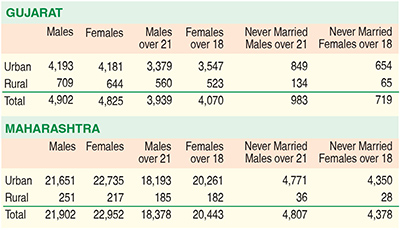
The 2011 census puts the total all-India Parsi population figure at 57,264. The two western India states, therefore, comprise 54,581 or 95% of the total number. The remaining 2,683, or five percent, are scattered over the rest of the country.
Of the 44,854 in Maharashtra, 21,902 were males of which, 21,651 resided in the urban areas and 251 in the rural. Females numbered 22,952, of whom 22,735 were in the urban areas and 217 in the rural areas. Hence the male-female ratio was 49:51 in the urban areas and 54:46 in the rural areas.
In Gujarat, there were 4,902 males with 4,193 in the urban areas and 709 in the rural. The females numbered 4,825 with 4,181 in the urban areas and 644 in the rural. The male-female ratio in the urban areas was 50:50; and in the rural areas 52:48.
In Maharashtra, the count of those not married is shown as 14,991 which would work out to 33% of the Parsi population. However, the marriageable age for females in India being 18, and for males 21, we have discounted that segment of the population that falls below these age lines. Hence it shows that 4,378 of the 20,443 females or 21% are unmarried. Among males, 4,807 of the 18,378 or 26% are never married. These percentages remain the same for the urban areas but for the rural areas, 15% of the females and 19% of the males are seen as never married.
In Gujarat, 719 of the 4,070 females or 18% feature in the never married column. For males, it was 983 of the 3939 or 25% who are not wedded. These same percentages are applicable to the urban areas while in the rural areas the percentage declined to 12 for females and 24 for males.