It is no secret that The B. D. Petit Parsee General Hospital (PGH) is in urgent need of reforms and restructuring. We all want the Hospital to become one of the best healthcare centers in Bombay. It has served the community diligently for over 100 years and we hope and pray it continues to serve the generations to come.
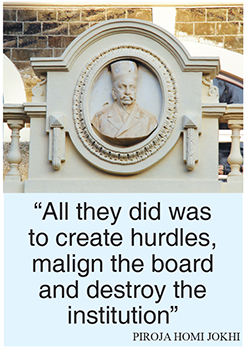
Those who successfully opposed the proposed development of the PGH may have had their reasons, but if they were true well-wishers of the institution they should have come out with concrete plans and practical suggestions. All they did was to create hurdles, malign the board and destroy the institution. They misled the community by spreading false propaganda. (See "PGH project scuttled,” Events and Personalities and "The nays have it,” Editorial Viewpoint, Parsiana, April 21-May 6, 2019)
The main reason for the decline in occupancy in the PGH is that it lacks adequate infrastructure to offer optimal healthcare to patients, and a dwindling Parsi population. Today the Hospital looks deserted and forlorn with 30% occupancy, and this will decline further until a time comes when it will be futile to run the institution.
 There is wisdom in moving with the times. In earlier years there were educational institutions catering only to Parsi students. When the number of Parsi students in such schools fell drastically the managing trustees wisely decided to admit cosmopolitan students. Today these schools have survived and are running to full capacity.
Why can we not be similarly pragmatic and broad-minded in dealing with the present situation? It is not viable to establish a fully equipped hospital and cater to a few, and that too free or at subsidized rates. If at least one floor is offered to non-Parsi patients it would generate income and enhance occupancy. Once the hospital gets a facelift and is adequately equipped to offer the best healthcare facilities with well-trained efficient staff, it will be at par with the other good hospitals in the city. Philanthropists Jal and Pervin Shroff of Hong Kong would probably agree with this and divert their proposed magnanimous donation for setting up a state of art diagnostic center named after them. Operation theaters, Intensive Care Units, etc should be updated with the latest facilities in line with modern hospitals. Restructuring of the PGH would also need donors’ assistance. With occupancy gaining momentum, the Hospital will be self-sufficient.
The PGH building itself is large enough to accommodate a diagnostic center. The Hospital has two wings. The ground floor may be utilized to set up a well-equipped casualty department with a diagnostic center next to it equipped with modern gadgets and state of art machinery. Investigations will be done on the spot. One floor of the hospital may be reserved only for Parsi patients, with male and female general wards and some special and semi special rooms at concessional rates for community members.
If, as in the earlier proposal, the Medanta group could make profits and share a part of those with the PGH, would it not be possible, when the Hospital makes enough profit, that it would be able to give subsidized treatment to patients from the community? But the question is: can the PGH be run with the level of expertise that Medanta has?
Earlier the community lost a golden opportunity when a deal with Krimson Healthcare to establish a world class center for orthopedics and neurosurgery at the Parsi Lying-In Hospital was cancelled. At that time, the then chairman of the Bombay Parsi Punchayet had stated that more lucrative offers are available and that committee members were disposing of the property for a song. Today that precious property is lying in shambles, not generating any income nor having any utility. We should be vigilant this time and not be carried away by malicious propaganda.
We need to be united and plan for the future. Why can’t we think rationally and solve our problems amicably? Talented community members should offer their suggestions in the matter.
PIROJA HOMI JOKHI
piroja.jokhi@yahoo.com