Rich tributes were paid to Bombay
High Court Justice Shahrukh
Kathawalla on his retirement from
the bench this March
When a property developer was informed that a case against him by a flat owner in a redevelopment project was listed for hearing before Bombay High Court (BHC) Justice Shahrukh Kathawalla, he contacted the plaintiff and settled the matter. "I had no reason to appear,” narrated Vishal Kanade, honorary secretary of the Bombay Bar Association (BBA) on March 22, 2022 at a farewell tea party organized by one of the oldest associations of practicing lawyers in the country. The erring builder anticipated the judge would show him no mercy. The filled to capacity hall on March 22 was testimony to the high esteem the judiciary held the 62-year-old jurist who retired on March 23 after serving as a judge for 14 years. "After March 23, Courtroom number 20 will not be the same,” said Kanade.
As lawyer Berjis Desai noted in a brief write-up he penned on Kathawalla at Parsiana’s request, "Most judges simply interpret the law and apply it to the facts of the case. Many are swayed by the standing of the lawyer arguing. A few are ultra-technical and are unwilling to go beyond the four corners of the law. Justice Kathawalla was none of these. His sole objective was to dispense justice.” The Parsi community in particular is indebted to him for ensuring the thrice delayed Bombay Parsi Punchayet (BPP) trusteeship elections will finally be held on May 29.
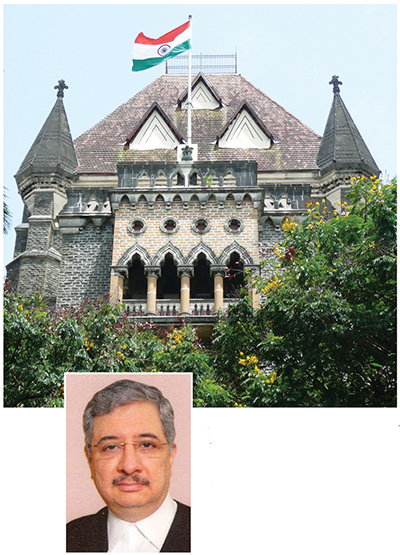
Top: Bombay High Court Photo: Jasmine D. Driver; inset: Justice Shahrukh Kathawalla
A first generation lawyer who worked his way up from delivering briefs to lawyers, to fetching law journals for seniors and configuring the South Bombay roads, the Malcolm Baug resident who did not have enough money to buy a 75 paise cup of tea from the vendor outside the office, sometimes felt he was performing a peon’s job. He even contemplated an alternative career of giving tuitions to students should he be unsuccessful in securing briefs. But the young graduate of Wilson College and the Government Law College persevered, mastered the bureaucratic procedures and regimen to be followed, even slipping Rs 50 notes to ensure legal papers moved! No one could fool him on courtroom procedure, he told the distinguished and appreciative gathering of jurists.
Appointed a judge in 2008, he stated his 14 years on the bench gave him more "job satisfaction compared to all my 23 years as a practicing lawyer.” To be an impartial and fair judge it was necessary to "wipe your mind clean of any prejudices towards your opponents,” including lawyers who may have opposed one in court. The duty of a judge "is to serve the litigant, unadulterated by prejudices, uninfluenced by pressures, guided only by justice and by the law.” In closing, he quoted the Greek philosopher Aristotle, "At his best, man is the noblest of all animals; separated from law and justice, he is the worst.”
BBA president Nitin Thakker, referring to Kathawalla’s devotion to his clients and the bar, recalled how the workaholic jurist once hired a room for the night at the Taj hotel so he could work on a client’s brief. He slept for a few hours in the wee hours of the morning before presenting himself in court at 11 a.m. As a judge, "he has not taken leave for a single day,” except when the courts were closed due to Covid, recalled Thakker. Here also he was willing to work but concern about the staff contracting the virus prevented him from doing so. Kathawalla took on the assignments of a vacation judge, despite his seniority not requiring him to do so. Always dressed in a white shirt and trousers, except when donning the judge’s black coat, he had "a spotless record like his spotless white attire,” remarked Thakker. He spoke of the charity Kathawalla did in his personal capacity which included free trips for Parsis to the south Gujarat mecca of Udvada. While a judge, in awarding costs he had raised 34 crore rupees (USD 4,489,931) for charities. His only hobby is listening to old Bollywood songs, his favorite singer being Mukesh, related Thakker.
BBA vice president Dr Birendra Saraf, noted, "There will not be another Justice Kathawalla in this court.” He demonstrated that the bar was not a mere means of earning a livelihood but to serve the purpose for which it was established, "to dispense justice.” The law did not have to be bound by procedures and bureaucratic entanglements. Saraf had appeared in the historic 3 a.m. hearing that Kathawalla had held in 2018. He said he had a hard time convincing "his unbelieving family that he actually was returning from court.” The next morning both he and Kathawalla were in court at 11 a.m. with the judge looking "as fresh as ever, hearing a matter at length.” He "strengthened the faith of litigants in this august institution. He put fear in the minds of the wrong doers.” The judge was unmindful of criticisms. "To do good you should have the hide of a rhino,” he would say. On his departure Kathawalla was sure to receive the "blessings of thousands of litigants you rendered justice to,” said Saraf.
As Desai commended, "A judge, like Kathawalla, willing to unshackle himself from the dry rules of process and procedure, is invaluable. When litigants are cynical about the delays and inefficiencies of the Indian legal system, judges like him are a ray of hope; a feeling that all is not lost.
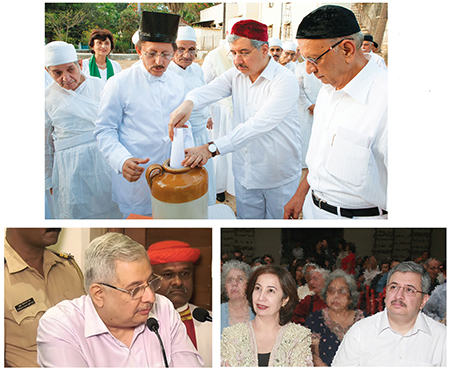
Clockwise from top: Shahrukh Kathawalla (2nd from r) at the foundation stone laying
of the Homai and Jimi Kathawalla Memorial Hall; with sister Mahrukh Noble; at the farewell function
"He almost always went out of his way to find a quick practical solution in knotty commercial cases. Woe betide the defendant who had no defense except to delay. The judge saw through the ruse and made such dilatory tactics ineffective. On the other hand, he gave latitude to advocates who were transparent and motivated to settle matters instead of hiding behind procedure and technicalities.
"On the dot of 5 p.m. the court sepoy enters and stands next to the judge. Like a restaurant shutting off its lights to hint not so subtly to the remaining patrons to go home. No sepoy dared to come and stand next to Kathawalla. He worked insane hours to finish a matter. Advocates grumbled. Even a few conscientious ones said that this was intrusive of their family lives. A confirmed but yet highly eligible bachelor, Kathawalla burnt the midnight oil literally. In the process, he ruined his back by sitting so long. Although a disciplinarian, he began having health issues. He couldn’t care less.
"His approach was that truth must prevail; legitimate rights be protected and wrongdoers put in their place. He often pressurized lawyers and litigants into settling matters by filing consent terms, so there would be no appeal. Some found his approach unorthodox and a bit too proactive. Most loved it. He earned the affection and blessings of many who were unjustly wronged.
"Even he ran out of time to write detailed judgments. Though when he did, his language was lucid; his reasoning perfect. However, many times in cases which were not so time bound, his judgments were delayed. Technically, this meant his disposal record fell short. Ironic for such a super fast and super workaholic judge. His time was spent in attending to the urgent and immediate. Cases crying out for relief. Perhaps that is the only reason why a judge of his impeccable integrity and dedication was not elevated to the Supreme Court. Had he chosen to divert his time to write a few long and erudite judgments, he would have been in New Delhi. It mattered little to Kathawalla. He was a true missionary. A servant of justice. The blind goddess will miss you, judge.”
The mainstream media as well as the Jam-e-Jamshed (JJ), the Parsi Times (PT) and Parsi Junction (PJ) all carried glowing tributes to Kathawalla’s tenure. The JJ spoke of his charities. He has donated money for scholarships and cash prizes.
In 2013, on the occasion of Malcolm Baug’s Bai Motlibai Wadia Adaran’s 150th anniversary the Kathawalla family donated towards the construction of the Homai and Jimi Kathawalla Memorial Hall built in memory of his late parents.
PT noted, "His court attracted law interns from across the nation as they wished to experience and learn from his presence and wisdom… He was patient with junior lawyers, always hearing them out.”
The PJ listed several cases when Kathawalla had given the majority BPP trustees relief though in the 2022 election amendment appeal he thwarted their efforts to delay the election. Despite this, PJ stated, "It is our fervent request that he consider the role as chairman of the BPP.” The PJ is published by ex BPP chairman Dinshaw Mehta loyalist, Kersi Sethna, who Kathawalla had castigated in court for trying to delay the BPP elections.
In his farewell speech to the Advocates’ Association of Western India, also on March 22, Kathawalla noted, "People have often asked me why I gave up a lucrative practice as an advocate… since judgeship scarcely pays you a king’s ransom! A successful advocate would earn much more in a day than a diligent judge would in an entire month. But is money everything? When you come with nothing and leave this world with nothing, should money be your master? What about soul satisfaction and the warmth in your heart when you realize that those cheated, defeated, miserable litigants who came vexed, crying and begging for justice before you are leaving with the sheer delight of having their faith restored in the rule of law? Or their joy when they realize that the legal system is fair, just, humane and gives them their due when they most need it.”