The 50:50 joint venture (JV) between Tata Steel and Thyssenkrupp AG of Germany formed this June will make the new venture second in sales in the world. The partially Indian-owned steel maker Arcelor Mittal is number one. But, Tata Steel managing director T. V. Narendran clarified in an interview with the Daily News and Analysis on July 16, 2018 that it "is not the ambition” to "expand capacity to overtake” their bigger rival. "We just want to make the JV work, and make it profitable and sustainable... This market is not a growth market where you build capacity,” he stated.
The agreement was "difficult,” the managing director told The Hindu (TH) on July 3. "Thyssenkrupp had its own pressures and they have shareholders who were demanding a relook,” he said, referring to the somewhat lackluster performance of the Indian company in the two preceding quarters due to significant investments in The Netherlands to upgrade facilities there. "The operating team in Thyssenkrupp understood that,” he said.
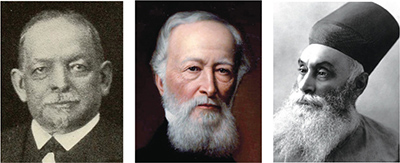
From left: August Thyssen, Alfred Krupp, Jamsetji Tata:
founding fathers of their respective business house
"Both companies have stated that the JV will help achieve annual synergies of EUR 400-500 million, through joint purchasing, including logistics services, higher equipment utilization and reduced administrative expense,” noted the Mint in a report dated July 2. Up to 2,000 administrative jobs and possibly up to 2,000 jobs in production will have to be cut in the coming years at both firms, the report noted.
"This is a significant milestone for Tata Steel and we remain fully committed to the long-term interest of the JV,” Group chairman and also chairman of Tata Steel N. Chandrasekaran noted in the Group press release dated June 30. The JV comes in the 111th year of the founding of the company, then called Tata Iron and Steel Company.
A specially created website tata150.com (the Group was founded in 1868) lists the key achievements of the company. "‘Final’ is not and has never been part of the Tata Steel lexicon; it only spells out the present and, maybe, the foreseeable future. It describes the phasing out of old units and outdated technologies, and the use of the very latest. Through this process, Tata Steel keeps up the tradition of getting the best resources in the world involved for the creation of wealth.”