Housing disadvantaged community members in Bombay has been a major concern for over 130 years. A report in The Times of India (ToI) titled "Houses for the poor Parsees of Bombay” dated April 1, 1889 on the foundation stone laying ceremony by Framji Dinshaw Petit for "new houses for the use of the poor classes of the Parsi community” gives an insight into the rationale behind the founding of what was to later become Bombay’s Murzban Colony, believed to be the first community housing project for the Parsis.
According to the news report, Khan Bahadur Muncherji Murzban, memorialized as the founder of the Colony, lauded the "significant part” the community played in Bombay’s "present enviable condition,” but also lamented that the "wheel of fortune (had) ceased to take its forward course,” noted the news report. He commented that if the community remained apathetic to its 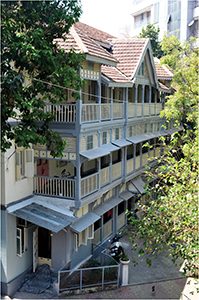 "growing wants and requirements” there was "every danger of their lagging behind” other communities. Noting the increase in poverty within the community, Murzban stated that "poor coreligionists who could ill afford the luxury of sweet and healthy dwelling houses” would be able to make homes in the tenements that were to come up. In these spaces, "after a day’s toil and turmoil, the fagged and weary mechanics and artisans could enjoy happiness and the comforts of life in the bosom of their family.” Another rationale given for the yet-to-be built homes: modest rents would allow the tenants to "maintain and educate the members of their family… with due regard being had to economy, and the health, comfort and convenience of the occupant.” The increased supply of housing would be conducive to the "moral and material welfare of the community,” stated the honorary secretary. The building committee had collected Rs 25,000 from community members, he noted.
In his speech, Petit referred to the "general consensus of opinion (that) cheap dwellings for the poor are now absolutely necessary” for the community. Affirming faith in the "persuasive powers and indefatigable zeal” of the committee’s "talented and highly energetic” honorary secretary, Petit stated that Murzban would be able to "get the cordial cooperation of all those who had the interest of the poor at heart.” He hoped that the two blocks of flats that the committee intended to erect, may in some 10 years hence be multiplied to 22. Sir Shapoorji Bengallee proposed a vote of thanks.
The Garib Zarthostiona Rehthan Fund that today manages 24 buildings within Marzban Colony and yet another colony at Lal Chimney in Central Bombay, reportedly provides housing for over 200 families in their colonies and other buildings. The restoration of the Cama Building in Murzban Colony (pictured) received an Award of Merit at the United Nations Educational, Scientific and Cultural Organization (UNESCO) Asia-Pacific Awards for Cultural Heritage Conservation four years ago (see "UNESCO award,” Events and Personalities, Parsiana, October 7, 2016).
The ToI report noted that "3,000 Parsi ladies and gentlemen” participated in the function. The neighborhood was decorated with "venetian masts surmounted with flags.” An extensive marquee decorated with flags and buntings was erected, as was a platform where "Sir Dinshaw Maneckjee Petit, high priests of the Parsis and members of the building committee” were seated. A choir of about 50 "ladies and gentlemen led by K. N. Kabrajee singing a hymn (most likely a monajat) to the accompaniment of a harmonium, the whole assembly up-standing” had opened the proceedings.