The Parsi Ward of the J. J. Hospital is one of two Parsi-only institutions to care
for the infirm in Bombay
The grey haired lady dressed in a frock at the Parsi Ward of the J. J. Hospital (JJ) politely asked social worker Arnavaz Mistry for a pair of slippers. Her old ones had given way. Mistry excused herself from the meeting with Parsiana on September 23, 2016 while she rummaged through the shelves of a wall cabinet behind her and obtained a pair. They were small in size so another pair was dug out. The woman waited patiently and expressed her thanks.

Mistry had bought 90 bhakras (flour based sweet delicacy) for distribution among the 45 or so female and male occupants of the 124-year-old quaint ground plus one structure that nestles in the compound of the vast Sir J. J. Group of Hospitals’ complex off Bombay’s congested Mohammed Ali Road. The eats were served to the residents around tea time.
"I want to make them feel ‘this is your home, not a hospital.’” The occupants are "my happiness. JJ is my life,” asserts the 69-year-old former trustee of the Bombay Parsi Punchayet (BPP). On account of her charitable work, she had won the highest number of votes (10,030) in the 2008 trusteeship elections, the first time universal adult franchise was introduced in the 343-year-old apex Bombay trust. Hence her defeat when seeking reelection in the April 2016 trusteeship election came as a shock. "I can’t believe I didn’t win,” she admits candidly.
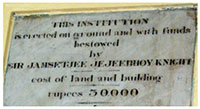
Arnavaz Mistry at the entrance of Parsi Ward; signage
Entering the political arena exposed the social worker to partisan attacks from her opponents who questioned her bona fides. Rumors of her exploiting the JJ and the F. S. Parukh Dharamshalla (where she is the chairwoman of the Ladies Committee) inmates for personal gain were publicized on social media and even published as advertisements in the Jam-e-Jamshed Weekly by her most vociferous rival, former BPP chairman Dinshaw Mehta. (Following the election, the BPP trustees decided to stop advertising in the paper.) Initially a Mehta supporter — Mistry’s late husband, Jal, and Mehta were childhood friends — Mistry switched loyalty to the World Alliance of Parsi Irani Zarthoshtis (WAPIZ) trustees and others, thereby giving them a majority on the former seven-member board. When she assisted four JJ residents to vote at one of the BPP elections, her critics alleged she coerced them into supporting her candidature. She states she only gave the patients an outing. The hue and cry resulted in the Hospital restricting outings except in the JJ complex grounds. Trips to the H. B. Wadia Atas Bahram were halted. If a patient is taken out of the complex it would amount to a discharge and he/she would have to be formally re-admitted. Admissions to the JJ Ward are allowed only on Thursdays.
Often there is a waiting list. The JJ Ward and the Lady Hirabai Jehangir Health Clinic in Gamadia Colony at Tardeo are the two Parsi-only institutions in Bombay that accept immobile inmates. The director of the Hospital and the staff are very cooperative and sympathetic, says Mistry.
According to Wikipedia "in 1845 the J. J. Hospital had only a casualty and outpatient department with a dispensary behind it. Soon in 1851, the obstetric institution was built thanks to Sir J. J.’s donation. In 1892, the obstetric ward became the Parsi Ward.” The J. J. Hospital complex is spread out over 44 acres, notes the website.
Mistry refutes the various allegations made against her and queries, "Why are people praying patet (evil) for me? What have I done? I am prepared to give answers” to the accusations. As to the charge that she is enriching herself, Mistry says she is wealthy enough and does not need to usurp anybody else’s money or property. Critics accused her of conning inmates into transferring their rent receipts in her name. "What would I do with a rent receipt?” she queries. Tenancy is transferred by the landlord upon payment and may be willed only to close relatives. She prefers being at the Ward twice a week, rather than attending social functions.
Interiors of the Parsi Ward
While much of the expenses of running the Ward is met by the government and the JJ trusts contribute for luncheon expenses, Mistry says funds are needed for additional expenses (staff employed over and above those sanctioned by the Hospital, miscellaneous expenses, extra linen, night time meals, etc) which can range from Rs 50,000 to Rs 1,00,000 and even more, a month. Five employee salaries are borne by the JJ trust and five by Mistry’s trust. She noted she could not receive large donations in her personal name and would need to issue proper receipts, etc, and hence at the instance of trust expert Noshir Dadrawala, Arnavaz conceived the Jal Minocher Mistry Foundation (JMMF). The trust was set up in January 2007 in memory of her late husband to tend to the elderly and provide relief from poverty. Mistry defends her decision to form a separate trust, as donations paid to the JJ trusts may take time to be passed on and entail more formalities. Donations are received by cheque and payments made by cheque. Petty cash is stocked in a pink, plastic cylinder shaped container.
The Lioness Club of Cuffe Parade has been a consistent donor of utility items such as soap, powder, cooking oil, etc and money. When one well meaning man collected funds to provide bread everyday to the occupants, he was accused of enriching himself and stopped his efforts to assist, she states. Mistry’s friends Viloo Bharucha and Gool Lala contribute six packets of butter and 280 eggs every week. Social worker Hutoxi Dadabhoy visits and assists patients once a week. Even some of the patients contribute monies, often from their pensions. "They feel proud. ‘We are contributors,’ they say, narrates Mistry.”
A part time gardener paid by the JMMF suggests buying new plants. "Paisa nahi hai (we have no money) cutting karo (use cuttings) instead,” she instructs in Hindi. She is fluent in the language, as also in Marathi and Gujarati. Mehernosh Engineer is employed by the trust to supervise the ward.
When she started visiting the Ward around 1987 at the instance of social worker and former BPP trustee the late Silloo Kavarana, the structure was dilapidated and largely neglected with only 24 beds, many of them empty, she says. Today beds are occupied by 22 women and 23 men, all over the age of 60. "I’ve done all this (additional beds, upkeep of the premises, employment) with the requisite permissions.” Even outings in the Hospital compound are taken after obtaining permission from the matron and required authorities.
The premises, the last home for most residents, are spotlessly clean without any of the odors one associates with hospitals. "Everything chaka chak rakhooch (is kept spotless),” she notes, pointing out how even the light switchboard has no stains from peoples’ fingers.
At Kavarana’s urging, "Why don’t you stand for BPP trusteeship and help more people?” she entered the murky arena of Parsi politics four years later when elections were finally held. While she is pained at the accusations being leveled at her, she asserts she has "no regrets not being a trustee… I can help people from outside.”