Supreme Court Justice Rohinton Nariman’s
tenure was notable for the impactful judgments he delivered on a multifarious range of subjects
Fredun E. Devitre
This is a truth universally acknowledged that on August 12, 2021, a genius retired as a judge of the Supreme Court of India. To those who know Justice Rohinton Nariman, this is a simple statement of fact. To those who do not, it may appear to be hyperbole. Is it? The encomiums showered on him at a multitude of farewell functions, official and private, would have converted even doubting sceptics to that view. The sheer statistics are staggering. About 365 major, impactful judgments, in addition to a thousand orders and about 500 reported decisions of the apex court in which he appeared as counsel.
Nariman was the fifth "direct appointee” to the Supreme Court, i.e. directly from the bar, and also the fifth Parsi judge in the Supreme Court. It was Chief Justice Rajendra Lodha who ensured his appointment in July 2014. Lodha told Parsi
ana: "Only one or two lawyers in a million-plus bar get a chance to be elevated to the Supreme Court. As Chief Justice of India, I made the choice to elevate him as I believed he was better than many and his vast knowledge would bring intellectual vitality to the Court.”
Nariman has his own twist to the tale. At the Supreme Court Bar Association farewell meeting in Delhi, he told his enraptured audience how Lodha gave him no chance to refuse. "He called me one day and said I had to accept, that he would not take ‘No’ for an answer. I asked for a day’s time to consider, at least to consult my wife, before deciding. ‘Don’t worry about your wife, I will convince her,’ said the Chief Justice. I laughed and said, ‘You haven’t dealt with Parsi women, you don’t know what they are like!’ I told him I needed to speak to my parents. He said, ‘I will talk to your father Fali.’ I said ‘parents,’ not ‘father,’ I told him. But he said whatever happens, I am sending your name, you simply cannot say ‘No.’ And that’s how I accidentally became a judge,” concluded Nariman. Incidentally, at his swearing-in, the proudest person was Rohinton’s mother Bapsi, who was radiant with ecstasy at seeing her son elevated to the bench.
It was a huge financial sacrifice on Nariman’s part, willingly undertaken, given his undeniable dedication to public service. He has never regretted it. The sense of satisfaction and fulfilment of ensuring justice according to law to all who came before him, was incomparable.
The range and breadth of the subjects covered in Nariman’s Supreme Court judgments is jaw-dropping: admiralty and shipping, constitutional, criminal, commercial, taxation, arbitration, securities laws, economic offences, monopolies, personal laws, insolvency, excise — there are profoundly wise words touching every aspect. He has toiled many hours each day, digesting every page of the voluminous briefs, often at cost to his own health. His clear thinking helped to remove the cobwebs and uncertainties in a myriad variety of laws, and in many cases re-enunciated known principles with precision and certainty. Some of his judgments set the cat among the pigeons across the political spectrum.

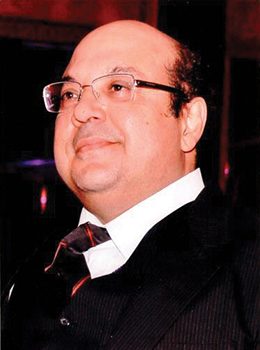
Rohinton Nariman (l) with Fredun Devitre
Whilst on the bench, he authored his book on the Gathas: The Inner Fire, and more recently, his masterly work of scholarship, Zoroastrianism in Other Faiths, bringing to bear his immense knowledge and study of comparative religions and the basic tenets of Zoroastrianism. His other masterpiece, Discordant Notes, a scholarly dissertation on the judgments and judges who have differed with the majority view, was released a few days after his retirement.
He was clear from the start that advocates would be given a patient hearing in his Court, particularly juniors. As Lodha observed to Parsiana: "With all his brilliance, charm and perspicacity, Justice Nariman has displayed a great judicial mind and balanced approach. The judgments delivered by him stand out for their clarity and eminently sound propositions. When I reflect on my choice, I am highly satisfied that Rohinton did prove to be an extremely prolific and distinguished judge. He proved me right.”
The hundreds of heartfelt messages Nariman received from junior members of the bar on his retirement is a testimony to the near reverence in which they held him. Among those who personally called him to wish him well on his 65th birthday and lauded him for his service to the nation were the President of India, Ram Nath Kovind and the Vice President, M. Venkaiah Naidu.
Nariman’s period of calmness and reflection has always been his daily walk — a sacred ritual. He attributes his mind-boggling memory and his patience with junior members to the lessons he learnt in the course of being ordained a navar at Bandra’s Tata Agiary as a young boy, when he recited over 50 Has (chapters) without reference to a scrap of paper.
His knowledge of western classical music, including opera, is phenomenal as is his collection of records, cassettes, etc, and his musical equipment and books. He loves interacting with children and the elderly and although he has a well-known reputation for not suffering fools gladly, it is the knaves and the dishonest who really get his goat. He loves nothing more than an evening of majah masti (fun) with his friends, the madder the merrier!
One of Nariman’s earliest judgments involved the question of giving an oral hearing in review applications filed by convicts sentenced to death. Upholding this right, Nariman, the youngest member on the Constitutional Bench, held (in Mohd. Arif vs Supreme Court) that the fundamental right to life and the irreversibility of a death sentence mandated the right to an oral hearing as a just, fair and reasonable procedure under Article (Art) 21 of the Constitution. In doing so, he put things in their historical perspective by observing that Art 21 — the right to life — "has its origins in nothing less than the Magna Carta (the 30th Article) of 1215 vintage which King John of England was forced to sign by his Barons.”
Shortly thereafter, in the celebrated Shreya Singhal case, Nariman delved into a deep analysis of Art 19 (1) (a) — the fundamental right to free speech — and Art 19 (2) — the permissible restrictions on that right — and in a clear enunciation of the law, held that: "There are three concepts which are fundamental in understanding the reach of freedom of speech and expression, the most basic of human rights. The first is discussion, the second is advocacy and the third is incitement. Mere discussion or even advocacy of a particular cause howsoever unpopular, is at the heart of Art 19 (1) (a). It is only when such discussion or advocacy reaches the level of incitement that Art 19 (2) kicks in…”
As an example of the difference between advocacy and incitement, he quoted Mark Anthony’s speech in Shakespeare’s Julius Caesar: "...For I have neither wit, nor words, nor worth, Action, nor utterance, nor the power of speech, To stir men’s blood; I only speak right on … but were I Brutus, …Would ruffle up your spirits and put a tongue in every wound of Caesar that should move The Stones of Rome to rise and mutiny.”
Nariman’s immense knowledge of history helped in enlivening even as dry and dreary a subject as taxation. His judgment in Bangalore Club (whose members formed an association not for commercial or business profit, but as a social club), contains an erudite discussion on the subject of Wealth Tax. But the start is anecdotal and laced with humor. It reads: "In the year of grace 1868, a group of British officers banded together to start the Bangalore Club. In the year of grace 1899, one Lt W. L. S. Churchill was put up on the Club’s list of defaulters, which numbered 17, for an amount of Rs 13 being for an unpaid bill of the Club. The ‘Bill’ never became an ‘Act.’ Till date, this amount remains unpaid. Lt W. L. S. Churchill went on to become Sir Winston Leonard Spencer Churchill, Prime Minister of Great Britain. And the Bangalore Club continues its mundane existence, the only excitement being when the tax collector knocks at the door to extract his pound of flesh.”
Another major impactful judgment was in State Bank of India vs Santosh Gupta. A seemingly innocuous commercial matter involving the applicability of the Securitisation and Reconstruction of Financial Assets Act ("Sarfaesi Act”) to the State of Jammu and Kashmir (J&K) was molded by the judge into a scholarly dissertation on what true federalism in India is and an analysis of the entire history of the State, boldly declaring: "What is important to note in the Constitution of J&K is that the State of J&K is stated to be an integral part of the Union of India. It is rather disturbing to note that various parts of the (High Court) judgment (under appeal) speak of the absolute sovereign power of the State of J&K. It is necessary to state that Section 3 of the Constitution of J&K … makes a ringing declaration that the State of J&K is and shall be an integral part of the Union of India. And this provision is beyond the pale of amendment.”

Sabarimala Temple in Kerala Photo: Wikipedia
But the best was yet to come: K.S. Puttaswamy — the privacy judgment.
The challenge was to the "Aadhar” scheme of the Government of India (under which the Government collected and compiled demographic and biometric data of the country’s residents to be used for various purposes). Nariman delved deeply into historical, philosophical and of course legal nuances of the right to privacy, and upheld that right as one of the fundamental rights guaranteed by the Constitution.
He started his discussion on the subject by referring to the Semayne case of 1603 in England which decided that every man’s home is his castle and fortress for his defence against injury and violence as well as for his repose. He quoted William Pitt, the Elder thus: "The poorest man in his cottage bid defiance to all the force of the Crown. It may be frail, its roof may shake, the wind may blow through it, the storm may enter, the rain may enter — but the King cannot enter, all his forces dare not cross the threshold of the ruined tenement.”
Most significantly, Nariman accepted as correct the proposition that the right to privacy inheres in every individual; by virtue of being a human being, it is a natural right, which is not conferred by the Constitution but is only recognized and given the status of being fundamental.
In a 2020 judgment (Rambabu Singh Thakur), Nariman noted with dismay the increasing criminalization of politics in this country and laid down a fresh set of directions, making it mandatory for political parties to upload detailed information regarding candidates with pending criminal cases, giving reasons for such selection and also why other individuals without criminal antecedents could not have been selected. When the directions were ignored in the ensuing Bihar elections, he imposed fines on several political parties in contempt jurisdiction and furthered the cause of clean politics in India.
The effort to clean up electoral processes continued in State of Goa vs Fauzia, a recent 2021 judgment, wherein Nariman struck down "the most disturbing feature of these cases,” viz that the law secretary, who is directly under the control of the State Government, was given additional charge as the state election commissioner. This, thundered Nariman, was a "subversion of the constitutional mandate” that an election commissioner, an important constitutional functionary, has to be independent of the Government.
His tour de force on the question of homosexuality in Navtej Singh is remarkable for the quality of the writing, the research, the historical setting and the survey of how other courts and societies have dealt with the problem. Nariman started his concurring judgment with a reference to "the love that dare not speak its name” — the expression used by Lord Alfred Douglas, in the poem Two Loves that he wrote to his lover, the great Oscar Wilde. After a sweeping survey of the law in other countries — including Oscar Wilde’s famous defamation trial — Nariman boldly — concluded that "persons who are homosexuals have a fundamental right to live with dignity … Such groups are entitled to the protection of equal laws and are entitled to be treated in society as human beings without any stigma being attached to them… We further declare that Section 377 in so far as it criminalizes homosexual and transgender sex between consenting adults is unconstitutional.”
One of Nariman’s great dissents came in the Sabarimala Temple review matter. He first rejected (disagreeing with the majority) the argument that a case was made out for review of the main judgment. Then, finding that the State and Central authorities were preventing entry of persons into the temple, contrary to the judgment, Nariman launched into an extraordinarily erudite discussion on the meaning of the ‘rule of law,’ tracing the expression back to the great Greek philosopher Aristotle. He noted that Article 144 of the Constitution required that "all authorities, civil and judicial, in the territory of India, shall act in aid of the Supreme Court” and observed: "Any deviation from this high constitutional principle is in derogation of the oath taken by every minister and legislator during his term of office. Once this is clearly understood and followed, the rule of law is established, and the shameful spectacle of political parties running after votes, or instigating or tolerating mob violence, in defiance of decrees or orders passed by the Supreme Court does not reign instead,” he ruled.
In highlighting what can happen in a society where there is no rule of law, he narrated the story of Peter the Great of Russia, an absolute monarch who one night decreed that "no adult male, in future, shall have a beard.” The decree was carried out overnight with Russian officialdom, armed with razors, shaving off beards of those unfortunate wretches who had not obeyed the decree. Eventually, those who insisted on keeping their beards were permitted to do so on paying an annual tax. Noted Nariman: "It is in the wake of such tumultuous events in history that the great democratic constitutions of the world have been promulgated, so that social transformation takes place peaceably, as a result of the application of the rule of law.”
On the personal front, Nariman has come a long way from the time he was an over-anxious parent (constantly worrying about the nasal flow of his lovely young daughters Nina and Khursheed and constantly checking that they were not starting a cold or cough!), to being a greatly indulgent and relaxed grandpa to his two adorable grandchildren Zarina and Cyrus, with whom he no doubt plans to spend a lot more time now, after retirement, with his charming wife Sanaya by his side.