The institutions in Bombay, founded by Shirinbai Cama, are a
boon for Parsis seeking rest and recuperation
He returned from his morning walk with some bright red hibiscus in his hands which he dutifully laid before the framed photo of Shirinbai Cama. This is a task he has taken upon himself to show his gratitude to "Maiji,” the matriarchal founder of Cama Convalescent Home (CCH), whose memory continues to be enshrined with a continuously burning oil lamp beside her photo in the vestibule. For Jal and his wife Katy Chothia who stay in a crowded chawl in a Muslim locality in Bombay, the CCH provides an annual leisurely retreat where they can unwind for a fortnight.
With its idyllic locales, the seaside property in Bandra is primarily reserved as a facility where low income Zoroastrians are offered free boarding and lodging to rest and recuperate for a fortnight, with medical attention assured. It was in 1903 that Cama founded the Bandra Parsi Convalescent Home for Women and Children, and in 1932 for men. Following her demise in 1936, the men’s facility was renamed as The Shirinbai Cama Convalescent Home for Poor Parsi Men and Boys. The two properties are 500 yards apart but whilst the women’s section is currently under litigation following encroachment and hence not being used, it is in the men’s section located in Sir Dhunjibhoy Bomanjee Building on Bandra’s Byramji Jijibhoy Road that the Home continues to house members of both sex.
"On an average we have 12 to 15 occupants a day, although during the month of May, Diwali and Christmas holidays, we are full,” says senior trustee Sam Choksey who is endeavoring to promote its usage. They have a total capacity of 37, with 28 beds in the dormitory on the ground floor, partitioned by a curtain for males and females. On the first floor are three private rooms with two beds each, and one room with three beds for which occupants are requested to make a nominal donation. Usually permission for stay is granted for 15 days which may be extended depending on the availability of beds.
On the morning of April 17, when Parsiana visited CCH, there were 10 occupants. On the long and spacious verandah abutting the dormitory, one group was immersed in their game of carrom, another lady with three books in hand borrowed from the book cases on the premises was deliberating on which to read first. Others were content to bask on the sofas, enjoying the seaside breeze that wafted in. Longstanding prayer teacher Ratamai Peer informed us that she has been a regular visitor at CCH for the last 50 to 55 years and often needs to come twice a year to recharge herself in the serene and tranquil environs: "Tauj maru kaam chalu raakhi saku (only then can I continue with my work).” With her zest, she gets her fellow inmates together for interactive games or teaches monajats or devotional songs. For those who are content with passive entertainment, there is always the TV in the lobby. Whilst walks by the promenade are popular with most guests, visits to the fire temple are given a priority in the month of April-May that coincides with the Shahenshahi mah Adar.
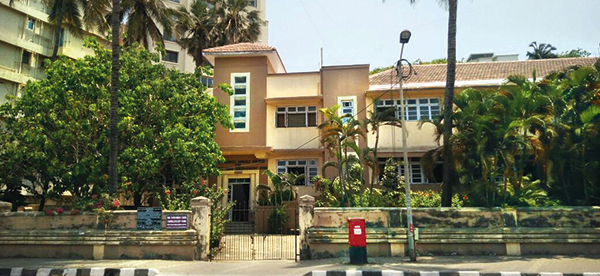
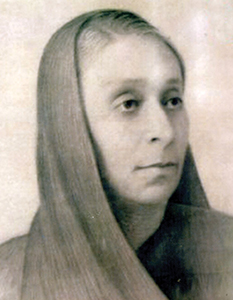
Shirinbai Cama (top) whose memory is enshrined at the Cama Convalescent Home (above)
Occupants are free to step out after informing the manager Dilbar Pestonji so long as they are in time for their meals and return by 7.30 in the evening. All guests come together in the dining hall for their meals which they invariably start after a prayer. Whilst breakfast is cooked in-house and regularly includes Protinex/Bournvita with eggs and/or other Indian items, lunch and dinner is supplied by Havovi Kotwal who sends Parsi meals as per the number of guests each day.
Recently they celebrated the 92nd birthday of one of the guests from Poona with the traditional sev and ravo, and even got her to cut the cake, reminisces Pestonji. If it’s Navroz, a glass of falooda is a must on the menu as is the chasni (consecrated fruits and sweets) after the annual Dae mah jashan.
Among the regulars at CCH are the ladies from widows’ chawls but "they are scared to stay here longer” out of fear that their room at the chawl will be locked by the trust, mentions Choksey. The Liaison Committee members too avail of the CCH for some days every year. Whilst 70% of the time it is Bombayites who come to CCH, the Home has been used by residents of Ahmedabad, Surat, Navsari, Baroda, Calcutta, Jhansi and Nasik too. Around 60% females as compared to 40% males avail of the facility. Among the ladies was one young mother from a mobed family who brought her newly delivered infant directly from the hospital to CCH and was permitted to spend 40 days here as her residence was not large enough for her to observe the rules of menstrual segregation.
When larger groups, usually of youngsters, are to be accommodated at CCH, mattresses are laid out on the floor. For the All Parsis Athletic Meet held in Bombay each year, nearly 80 sportspersons from outstation teams are hosted at CCH that provides for their free boarding and lodging. For the ZoChild function held in end November, over 100 school children from other cities are accommodated at CCH and provided breakfast, mentions Pestonji. When around 70 students of the Surat Orphanage make a trip to the four atash behrams in Bombay, they too stay over at CCH.
The application form seeking stay at the Home needs to be filled in with personal details and a photograph, and submitted to the Cama office at 48, Land’s End, Bandra West, Bombay 400050, tel: 022-26423727/26451161; email:
camahomes@gmail.com. The form provides for a column where the medical condition of the applicant has to be attested by the family doctor or resident medical officer of a hospital. Additionally, a recommendation from an individual known to the applicant is required. Other supporting documents that need to be attached are a copy of the rent receipt and medical reports before the application form can be certified by Dr Porus Andhyarujina or Dr Dara Engineer. During their stay at CCH, their health parameters are regularly checked by Engineer on his weekly visits, appreciate the management.
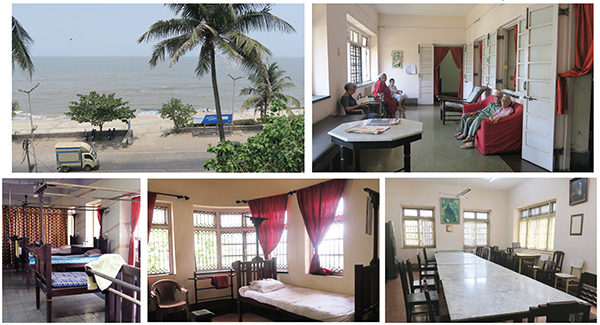
At the Cama Home (1st row, from l): view from the terrace; lounging on the verandah;
(bottow row, from l) dormitory and private room; dining hall
At the Cama Home (1st row, from l): entertainment for seniors; popular with youngsters;
(bottow row, from l) inmates with Dilbar Pestonji (4th from l); enjoying a game of carrom
Choksey says he was invited to join the trust board by the late solicitor Rusi Sethna. The other trustees currently on the board are Bomy Dabhoiwala, Nadir Modi, Farokh Kavarana, Cyrus Vevaina and Farokh Banatwalla. Assisting the trustees in the day-to-day responsibilities are Pestonji, administrator Aspi Maloo, Rohinton Dadachanji and other clerical and support staff.
While the day-to-day hiccups they can take in their stride, a major issue before the trustees is renewing the lease for their property. The trustees are currently engaged in raising funds to refurbish and rebuild the women’s home. They are hopeful once the litigation ends they can enlarge the scope of their activities to include a senior citizens’ home and a hostel for young persons who come for employment from other cities.
The feisty founder
Shirinbai Cama had immersed herself in social work from the time she became a widow at the young age of 35 in 1892, according to her life profile compiled by community historian Marzban Giara. Since her husband Muncherji Dosabhai Hormusji Cama was interred in Bangalore, she obtained the surrounding plot of land from the government, and entrusted it to the Bangalore Parsi Anjuman to be used as an aramgah.
The seeds for a convalescent home in Bombay were sown when she took charge of a ladies’ tailoring class that was started by Navroji Hormusji Patuck. The underprivileged ladies who attended these classes would frequently be absent due to ill health and malnourishment. This prompted her to start a convalescent home where women could be restored to health and made fit to resume work. To get the necessary experience of nursing, dispensing medicine and maintain standards of hygiene, she stayed for some time at the Masina Hospital.
She would approach affluent Parsis and seek donations. From Rs 50,000 donated by Sir Dorab Tata, she bought Jalbhai Sett’s bungalow at Land’s End; Rs 1,500 from Avabai Petit helped purchase furniture for the Home; many other well-known families lent their mite too. With more beneficiaries availing of the Home, a trust was formed with Sir Dorabji Tata, Meherwanji Muncherji Cama, Hiraji Cawasji Kolah, Jehangir Dosabhai Faramji and Shirinbai Cama as the first trustees. Within 15 years there was need to extend the building with Tata contributing Rs 50,000 in 1919 on the condition that Shirinbai raise Rs 25,000 from others. In 1923 Jerbai Wadia donated Rs 25,000 that helped build another ward and building that was inaugurated in 1924.
As per the trust deed of 1937, The Shirinbai Cama Convalescent Home for Poor Parsi Men and Boys had for its first nine trustees four knights: Sir Hormasji Cowasji Dinshaw, Dr Sir Nusserwanji Hormasji Choksey, Sir Shapoorji Bomanji Billimoria and Sir Hormazdyar Phiroz Dastur. The other five co-trustees were Shirinbai’s sister, Dhanbaiji Hormasji Pesikaka, Dr Dadiba Nowroji Saher, Bejonji Hormasji Allbless, Dinsha Kharshedji Daji and Kaikhushroo Ardeshir Dubash. Whilst the Home was permitted to have a maximum of 11 trustees, the minimum could not be less than five.
"The principal and primary object of the… Convalescent Home shall be to provide free change of air, board, lodging and medical aid and relief to deserving poor Parsi men and boys; and the subordinate and secondary object…shall be to relieve mental or physical distress and suffering of deserving poor Parsi men and boys and to relieve them from the evils and effects of poverty by providing them inter alia work or employment in connection with the… Convalescent Home by placing them in a position to earn an independent livelihood or by providing them with (opportunities for) acquiring knowledge, instruction or training in any particular art, handicraft industry or skill suited to their sphere or prospects of life, health, means, ability or training,” notes the trust deed.
The Convalescent Home for Men and Boys was established by Shirinbai in August 1932 in the bungalow Sea Breeze at Bandra. After the inaugural jashan by Ervad (Dr) Jamshed Manekji Unwalla, a scholar who did archeological research on ancient ruins in Iran, it was inaugurated by Dr Sir Jivanji Jamshedji Modi who commended Shirinbai’s dedication to continue with her socially relevant contribution even at an advanced age. The first batch of inmates was requested to contribute whatever they could afford for their stay there.
Shirinbai also felt the need to have a similar convalescent home in a hill station and thanks to her efforts Lady Navajbai Ratan Tata donated her palatial bungalow, The Home Stead, in Matheran which was endowed as Sir Ratan Jamsetji Tata Convalescent Home for Parsi Women and Children (now reportedly defunct).
Besides sewing, she had also learnt embroidery and cooking in the UK and was skilled in painting, drawing, music and other arts too. She gave the benefit of her skills to Sir Ratan Tata Industrial Home and as chairperson of the Ashram for the destitute under the Seva Sadan Society she used to train women in the English language and the making of Indian sweetmeats. A founder member of the Stree Jarthosti Mandal, she served as its vice president for 17 years and enthusiastically helped the poor to earn a living. The Parsi Hunnarshala was also her brainchild where thanks to her efforts those who had lost their livelihood due to the textile mills strike were taught alternate trade skills like furniture making, fretwork, polishing, making toys, suitcases, sofa linings and tinsmithing. She further served as an office bearer of the Bai Avabai Petit Orphanage Committee.
From 1926 until her death in 1936 at the age of 78 years, she was appointed a jail visitor and Justice of Peace at different times. At the samast anjuman meeting convened on her demise, the resolution recorded that the benevolent lady had "taken birth for the good of poor fellow Jarthostis, sacrificed her life for mitigating their suffering… made great efforts for their happiness and health.”