The terms of settlement in the priests ban case may fuel further litigation
After five years of litigating, legal bills totalling up to three crore rupees and a Supreme Court (SC) stamp of approval on the mediation terms, one would have thought the contentious issue of banning two priests from performing religious ceremonies at Doongerwadi and two fire temples controlled by the Bombay Parsi Punchayet (BPP) would have been laid to rest. Not so.
A flurry of emails and messages criticizing and defending the terms of settlement are making the rounds of electronic and social media. The cause: a blatantly discriminatory clause in the consent terms that permits bereaved families from using the services of any "duly ordained priest,” save Ervads Framroze Mirza and Khushroo Madon, the two mobeds at the center of the controversy. Madon and Mirza had been banned in 2009 for performing funerary ceremonies of those opting for cremation. As the respondents Jamsheed Kanga and Homi Khusrokhan who pursued the legal battle note in their "clarification,” "we were compelled to take the difficult call that the benefit to every priest who gains from this settlement for all time to come, far outweighs the benefit to a single individual (Mirza having already accepted the ban). Looking at it practically no mobed including Madon’s sons will ever have to undergo bans from the Punchayet henceforth.” (For extracts of settlement terms see "Pertinent clauses.”)
BPP chairman Dinshaw Mehta told Parsiana that while the settlement "was a big financial load” taken off the trust, it was "not a very fair one. An injustice has been done to the two priests while allowing all others” to pray at the three religious institutions. "It was the only way to save charity funds being squandered.”
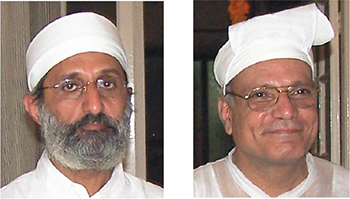
Ervads Framroze Mirza (left) and Khushroo Madon
If Madon and Mirza take the matter to court however the BPP will once again be saddled with huge legal bills. Settling one matter and opening the floodgates to another will not prove to be parsimonious.
Madon told Parsiana over the phone on April 28, 2015 that he was very "upset, saddened and surprised” by the settlement terms. "I will never be able to pray at Doongerwadi,” he lamented. "Apré vishwas rakhéloo (we had put faith) in Homi and Jamsheed… What have we gained… reforms né nuksan thayoo (have suffered)… I don’t know why they did it.” He is considering seeking legal counsel.
Over the phone on April 28, Mirza claimed Kanga and Khusrokhan "have completely surrendered the rights of all mobeds to the BPP. They have made the BPP stronger than even the high priests. And this has the SC’s stamp of approval. There is no scope left for improvement.” He wondered if other priests would now be deterred from performing navjotes of children of interfaith married couples, the ashirwad ceremony of Parsis married to non-Parsis and funerary prayers for those opting for cremation. When informed the judgment referred only to activities performed at Doongerwadi and the two BPP controlled agiaries, he suspected the BPP trustees and high priests would assert pressure on trustees and panthakies of other agiaries to boycott priests who perform such ceremonies.
"Jèm madari vandra né nachavé tèm (trustees) mobed o né nachavsé (as the monkey owner makes the monkey dance so also will the trustees make the mobeds dance).” He believes Kanga and Khusrokhan "should have let the SC decide the issue. Why compromise? Why did you surrender?” he asks. Reformists have put their swords away — "talwar muki didha. I am better than them.”
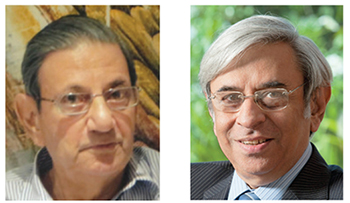
Jamsheed Kanga (left) and Homi Khusrokhan
Mirza says he "stood on his own” and "was not bothered if he was referred to as ‘renegade’ or ‘Apollo Gate.’” He had submitted an affidavit in the Bombay High Court (BHC) stating he would follow the ban by the trustees, and that even if they now requested him to pray at Doongerwadi he would refuse to do so. Ironically, the BPP has re-employed him to tackle the residents of the Bhabha Sanatorium in Bandra where several rambunctious occupants are proving troublesome. "I’m bindaas (couldn’t care less).”
He says he has "plenty of work. I can’t cope with it at times.” People say "Hu reformist no high priest thai gayo (I have become the reformists’ high priest). I get VIP treatment. At the same time I’m helping Parsis.”
He intends to be cremated and jokingly tells the staff at the Bombay Municipal Corporation electric crematorium at Chandanwadi whom he knows well to keep the ovens clean and in working order because "I’ll be coming here.” He has told his family that if they take his corpse to Doongerwadi "hu bhoot thai né paachho aavas (I’ll return as a ghost and haunt you).”
The Association for the Revival of Zoroastrianism trustee Kerssie Wadia termed the settlement "a sell-out” while his brother and co-trustee Vispi claimed "the settlement has done a grave injustice to Madon. Ené bali no bakro banavyo (they made him a sacrificial lamb).” Vispi was also upset about the word "religious” being added to describe the BPP trust. "The BHC has ruled that they (BPP) can’t interfere in religious matters,” he claimed.
Noshir Dadrawala, Centre for Advancement of Philanthropy’s chief executive officer and former BPP trustee stated, "After blowing up over three crore rupees is this what we, as a community, get? It’s appalling, to say the least.
"I am no advocate for these two priests. In fact I hardly know them. However, isn’t it a contradiction that on one hand the BPP has no religious rights to ban any priest; however, it has the right to selectively ban these two priests! Where is our once famous Parsi sense of justice and equity — one rule for all and all rules for one?”
BPP trustee Khojeste Mistree replied to Parsiana’s SMSs seeking his comments stating he was "busy with other work and hence I am sorry I cannot meet your print deadline.”
In the wake of the backlash Kanga and Khusrokhan sent the following clarification:
"We approached the BHC seeking an interpretation of the Trust Deed of 1884 on whether the trustees had the power to issue such a ban. Striking down of the ban was in the interest of the community and was imperative for the entire mobed community. Our court action was not undertaken just for the benefit of these two priests alone…
"The judgment of the division bench in March 2011 makes it abundantly clear that ‘under the Deed of Trust of 1884, the trustees are not entitled to prevent any ordained Parsi Zoroastrian priest from performing Zoroastrian religious rites and ceremonies in the premises of the Towers of Silence (Doongerwadi) and the two agiaries.’ This ruling is of paramount importance and henceforth will hold good for all time to come as it has now become the law of the land. Thus, we have achieved our primary objective of ensuring that no other priest is subjected to any ban by the BPP.
"Clause 4 of the settlement reads: ‘It is agreed that the petitioners as trustees shall permit and suffer the use of the Doongerwadi complex by every Parsi Zoroastrian, who opts for the dakhmenashini system, as a place of exposure of a deceased Parsi Zoroastrian and the performance of Zoroastrian religious rites and ceremonies, carried out as per Parsi-Irani customs, by using a duly ordained Parsi priest of his/her own choice.’ By using the exact words, viz, permit and suffer, found in the Trust Deed of 1884, we have re-emphasized in the strongest possible terms that whilst trustees may have certain rights and powers, they also have certain obligations and duties cast on them. There is no question whatsoever hereafter of their interfering in the choice of a priest by the family of the deceased.
"In Clause 9 of the settlement the only right given to the trustees to exclude a priest from praying at Doongerwadi is if the priest ‘within the trust property does any act contrary to religion or misconducts himself.’ It goes on to say: ‘The petitioners as trustees have powers and duties to ensure that a priest charge-sheeted or convicted of an offence involving moral turpitude should not be allowed to conduct prayers at the Doongerwadi complex and the aforesaid two agiaries, unless such charge-sheet is dismissed or conviction set aside.’ It should be noted the power to exclude is therefore now confined to these two situations alone and that any act contrary to religion has to be within the trust property and not elsewhere…
"We have heard concern expressed about the statement that ‘the petitioners state that they are trustees of a religious and charitable trust.’ The settlement does not confer any religious powers on the trustees in their administration of the secular activities of Doongerwadi and two agiaries. The settlement provides that the trustees are not seeking to expand the scope of their powers and duties beyond the Deed of Trust of 1884. It needs to be explained that under Clause 26 of the judgment of the division bench in our matter, it has been stated that ‘the position in law is well settled. The administration of a religious institution or an endowment made for religious purposes is a secular activity.’
"That leads us to the last concern being expressed regarding the alleged discrimination against Madon. Unfortunately, just as there were certain deal-breakers for us, this became a deal-breaker for the other side. Even at the last meeting considerable time was spent by us in trying to remove this requirement of an affidavit that restricts Madon’s presence at Doongerwadi to praying for members of his immediate family, but unfortunately our efforts were in vain and finally we were compelled to take the difficult call that the benefit to every priest who gains from this settlement for all time to come far outweighs the benefit to a single individual. In every settlement there has to be some give and take and this unfortunately is one we had to ‘give.’ Looking at it positively, no mobed, including Madon’s sons, will ever have to undergo any bans from the Punchayet henceforth.
"One continuing concern for us was the SLP (special leave petition) filed by five of the six high priests in the SC (though they had not appeared in the BHC). This SLP has also now been withdrawn by the high priests. Thus, the erudite judgment dated March 11, 2011 of the division bench of the BHC stands, with the few modifications as agreed upon in the settlement. We believe this is a victory for the entire community.” (For full text of clarification see parsiana.com)
Pertinent clauses
The terms of settlement note the "trustees shall permit every Parsi Zoroastrian (to use) a duly ordained Parsi Zoroastrian priest of his/her choice. Without in any manner limiting the aforesaid right of every Parsi Zoroastrian for appointing a priest of his/her own choice, only for Mirza and Madon, an option will be given to these two priests to file an affidavit/undertaking that they will only perform the funeral and four days after death ceremonies and the farrokhshi ceremony for the Fravardin parav each year, for the deceased member of their immediate family, who opt to be consigned to the dakhma (Tower of Silence) in accordance with the dakhmenashini system. In the event of their failing to file such an affidavit/undertaking, they are not entitled to perform any religious rites and ceremonies at the Doongerwadi complex and/or at the two agiaries of the petitioners…
"It is agreed that the petitioners as trustees are entitled to employ any duly ordained Parsi Zoroastrian priests of their choice at the Doongerwadi complex and the two agiaries vested in them…
"By and under the Deed of Trust of September 25, 1884 governing the Doongerwadi complex (including the Sagdi) and the Godavara Agiary, as also the Jokhi Agiary (collectively referred to as ‘the trust property’), the petitioners as trustees have powers and duties pertaining to the religious and secular activities of this trust. It is clarified that the respondents do not seek to restrict these powers and duties to less than what the said deed provides, and similarly the petitioners as trustees are not seeking to expand the scope of the trustees’ powers and duties beyond the said deed of trust of 1884.
"It is agreed that the petitioners as trustees have full power to regulate the performance of religious rites and ceremonies in the Doongerwadi complex and the aforesaid two agiaries and accordingly can take suitable action including exclusion against any priest who, within the trust property, does any act contrary to religion or misconducts himself. The petitioners as trustees have powers and duties to ensure that a priest charge-sheeted or convicted of an offence involving moral turpitude should not be allowed to conduct prayers at the Doongerwadi complex and the aforesaid two agiaries, unless such charge-sheet is dismissed or conviction set aside.” (The complete terms of settlement are on the Parsiana website parsiana.com)