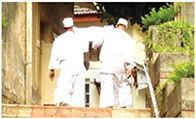
In August 2019 I approached 16 major Zoroastrian anjumans and punchayets in India for feedback on the socio-economic status of pallbearers (pictured) and any prospective efforts to phase out the system. Only five replied, despite my sending subsequent reminders. Here are the findings I have been able to glean.
 In Calcutta, there have been no paid pallbearers for several years. There are only volunteers to whom a small honorarium is offered, which only some accept. They are fully integrated into the community. Eighty percent of Zoroastrians in Calcutta still opt for dakhmenashini.
In Surat, the Panchayat has not thought of phasing out the pallbearers who are treated well and with respect, without any discrimination. There are eight paid nassessalars whose children are given free education and financial assistance up to the college level. Three of these pallbearers also work in the local agiaries and one is a manager of the Nariman Home and Infirmary there.
Mhow’s agiary and dakhma are governed as per a court ordered scheme of management. One person is employed as the agiary and dakhma assistant. There is no discrimination or ostracism of the assistant or of his family members. There are volunteer pallbearers, and the Parsis of Mhow live in perfect harmony.
The Ahmedabad Parsi Panchayat considers their pallbearers an integral part of the community and they are included in all functions and ceremonies.
An interim reply was received from Secunderabad and Hyderabad, with no details revealed. A reminder has been sent.
Those who did not respond are Poona, Indore, Valsad, Vadodara, Jamshedpur, Nagpur and Kamthi, Navsari, Udvada, Bharuch, Delhi and Bangalore.
Our community must make a serious attempt to phase out the institution of pallbearers and introduce a practice of volunteers as is done by the smaller anjumans that cannot afford paid pallbearers.
BEHRAM T. DASTUR
dasturbehram@gmail.com