Translated from the Gibberish, seven stories & one half truth by Anosh Irani. Published in 2019 by Penguin Random House India Pvt Ltd, 7th floor, Infinity Tower C, DLF Cyber City, Gurgaon 122002; website: www.penguin.co.in. Pp: 215. Price: Rs 399.
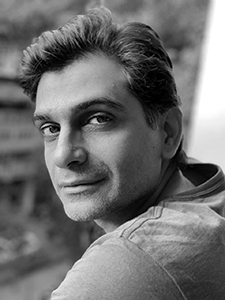
After several novels and plays, Anosh Irani (pictured, Photo: Boman Irani) has published his debut collection of short stories, Translated from the Gibberish, seven stories & one half truth. The stories are sandwiched between two semi-autobiographical fragments. However, there are only six stories. This seems to imply that these two fragments at the beginning and end must include a story and one half truth.
 These fragments reiterate Irani’s personal sense of exile: the inability to call either Vancouver or Bombay his home. Part 1 starts in Bombay where Irani stares at the large flapping underwear of Mrs Hansotia who is recently deceased. Though this display has thrown the inhabitants of Shapur Baug into a "tizzy” as they believe that her husband, Dr Hansotia, has lost his mind, Irani wonders who this "I” is who is witnessing the event. Is it Irani "the writer, (or) the narrator, (or) the character?” As his mind wanders from place to place and from person to person in a stream of consciousness manner, he travels back in time when, as a young boy, he suffers from a deviated nasal septum and Dr Hansotia sends him to a yoga class where the instructor, while teaching him breathing exercises, is unable to say ‘exhale’ and pronounces the word as ‘exile.’ Irani did not realize at that time that this mispronunciation would be prophetic and have such far reaching implications for him.
Of the six stories, three are located in India and three in North America. In "Behind the Moon,” Irani portrays the plight and the impossible dead-end situation of the illegal immigrant. Abdul, the cook at the Mughlai Moon, lives in a small room behind the restaurant. Irani compares Abdul’s situation to a rat he discovers in his room and realizes that he, like the rat, "had found a way in but could not find a way out.” Abdul is at the mercy of his boss Qadir Bhai who holds his passport for "safe keeping” and who dangles the carrot of permanent residency, which of course never sees the light of day. The only thing that Abdul looks forward to is his game of cricket at which he excels. But it is finally cricket which is the cause of his undoing, just when there seems to be a light at the end of the tunnel and he is offered a better job with higher pay and the assurance of permanent residency.
Majid, in "The Treasury of Sweetness,” runs a sweetshop in Canada but, like most immigrants, his thoughts keep returning to India where he has left his wife and daughter both of whom he adores. Again, like most immigrants, Irani portrays him as a man who seems to be hardworking and dedicated but very isolated with apparently no friends. It is little wonder that he is overjoyed when Jalal, a Muslim taxi driver, enters his shop to buy some sweets. Jalal drops in frequently but is very reticent and to encourage him to speak about his family, Majid tells him about his wife, Fatima, and daughter, Ayesha, who he has left behind in Madanpura in Bombay. Majid innocently and foolishly believes that no matter what the circumstances, sweets would bring people together. 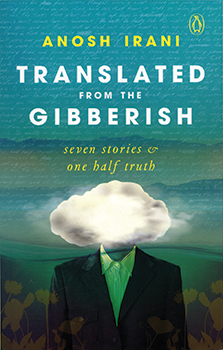 However, Jalal’s friendship is devious and sinister and one wonders how far Majid will go to protect the ones he loves.
Unlike Majid and Abdul, Sunjoy, in "Butter Chicken,” is a successful businessman with restaurants in New York and Bombay. He has been invited to participate in a show to demonstrate to the spectators how to make the "authentic” Gupta’s butter chicken. During this presentation, his thoughts go back to India when he was a young boy who received no affection from his father. On the day Sunjoy’s mother taught him how to make the butter chicken, he remembers how his father thrashed him on "every inch of his body, as if his body were a map and his father was the most adventurous, daring explorer.” One is never clear whether he has even started the presentation but to the amazement of the host and the audience, he describes what he did to take revenge on his father.
In the stories set in Bombay, Irani portrays a set of characters who are as lost as their counterparts are in the West. Ulrich, the swimming coach in the story with the same title, is 40. His brother suggests that he read John Cheever’s The Swimmer. Both Neddy in Cheever’s story and Ulrich suffer from a mid-life crisis and are trying to make sense of their lives. Just as Neddy decides to swim home through every pool on the way only to find his house abandoned and locked, Ulrich decides to swim to meet his ex-wife, Angela.
In "Circus Wedding,” Raju, the clown, has lost his heart to Shiela, a young woman who takes part in the elephant trainer’s act, and craves to marry her. His friend, Ghulam Ali, tries to warn him about his "rabid passion” but Raju does not heed the advice. He buys his love a diamond ring (which significantly is too loose) and proposes to her on his knees during a regular performance. But will Shiela be faithful to him when there is Tariq, a trapeze artiste with beady eyes and a cold gaze hovering in the background?
In "Mr Molt,” Irani’s protagonist, Reshma, is also in an impossible spot. Everywhere she goes she encounters advertisements about penguins acquired by the Byculla Zoo. When she pays a visit to the Zoo and sees a baby penguin dressed in red as it is his birthday, she is convinced that he is a reincarnation of the son she has lost. She can only be appeased if the penguin is kidnapped and brought home.
In the fragment at the end of the collection Irani is preparing to return to Vancouver confused, as he feels he "is going home, and leaving home, at the same time.” He pays a final visit to Dr Hansotia who admits he has never read Irani’s novels. This makes Irani ponder about the writing of novels and short stories, and he concludes in a tongue-in-cheek fashion that a short story is "writing about characters who don’t deserve novels.” Though this collection may consist of short stories, the characters Irani etches live on in our memory long after we have closed the book.
FIRDAUS GANDAVIA
Gandavia holds a doctorate in English literature and is a retired chartered accountant. He is a compulsive reader of fiction.