Our attitude and approach towards charity is warped
Berjis Desai
To the world, a poor Parsi is a misnomer. Such giant charities — land and cash — are surely adequate to ensure that no member of this minuscule minority suffers from any want. There is a disconnect between this external perception and the ground reality. Parsi farmers in far-flung villages of Gujarat, in debt and penury; the old and the indigent not being able to afford healthcare; the long retired who have run out of savings but are too self-respecting to seek help; widows in sanatoria making do with a single meal; those living under leaking roofs and fear of a house collapse. The largesse is not reaching all of the deserving. Of course, there are poor Parsis; and each one of us should be ashamed.
Parsi pioneering merchant princes were magnanimous and munificent. Their great desire to do charity arose mostly out of compassion towards poor relatives and comrades whom they had surpassed manifold. Also maybe to salve their conscious for selling opium to the Chinese when the sale was banned. Decades later, a dowager, in a moment of pique against her interfaith marrying children, is believed to have transferred the ownership of the housing colonies dotting Bombay to the trustees of the Bombay Parsi Punchayet. Survey the mega charities of Bombay and find an astonishing percentage having been created by Parsis, quite a few for secular user too. Hospitals, with exclusive ones for pregnant women, children and animals, orphanages and girls schools, art and architecture colleges, the racecourse, convalescent homes for the old and infirm, morgues and dispensaries. Parsi charity is the stuff of legend. In the last hundred years, new charity, mostly from overseas, has continued to flow. These donors, however, would not be pleased with the state of affairs today.
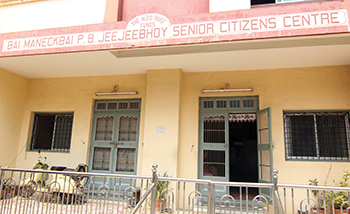
Facility for the community elders in Navsari Photo: Jasmine D. Driver
The fault lies not only with the charity managers but also with the approach and attitude of the beneficiaries: "Our hospital is being sold to a Muslim business group.” "Money is exchanged under the table for allotment of flats.” "A builder is being allowed to encroach upon the Doongerwadi land.” Each of these statements is alarmist and false. However, many are ready to believe and spread the word. Factionalism is rife in virtually every large charity. These factions love to denigrate each other by encouraging whisper campaigns. This deters the competent and the honest from becoming trustees unless they are thick-skinned. Without credible evidence, it is unpardonable to allege lack of integrity. An idiot is not necessarily dishonest.
Most of us have been conditioned to believe that charity is our birthright. Even when we have prospered, we continue to avail of charity. Perhaps it is too much to expect those who have done well later to voluntarily surrender their charity residence. It is distressing that many who have moved out or migrated, keep their houses locked and unused. Crores are lost in litigation and some even enjoy a post lunch visit to the court like a digestive. If all behaved honorably, not a single Parsi would be on the waiting list for housing. Warring trustees obtain frivolous stay orders on super technical grounds so that scores can be settled and artificial shortages keep the electorate beholden to the bestower of favors. A Sicilian approach to charity.
The average age of trustees in many large trusts hovers near 70 years. Often a single trustee rules the roost and others follow. And they bicker and snigger. Emotional intelligence, a must for charity management, is poor. Add to this cocktail called gerontocracy, the ingredients of crass stupidity, prickly egos and a six-inch vision. Contrary to popular belief in baug circuits, there is hardly any corruption any longer, but there is oodles of favoritism, bias and mismanagement. Several beneficiaries are ill informed, selfish and undeserving. Undoubtedly, matters have improved in the last 50 years; but not commensurate, considering the resources of the community. Of course, there are beacons of hope like Dinshaw and Bachi Tamboly, wiping many a tear from the poorest in the hamlets of Gujarat in a highly organized and scientific manner.
Considering that we have no reservations in colleges, the assistance provided to students, even from cash rich charities, is inadequate. We forget that there are huge resources for the benefit of the fast shrinking few. Educational help is obviously the most vital for the future of the community. Being miserly with other people’s largesse makes for a bad trustee. There are exceptions, of course, like the A. H. Wadia Charities, which sanction liberally once a cause is identified. But these are the exceptions. The mindset is to provide assistance, much below the legitimate requirement.
Coordination between Parsi charities is non existent. Decades ago, the Liaison Committee was formed, some of whose members reportedly arrogated to themselves the right to barge into poor homes and examine the food cooked ("You are able to afford to eat mutton and yet you have applied for help? Shameful!”). Shameful, indeed. A few beneficiaries continue to abuse the system to seek help from multiple trusts.
Several charities distribute hampers, during Navroz, containing mostly food items. Many recipients are delighted to taste butter and cheese after a long time. Some community organizations distribute monthly ration to the poor which is the survival kit for many Parsi families. It is healthy to feel guilty about these folks the next time you wallop on lobster thermidor.
The caring and compassionate must volunteer to be trustees of charities so that the very old trustees can resign. We have to institutionalize philanthropy management and educate the community. And let us stop making allegations without evidence.
Donors with large hearts; trustees with small minds; and beneficiaries with big mouths. A poor Parsi is not yet a misnomer.
Berjis M. Desai is a lawyer in private practice and a part-time writer. He considers himself an unsuccessful community activist.