The flood of tributes to legendary jurist Fali Nariman soon turned into a tsunami. From the highest corridors of those in power and the upholders of the law, to fellow jurists, media bastions and community institutions, all praising his contribution to upholding constitutional norms, fundamental rights, and lauding his humaneness and wit. He died on February 21, 2024 in New Delhi aged 95.
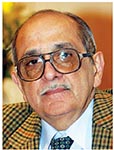
President of India Droupadi Murmu noted, Nariman was "among the wisest experts on our Constitution… a globally respected jurist. His contributions in enriching constitutional practices and strengthening the legal system will be remembered for long.” Prime Minister Narendra Modi described Nariman as being "among the most outstanding legal minds and intellectuals. He devoted his life to making justice accessible to common citizens.” The Chief Justice of India (CJI) D. Y. Chandrachud termed him "a great giant of an intellectual.” The solicitor general of India Tushar Mehta wrote, "The country has lost the epitome of what righteousness stood for.”
Among the other political leaders who paid tributes were Union home minister Amit Shah who said Nariman’s "key intellect served as the guiding light for our judicial system.” Indian National Congress leader Rahul Gandhi stated, "Nariman not only shaped landmark cases, but also inspired generations of jurists to uphold the sanctity of the Constitution and civil liberties. May his commitment to justice and fairness continue to guide us, even in his absence.”
Tremendously respected in legal circles, Nariman had served as additional solicitor general of India, president of the Bar Association of India, of the International Council for Commercial Arbitration, of the Law Association for Asia and the Pacific, and as chairman of the executive committee of the International Commission of Jurists… The International Bar Association had named him a "Living Legend of the Law” and in 2002 he was selected for the Justice Prize by the Peter Gruber Foundation. He was awarded the Padma Bhushan in 1991 and the Padma Vibhushan in 2007. More than the positions and honor, to Nariman, "The judiciary of the 21st century, along with the legal profession, needs to set an example in exemplary self-discipline; discipline in approach, discipline in lifestyle; discipline in thought, word and deed.”
His legal acumen and mentoring were recalled by Iqbal Chagla who served three terms as president of the Bombay Bar Association: "When I came to Bombay as a brief less barrister, he took me by the hand. Fali was a towering figure. His was a reputation that transcended borders... He fought for human rights in a troubled world.” Former CJI N. V. Ramana said Nariman "would be remembered as an ethical giant for generations.” Noted lawyer Indira Jaising considered him "the last of a generation of lawyers from Bombay who shaped and molded the history of constitutional law in India.”
Top: Fali Nariman and above: with Bapsi
A battery of well-known Parsi legal luminaries too commented on Nariman as an inspiration: Parsiana columnist Berjis Desai wrote, Nariman was the "undisputed numero uno in the art of advocacy. Combining tact, a practical approach, an uncanny reading of the judge’s mind, his success rate was phenomenal. Without theatrics, unlike some of his peers, Nariman made the court eat out of his hands. He was passionate about his community without being communally biased.” Former advocate general of Maharashtra and additional solicitor general of India Darius Khambata termed Nariman "the conscience-keeper of the bar in the Supreme Court.”
Rayan Karanjawala, managing partner of Karanjawala and Company, wrote, "God had gifted him with a great court presence and a penetrating voice. His was not a soft-spoken advocacy, it was in fact the thunderous voice penetrating and unmistakable but not deafening, and the flow of words at just the right frequency to ensure the judge was at his most receptive… He never discussed his strategy in a conference and when he came out with a novel idea, his own side was as surprised as the opponents. Also, he always changed his strategy in a big matter to most appeal to the judges.” Sometimes his arguments in the Supreme Court would be totally different from those in the High Court.
Terming him "a remarkable senior to appear with,” senior advocate Navroz Seervai noted: "It is universally acknowledged that he was a colossus at the bar.” His commitment to the independence of the judiciary was reflected in him taking on a challenge to the National Judicial Appointments Commission (NJAC) Act and prevailing in the Supreme Court. This was "in addition to several other landmark cases, which we can call Nariman’s legacy.”
In fact for the NJAC case when asked who he was representing, Nariman told the five-judge bench, "My client is the independence of the judiciary.” "Nariman, who opened the case, argued for about a week standing from 10.30 a.m. to 1 p.m., and 2 p.m. to 4 p.m. every day when he was about 86 years of age,” recalled former attorney general of India Mukul Rohatgi.
Many are the lawyers who have commended Nariman for setting "a high bar of integrity” by showing courage to submit his resignation as additional solicitor general the day after the infamous Emergency was declared in 1975. While he expressed his opposition to the curtailment of civil rights "I am afraid all of us (at the bar) have not risen to the occasion like he did then. The office bearers of the bar today are a little too eager to congratulate judges and politicians,” admitted former attorney general of India K. K. Venugopal.
Top l: Fali on his graduation; top right: with Bapsi, Sam and Banoo;
above, from l: with Bapsi, Zarina (on her lap), Anaheeta, Khursheed, Nina, Rohinton, Sanaya
A firm believer that a free Press is a requisite for democracy to prevail in India, during the years of the Emergency he developed a special bond with The Indian Express (IE) and its owner Ramnath Goenka who refused to buckle under pressure. Twelve separate articles, including a lead editorial were carried in the IE of February 22 as a mark of respect to their long-time anchor. When the government threatened to forfeit the lease of the IE headquarters in Delhi for a minor violation of municipal bylaws, Nariman "familiarized himself with the nuts and bolts of municipal law and managed to get the notice quashed… (This) couldn’t simply happen by quoting high principles. That required craft,” stated Arghya Sengupta, research director, Vidhi Centre for Legal Policy, in a comment piece in The Times of India (TOI) of February 22.
"Years later, when he was the government counsel for Gujarat, Nariman was tasked with defending the construction of the Narmada dam against a PIL (Public Interest Litigation) filed by activist Medha Patkar and others. Gujarat law officers were taken aback when one day Nariman angrily and abruptly returned the brief to them saying he was extremely upset over reported violent incidents against Christian missionaries in the state,” wrote IE contributing editor Coomi Kapoor.
Although Nariman never took up a government law post after he tendered in his resignation, he spearheaded virtually every leading constitutional case for the next two decades. "He mixed his trademark wit and cheerful nature with the seriousness his arguments deserved in the courtroom,” noted an article in the IE.
During his tenure at the Rajya Sabha from 1999 to 2005 he introduced a bill in Parliament seeking to cut allowances of all Members of Parliament on days when they disrupt the sessions to the point of adjournment. He believed this step was necessary to restore credibility of Parliament and to prevent "vast amounts of public money (being) needlessly thrown away.” When he realized that he couldn’t do justice to his role as a nominated member by devoting only a couple of hours to the Rajya Sabha while running his practice at the Bar for the remaining part of the day, he temporarily gave up his flourishing practice.
Abhishek Singhvi, a senior lawyer and member of the Rajya Sabha wrote in the TOI, "It was he who said that using the phrase horse-trading when humans defect is an insult to horses who are very loyal animals. He would dig out nuggets of history and marry them incomparably with his wit when speaking.”
"His death, coming at a time when the space is shrinking for both individuals and institutions who stand against the current, when the Constitution needs all its upholders, leaves a void that is especially gaping,” noted the IE editorial.
"My greatest regret in a long, happy, interesting life is the intolerance that has crept into our society… The Hindu tradition of tolerance is under immense strain — the strain of religious tension fanned by fanaticism,” he had written in his autobiography, Before Memory Fades.
Top: Fali receiving Padma Vibhushan form Dr A. P. J. Abdul Kalam Photo: Wikipedia;
above: Fali (4th from l) with Kalam and Dr Manmohan Singh (7th and 8th from l)
Fleeing Rangoon
Born in Rangoon, Fali’s father Sam Byramjee Nariman had settled there to start a branch of the New India Insurance Company. Mother Banoo’s family, the Burjorjees, ran the postal service for King Theebaw (the last Burmese royal who was deported to India following the end of the Third Indo-Burmese War in 1887). After the Japanese invasion in 1941, Fali, then 12 years old, had fled with his family to India. His conscientious father ensured that his office insurance files were taken along, even if most of the family’s personal luggage had to be left behind.
An alumnus of the Bishop Cotton School, Simla, Bombay’s St Xavier’s College and the Government Law College, at the age of 21 Fali enrolled as an advocate in the Bombay High Court and began his career in the chambers of the legendary Sir Jamshedji Kanga where his immediate senior was Kharshedji Bhabha. The need to maintain protocol, to respect customs that was reiterated time and again by Kanga was imbibed by Fali. Twenty-one years later he was practicing as a senior advocate in the Supreme Court, building up a formidable reputation when fighting for the causes he believed in.
This included taking up a bail application in the Supreme Court for Maoist sympathizer Kobad Ghandy who was imprisoned for over nine years under the draconian Unlawful Activities (Prevention) Act. Sensing the judge was not inclined to give bail, Fali withdrew the application.
Author of popular books
In 2022, at the age of 93, he appeared in the Supreme Court in support of the Surat Parsi Panchayat that challenged the government order requiring all Parsis who had succumbed to Covid to be compulsorily cremated. Admitting that he tended to be orthodox in his religious leanings, in an interview with Parsiana (see "The law-full legend,” May 7, 2008) he had mentioned that as a family "we pray from the Avesta. Wearing the sudreh-kusti is very necessary. If you miss your prayers, you find something is missing. I don’t pray for myself. I do believe that you have to keep your channel of communication to the Almighty open at all times. In myriad ways you are helped.” At the launch of The Inner Fire written by his son Rohinton when he was a judge of the Supreme Court, Fali had humorously alluded to the prevailing ambivalence on the existence of God, where "many say ‘No’ and some say ‘God only knows.’”
An avid reader of Parsiana, he would regularly send his words of encouragement showing his appreciation for the views expressed in the magazine or suggesting subjects that could be featured or periodically sponsoring an issue.
Always ready to guide an upcoming lawyer, young Shayan Bisney from Secunderabad, in a tribute to Fali published in barandbench.com spoke of the kindness the senior showed him. "When I had told him I am looking to buy any book especially related to law, he would directly ring up the author and ask them to send me a signed copy. No one could say no to his request!”
During their meetings Fali would have the BBC television news "running in the background and would watch the news carefully being sometimes concerned but mostly amazed with world affairs. (He was dismayed and bewildered as to why the British voted to leave the European Union — editors). He really enjoyed watching sports, especially cricket. He was a fan of the game since his younger days.”
To his granddaughters Nina and Khursheed, "Gramps,” as they addressed Fali, was "truly the best grandfather one could ask for — he kept a drawer of chocolates in his fridge to tempt us to come to his house daily (a trek both of us made every day, even when we were past the age of going for chocolates); who gave us so much pocket money in school that our mother would give us next to no money on purpose so we didn’t get spoilt; who often made funny faces at us from the stage in front of large audiences to entertain us at otherwise dull (dull for two young children) lectures.
"He has read out countless hours of books to us — we read Enid Blyton books, Lewis Carroll’s Alice in Wonderland, Shakespeare and Sherlock Holmes together. He had an understated (and sometimes rather wicked) sense of humor, and was a great lover of dogs. He once fell off his bed because he had a dream that his then favorite dog (Honey) was being attacked by other dogs. Before Honey, he had a Lhasa Apso, Bobo, who was really a reincarnated Rottweiler. Bobo’s claim to fame was that he had bitten any number of ‘important people,’ including the former finance minister Arun Jaitley. One day Bobo turned on his master and bit grandpa on the arm when he went to pet him. The old retainer, who had failed to tell grandpa that Bobo had been vaccinated that day, got roundly shouted at — it was never Bobo’s fault. Poor Bobo had gotten vaccinated that day, so naturally he would bite anyone that petted him!
"Our grandparents had unique ways of waking us up in the morning — our granny would sing ‘Good morning to you — and how do you do? — Quite well thank you — and how are you?’ while grandpa would wake us with a ‘Wake up, wake up! You have great things to do.’ They will always remain with us.”
While not in favor of accepting converts to the religion, Fali had expressed his views that Parsis "should have a system of adoption; it’s a step forward.” In the course of their travels, Fali and Bapsi would look forward to meeting Zoroastrians in different corners of the world for he believed "Parsis are like a banyan tree… the branches are far more religious minded. We need to grow…”
The jovial jurist is survived by his son, retired Justice Rohinton and daughter Anaheeta.