Died: Dr Sam Sarosh Bhacca, 74, erstwhile president of the Surat Parsi Panchayat (SPP) and vice president of the Federation of Parsi Zoroastrian Anjumans of India (FPZAI), on April 28, 2004 in Surat following broncho- pneumonia.
"I have always held him in high esteem for his astute thinking and pragmatism. He never hesitated to extend a helping hand to those in need and he always gave good and sincere advice when requested,” noted a condolence letter from Keki Gandhi, joint honorary secretary of the FPZAI. Vice president of the Federation since 1985, he took "an active part in the deliberations... He was a man of few words and spoke to the point. He enlivened the proceedings with his excellent sense of humor,” added Gandhi.
"A good samaritan who worked silently with commitment and dedication, Sam’s passing will be a void difficult to fill,” noted Dinshaw Tamboly, managing trustee of The World Zoroastrian Organisation (WZO) Trust, having been associated with Bhacca for many years "in welfare activities of the community that were very dear to his heart.” Bhacca had served as ex chairman of the India chapter of the WZO Trust Funds.
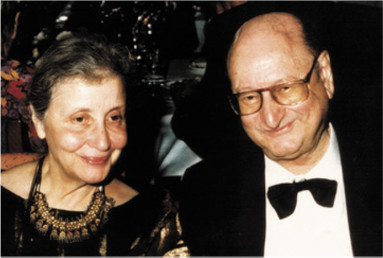
Mehroo and Sam Bhacca
As trustee of the SPP for 25 years of which 18 years were spent as its president it was under his leadership that work commenced on new residential buildings like Dhan-Parin Sadan, Zartoshty Brothers Building, the pavilion opposite the Panchayat headquarters and mobed quarters opposite the Kadmi Atash Behram. His stoic demeanor in the face of opposition and difficulties that came his way was referred to by SPP special officer Dr Ratan Marshall at the board meeting of the Panchayat trustees on June 21, 2004. During his tenure at the Panchayat he succeeded in raising the standard of the Sir J. J. English School. Equally keen was he to better the conditions at the Surat Parsi General and Maternity Hospital which was languishing for want of Parsi patients. Despite his busy medical practice, for years he would daily visit the Panchayat office at around 4 p.m. to attend to community matters. He enjoyed organizing functions and mixing with the audience. A good host and entertainer many were the humorous anecdotes he could relate to keep his listeners amused, whether at home or at the dispensary, related Rusi Besania, author and president of the Parsi Pragati Mandal in Surat.
At the condolence meeting held on June 27, 2004 under the joint auspices of the Surat Athor-nan Mandal and Seth N. M. Gheyara Gahambar ané Jashan Fund the resolution noted that he believed in adhering to the decisions he took with the welfare of the community in mind, despite the criticisms leveled against him. In the event of any difficulty faced by the Athornan Mandal or any of the mobeds Bhacca would immediately come to offer help, related Dastur Cyrus Dastur of Surat. Describing him as a "noble social worker, a philanthropist (who) lived a truly Zoroastrian life,” Dastur (Dr) Peshotan Mirza of Udvada wondered how despite being such a busy doctor he could find time to devote to so many activities unless he was committed to the maxim "Service to humanity is service to God.”
Bhacca was the senior joint managing trustee of Seth P. K. Vakil Kadmi Atash Behram and senior trustee of Seth D. N. Modi Shahenshahi Atash Behram as also Goti Adarian, Seth Bisney Adarian, Seth Randeria Agiary at Rander and Ookerji Dharmashala. At the Baug-e-Parsa Adarian he was the chairman. According to his bio data he was the chairman/president of more than 50 Parsi charitable trusts.
Former president of the Surat Medical Union he was also president of Bai Parinbanu Anti T.B. Hospital, vice president of Bai Parvatibai Leprosy Hospital and ex-secretary of The Countess of Dufferin Dispensaries Society, S. M. V. Hospital for Women and Children. Additionally he was president of the Gujarat Safe Deposit Company Limited and founder president of the Nanavat Urban Co-op Credit Society. He was also a member of the Police Commissioner Advisory Committee. He found time for the Rotary movement and had served as district 306 governor and donated the Dr Sarosh P. Bhacca Rotary Memorial Hall in his father’s memory. A committed Freemason, he was past deputy grand master.
"He certainly was a stalwart and leader among men. Undoubtedly he made his mark as one of the leaders of our community and his voice was heard with respect,” mentioned Baman Cama, trustee and honorary secretary of Shree Parsi Panchayat, Vadodara, in his condolence letter. "Though he believed in science and had modern views, he stood for the age-old tradition and customs of our community,” added Cama.
When dispensing medicine too which he continued to do until the last two days of his life, he would blend the traditional therapies with the new pharmaceutical drugs. As recalled Dara Behramkamdin, a lecturer at the Cambay Institute of Commerce, at the condolence meeting of June 27, when a swelling on his vocal chords prevented him from speaking aloud, after trying different medicines recommended by ENT specialists he went to Bhacca who made him lick some home brewed concoction on a fixed day of the week for three weeks after which his larynx never gave him trouble. Similarly when his wife had a severe earache Bhacca took out a vintage pump to draw out the dirt from the ear and end the pain. The patients who visited his clinic which was just across the road from his residence would get treatment from either Bhacca or his wife Mehroo, also a medical practitioner who had predeceased him by nine months. Those who could not afford the fees would be treated free of cost and in fact he would buy medicines on their behalf and supply them nourishing food.
Freny and Jehangir Bhownagary
He was so involved with all his multifarious activities that his personal life took a backseat, mentions his son Dr Sarosh, a neurologist. Looking after the estates and funds of all the trusts, he had limited time to supervise his own assets. Born in Surat, Bhacca was the third generation from his family to join the medical field. After graduating from Surat he completed his medical studies from the Manipal Medical College. Although he loved traveling, he had little time to enjoy vacations. Most of his travel involved meetings and functions in which he was invited to participate. Commending his father’s "tremendous will power” Sarosh related how in his last days, realizing that he was the sole surviving trustee of a charitable trust he established the Putlibai Enti Yaadgaari Trust with new co-trustees so that help for cosmopolitan charitable causes could be extended in perpetuity.
When a couple of years ago there were news reports of the proposed sale of the building in Navsari where Dadabhai Naoroji was born, he formed a trust hoping to raise sufficient funds to buy out the property. Unfortunately nothing came out of it, mentions Sarosh.
"His dedication to his profession did not deter him from taking up very important positions in social life. He enjoyed attending social functions; he enjoyed wielding power and position. Yet he remained humble to the core...He never professed to be a messiah. He was a human in all respects but had super human qualities,” pointed out Zawareh Wadia, trustee of the Modi Atash Behram, adding, "He had the courage of his conviction. He had the strength to say sorry when he erred. He had superb command over the language and his flow of thoughts never ceased... His memory and wit were always very sharp... He became more humane with added responsibilities.”
The committed doctor is survived by his son Dr Sarosh.