In their response to the Parsiana questionnaire, the five High Priests reiterate that
change in traditions and practices will be detrimental to the community
A religiously educated community will have a better chance of survival than the mere increase of numbers in the community,” asserted a joint statement from the five High Priests in response to a Parsiana questionnaire on the priesthood and religious institutions. While the issues raised have been discussed and debated over the past decades, Parsiana felt that in light of our dwindling numbers and the current pandemic, the subjects required clarification. Also since two new High Priests, Dastur (Dr) Jamasp Kaikhusroo Dastur JamaspAsa of Bombay’s Anjuman Atash Behram and Dastur Keki Cavasji Ravji Meherjirana of Navsari’s Bhagarsath Anjuman have assumed office in 2019, we wanted to ascertain their views too.
The questionnaire was hence sent to the two new High Priests as also Dasturs (Dr) Firoze M. Kotwal of Bombay’s H. B. Wadia Atash Behram, Khurshed Kaikobad Dastoor of Udvada’s Iranshah, and Cyrus Noshirwan Dastur of Surat’s D. N. Modi Atash Behram on July 28.
The High Priests decided to issue a joint reply "in one voice,” noting that the eight questions raised by Parsiana were "of vital concern to our religion and community.” They further observed, "As High Priests, our role is to uphold the time-tested traditions and practices of the faith… We do not wish to have a public debate or precipitate a controversy on these issues and cause further confusion and unnecessary rancor in the community.
"Our considered opinion is that we as a community must do all we can to preserve and perpetuate our heritage and our religious beliefs, and not barter and change our traditions and practices in ways that will be detrimental to the community’s future well-being. Any change in the time-tested traditions will eventually dilute and wipe out the religious practices of our faith,” they reiterated.
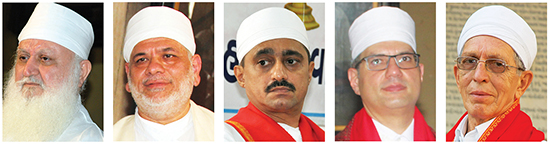
From l: Dasturs (Dr) Firoze Kotwal, Khurshed Dastoor Photo: Jasmine D. Driver, Cyrus Dastur,
(Dr) Jamasp JamaspAsa Photo: Dolly Divecha, Keki Ravji Meherjirana Photo: Sarosh Daruwalla
They further wrote, "While we understand that the Covid pandemic has raised many concerns and has changed temporarily the manner in which we dispose the bodies of our beloved ones, the rest of the seven questions refer to the same controversial issues which have been asked time and again to the High Priests over the last 30 years by Parsiana and others insisting that the community traditions and the sanctity of our sacred places need to be compromised to suit the individual needs of various interest groups in our community… Nevertheless, we will endeavor once again to respond to your queries and hopefully assuage the fears raised about the future well-being of the religion and the community.
"The world over, communities and institutions are safeguarding the tangible and intangible heritage of small, vulnerable groups such as the native Americans, Ossetians, the Marsh Arabs, the Kalash people and others. The United Nations in particular, since 2003, has emphasized the importance of safeguarding the ‘intangible cultural and religious heritage’ of smaller communities. They have worked towards preventing the destruction and disappearance of vulnerable people’s intangible religious heritage and have encouraged the need to build awareness among the younger generation.
"In the Parsi diaspora across the world, there has been a shedding of the traditions and practices owing to the exigencies of time and their quest for modernity. In India, where we have the most at stake in terms of our atash behrams, agiaries, a priestly school and our community institutions, we must respond robustly to safeguarding our heritage.”
In a separate email to Parsiana, Khurshed Dastoor stated that while he was in agreement with the four other High Priests "on all points,” he had "reservations regarding the question on disposal of bodies of Covid-19 victims” (see pg 64). In April 2021 he had written (see "Desperate times call for desperate measures,” Parsiana, May 7-20, 2021) that burial could be permitted on Doongerwadi grounds for those corpses afflicted by Covid-19. The Bombay Municipal Corporation rules state such bodies can only be cremated or buried.
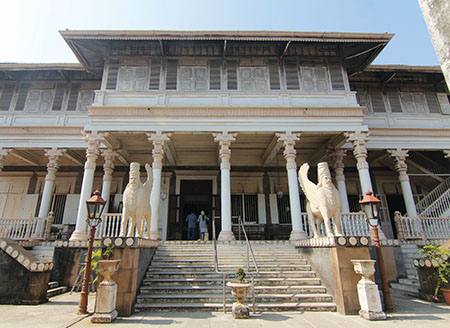
Iranshah in Udvada Photo: Jasmine D. Driver
We are carrying here the eight queries posed by Parsiana and the responses from the High Priests:
Parsiana: As our community continues to shrink and there are fewer worshippers frequenting atash behrams/agiaries, should the trustees shift the fire elsewhere? Other options?
High Priests: On the issue of declining population: As you have stated in your letter, the Indian census figures for 2011 do not mention the figure for the Parsi population in Bombay. It is your speculation that there has been a decline of 18%, for which there is no government verified data. (The 18% decline between 2001 and 2011 was for the all-India Parsi population. Since the data for Bombay Parsis for the 2011 census was not disclosed, we extrapolated the same percentage to the 46,000 count of Bombay Parsis as per the 2001 census — editors.) In addition, as Parsi births are not registered in the census, the birth figures are at best guesstimates on your part. In addition to unreliable birth figures, we as a community have also seen extensive out-migration of Parsis and Iranis since the 1960s which has also contributed to a fall in numbers. If we consider the out-migration figures, the decrease in the Parsi population worldwide would not be so alarming. Further, the high spinster and bachelor rates have also exacerbated the situation.
In order for a community to maintain cohesiveness and religiosity, which is so important for our community’s survival, we must follow in the footsteps of our forefathers and not just dismiss the lessons learned from the past or seek changes that will further destabilize the community. Each time a controversy has been raised in the community, it is unfortunate that it serves only to divide the community further and create alienated groups constantly at war with each other. We hope that equal time and energy is put into building the community and making it stronger rather than working to fragment it further.
Those agiaries where there is no Parsi population, the fire temple can be shifted; but it is important that when shifting the fire temple, the corpus of the fire temple and proceeds from sale of the fire temple land should be handed over to the trust or fire temple which is willing to house the sacred fire. The Seth Nasserwanji Hirji Karani Agiary, for example, was moved to Cusrow Baug in 1935 after the Parsis left a largely Muslim dominated area.
The Tavdi fire near Navsari was first shifted to the Sir J. J. Agiary in Navsari and later to (the S. F. Jokhi Agiary in) Godrej Baug. The Tavdi fire was brought with great pomp and ceremony to Godrej Baug, and it was an excellent example of the community uniting to safeguard a sacred fire.
Earlier in the area known as Dō Tānkī, the Dhana Patel Dar-i Mihr was established, but because of a dearth of Parsis in the area it was shifted to the Rānji fire temple for a few years, and later to Tardeo as the Boyce Dhana Patel Agiary, when the Boyce family gave a large donation making the shift possible.
Rather than building new agiaries we must give new life to old agiaries. This serves two purposes: a new cluster of Parsis can have a fire temple within the precincts of the baug or their area, and the sacred fire is safeguarded for the future. However, the agiaries should only be shifted after much consideration and after taking the views of the devotees who worship there regularly.
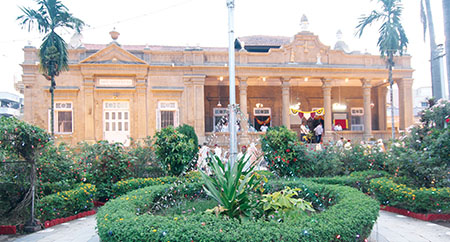
Navsari Atash Behram Photo: Jasmine D. Driver
Parsiana: If priests/chasniwallas are not available/affordable, how are trustees of fire temples to manage?
High Priests: Today we are pleased to say that we have young yaozdāthragar priests who can perform the high rituals of the faith, and there are young members from athornan families who want to serve as priests. Yes, we do need to have more priests to serve our fire temples. The Dadar Athornan Institute is contributing largely towards creating well-trained, skilled priests. It is up to the panthakies of various agiaries and senior mobed sahebs to help newcomers, fresh from the madressa, upgrade their priestly skills and encourage them to continue as priests. We are also beginning to see a cadre of priests who have retired from their secular jobs and are now serving in fire temples. There is no doubt a need to encourage more young priests to take up the priesthood.
To this end, the trustees of various fire temples should give our priests better facilities and ensure better pay. It has been said, time and again, that without the financial and material support of the trustees and other large Parsi trusts, it is difficult for good priests to join the priesthood.
Today we also have a team of well-trained and dedicated behdin pāsbāns who have been trained by well-meaning senior priests. The behdin pāsbāns who have learned the necessary prayers by rote, and have undergone full training, especially with regard to how to perform the boi ceremony and keep a sacred fire burning, can also be employed in the fire temples when no priests are available. This small group of behdin pāsbāns has served fire temples in various cities and in the mofussil areas where no priest is prepared to go. We must praise their dedication and love for the religion.
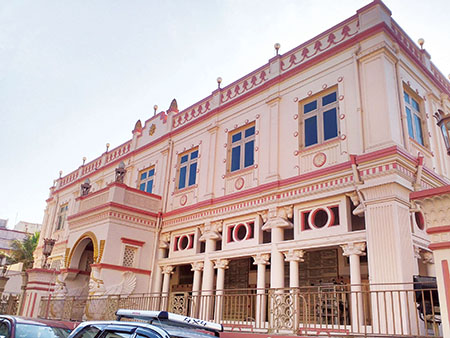
D. N. Modi Atash Behram in Surat Photo: Jasmine D. Driver
Parsiana: Should burial of Parsis who have succumbed to Covid-19 be permitted on Doongerwadi land as a temporary solution to avoid cremation?
High Priests: With reference to the use of burial as an alternative to dakhmenashini on Doongerwadi grounds during this Covid pandemic period, we have the following observations to make as High Priests:
The Doongerwadi land is seen as sacrosanct and was established by our ancestors according to the prescriptions of our faith, for the specific use of the religiously mandated system of dakhmenashini for the Parsi Irani Zoroastrian community.
In our considered opinion, no other system of disposal can be carried out on our sacred Doongerwadi land. All other systems of disposal i.e. other than dakhmenashini are un-Zoroastrian and do not conform to the theology and practices of the faith. The fact that a wrong practice prevails, be it in Iran or elsewhere in the world, owing to circumstances beyond one’s control, does not make a wrong practice right from a religious point of view. The trustees of all Doongerwadi lands are duty-bound to maintain and uphold the proper workings of the dakhmenashini system. The introduction of any other system, even temporarily, on functioning dakhma lands, amounts to a breach of trust on the part of the trustees.
If one is helpless as in the times of the Covid pandemic and if the government of the day has prohibited different forms of disposal of the body, then temporarily, only because of and during the pandemic period, a different method of disposal can be resorted to elsewhere. However, it cannot be done on functioning Doongerwadi land which is reserved explicitly for dakhmenashini purposes.
We emphatically reiterate that no other system of disposal can be introduced in the Doongerwadi complex, just as you would not be allowed to build a Tower of Silence in an aramgah or have an aramgah built on land meant for a burning ghat.
In case of a Covid victim, if dakhmenashini is allowed, the geh sārnā should be recited in full by a pair of mobeds facing the direction of the Tower of Silence, and it can be done only during daylight hours. The sagdīd ritual which allows the gaze of the dog to fall upon the deceased, is an important ritual, and it should be done before disposing of the nasā, i.e. dead body.
If dakhmenashini is not allowed for Covid victims, mobeds should be allowed to recite the geh sārnā even without a sachkār and sagdīd as it is a situation created out of helplessness and not by flouting religious laws. When there is no dead body present in front of the priests doing the geh sārnā, the ritual of sachkār and sagdīd does not arise. The geh sārnā affords solace to the deceased’s soul and the family members, and its recitation is important as part of the healing process.
Our learned High Priest of the H. B. Wadia Atash Behram, Dastur Edalji Darabji Sanjana, (d.1847) had decreed that if a body of a Parsi deceased cannot be located, then two priests can be sent to the Doongerwadi to recite the geh sārnā, facing the dakhma. This oral tradition has been recorded by Pirojshah Adarji Kotwal (d. 1943, the grandfather of Dastur Firoze Kotwal) who was the most skilled ritual priest in Navsari and whose opinion was sought on all matters pertaining to ritual practice in the first half of the 20th century. This was especially important in those days as men went on long perilous journeys and the body could not be retrieved, especially as the body may have been disposed of in a manner alien to Zoroastrian practice.
For this we have examples of prayers done within a ritual format and those recited without the performance of the ritual act. The Ahunavaiti Gāthā is recited during the geh sārnā ceremony. However, the Ahunavaiti Gāthā is a prayer of protection for defence against evil and is referred to as spiritual food (mainyush kharethāoscha) for a Zoroastrian and can be recited anywhere and at any time and need not be restricted to funerals only.
An example from our community’s history is one concerning the family of the first Sir Jamsetjee Jejeebhoy. Sir J. J. had two brothers and he was the youngest. His middle brother Rustomji was travelling from Calcutta to Bombay and he drowned in the Bay of Bengal on mah Spandarmad, roz Ram (1823 CE). He had no children and Sir JJ was made his pālak. Although his body was not found, the geh sārnā seems to have been recited for the deceased, when Dastur Edalji Sanjana was alive, serving the Bomanjee Naoroji (Lowjee) Wadia Ādarān at Dhobi Talao.
Similarly, a yasna proper requires a ritual to be done with the waras, zōhr and hōm twigs; but the yasna can also be recited without the ritual act and is called yasna without zōhr, for which there is merit of 100 good deeds, and the Yasna with zōhr merits a 1,000 good deeds, it is so stated in the Rivayats of Kamdin Shapur and the Rivayats of Hormazdyar Framarz. Both the vendidād and the farrokshī are examples of rituals which can be recited outside the ritual format followed in the Dar- i Mehr. When Pirojshah Kotwal died, the Vendidād with zōhr could not be done in the Vadī Dar-i Mehr, and so it was done at home without zōhr. This same flexibility is given to the recitation of the geh sārnā which may be done at the Doongerwadi bungli which is the most fitting place in such cases and it can also be recited as a prayer anywhere and at any time.
Every religion in the world has a defined structure that is sacred to them. It does not serve to mix two different systems, as it only results in diluting the religiously covenanted system, both spiritually and legally, by the trustees. It is unfortunate that our people instead of remaining firm and faithful to the religion are instead, perhaps unintentionally, weakening our age-old time-tested system of dakhmenashini by attempting to introduce burial as an alternative on Doongerwadi land.
On this point, Dastur Khurshed Dastoor conveyed his reservations: The current method used to dispose of the mortal remains of these unfortunate (Covid-19) victims is also completely against our religious tenets and scriptures. In my humble opinion, some consideration should be shown towards these patients and the surviving members of their family. With the passage of time, we have witnessed numerous changes in our customs and traditions. Today, we are faced with the most unusual but inevitable circumstances and we have no control over its effects in every aspect of human life. I beg to differ here by saying that we need a slightly more pragmatic approach to help us tide over these trying times. Whatever change is adopted has to, and will, be brought to an end as soon as we are through with this pandemic.
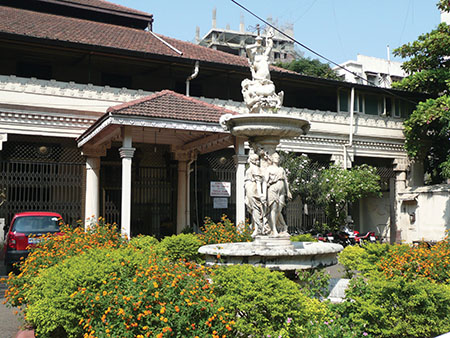
H. B. Wadia Atash Behram Photo: Jasmine D. Driver
Parsiana: Where a functioning dakhma exists, should priests perform funerary ceremonies for non-Covid deceased Parsis who opt for cremation or burial?
High Priests: Ancient religions such as Zoroastrianism adhere to a form of established religious practice which is inviolable. Religion is not a philosophical treatise which can be arbitrarily changed and re-molded when needed. Zoroastrian religious practices have sanctity and it has in place laws, systems of worship and traditions which are proper and fit to follow according to the precepts of the faith.
By burying any dead matter (nasā) in the earth, such as a corpse, the Parsis commit the sin of concealing and burying nasā. According to our texts, the corpse should be exposed to the cleansing rays of the sun and not kept enclosed in the bowels of the earth.
The practice of burial in the ground or cremation is not a practice followed by our ancestors. For example, there seems to be no evidence in Iran of huge tracts of Zoroastrian graveyards or necropolises as seen in Egypt. In Iran, bodies were left on mountain tops to be consumed by wild animals and birds and the bones when dried were placed in ossuaries to be preserved for the Renovation of the world when the bones of the dead will rise at the time of the Final Resurrection. Therefore, both cremation and burial in places where a dakhma exists are against the precepts of the Zoroastrian faith, and it is not proper under normal, non-Covid conditions for Zoroastrian religious ceremonies to be performed for those who opt for other forms of disposal.
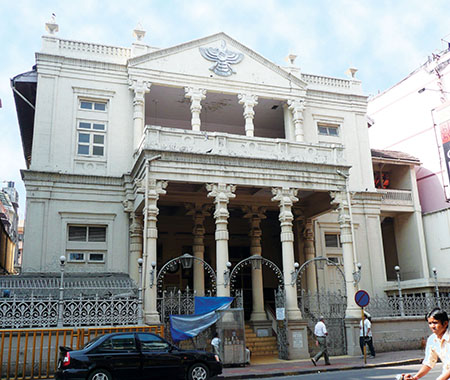
Anjuman Atash Behram Photo: Jasmine D. Driver
Parsiana: Why are non-Parsis in Bombay and several other places barred from attending funerary prayers? Why may they not be permitted to pay their last respects in the bungli?
High Priests: We fail to understand why a small section of the Parsi community want to challenge all our ancient time-tested practices of our faith almost on an annual basis stirring community energies on to a path of obliteration rather than preservation. We would like to stress here that it is not our non-Parsi friends who ask for this change but our own brethren out of a lack of understanding and non-acceptance of the theology and practices of the faith.
In any given religion, what is sacred and what is not, and what is not accessible to non-believers is determined by its theological practices. In Christianity, for example, a non-Christian cannot approach the Eucharist Table or consume the Holy Wafer and blood of Christ in a church. In Islam gusal (bathing the corpse) is not allowed by non-Muslims. In Zoroastrian funerary proceedings, as soon as the sachkār is done for the deceased, the bungli is decreed to be a religiously lawful and a consecrated place similar to a fire temple. Non-Zoroastrians are not permitted to enter the bungli or pay their respects once the process of sachkār has begun.
A simple way to maintain our ancient traditions and also facilitate non-Zoroastrians if some families are keen for them to view the body, is to keep the deceased in the pavilion before the sachkār ceremony as so many families have done, for non-Zoroastrians to pay their last respects, and this obviates the need to enter the bungli. It is a simple arrangement that can work without disrupting our practices. The intangible heritage of our community, its ethos and the spirit of its practices must be respected by Zoroastrians and non-Zoroastrians alike. Additionally, it is a spiritual requirement for a Parsi after attending a funeral to perform the all-important pādyāb-kusti which completes the ritual process which a person of alien faith cannot do.
Parsiana: Should priests perform the ashirwad ceremony for interfaith couples?
High Priests: The issue of performing the Āshirwād has been contentiously debated within the community because the ceremony is misrepresented as a mere blessing for the couple. The marriage ceremony is part contractual and a part of it is the Āshirwād or blessing. In the solemn contract which precedes the Āshirwād, the couple is asked if the marriage is being done in accordance with the rites and practices of the Māzdayasni faith. Therein it is declared that the bride is wedded "In accordance with the customs of the mazdā-worshipping religion (awar dād va āyīn i dīn i māzdayasni).” The marriage benediction which constitutes the recitation of the Āshirwād begins in the name of Ohrmazd who is declared as "the Lord, and Zarathushtra as the spiritual leader (Ohrmazd khodā shanāshād, Zarthosht rad setāyād).”
And later in the prayer for health (Doa Tan Dorosti) the priest recites: "May they (the couple) be steadfast in their knowledge of the good Mazdayasnian religion (Din beh māzdayasnān āgāhi āstwānī bād).” These are not just words recited but it is a covenant between Ahura Mazda and the followers of the Good Religion. Thus, it is assumed when the Āshirwād is recited that the bride and the groom are Zoroastrians. Therefore, performing the Āshirwād ceremony for interfaith couples should be considered a mockery and a deception perpetrated in the guise of religion. Religiously speaking a Zoroastrian priest cannot perform interfaith marriages. For such marriages the government offers a secular format recognized in law.
Parsiana: Should the navjote ceremony of children of interfaith couples be performed if both father and mother are agreeable?
High Priests: As orthodox High Priests and priests we are duty bound by the traditions and religious practices of the faith and such navjotes should not be performed. In the past, a series of resolutions regarding this issue have been passed by the High Priests of the community.
In 1942, during the controversial navjotes performed in the village of Bhamti in the district of Bānsda, the ruler of Bānsda wrote to Dastur Kaikobad Darabji Dastur Meherjirana that he will not give his approval for such interfaith navjotes as the High Priests of India had written against the performance of such navjotes. On March 16, 1945, a large meeting was held at the Cowasjee Jehangir Hall. The meeting was convened by Sir Byramji Jeejeebhoy to condemn such navjotes as irreligious and illegal. The speakers ranged from the learned Dastur Kaikhusroo Kutar, Dastur Khurshed Dabu, Jehangir Chiniwalla, Dinshaw Masani, Jamshedji Unvala and others.
Unvala, in particular, elaborated on how various geographic fringe groups of Zoroastrians, such as the Indo-Parthians and the Hephthalites assimilated in the larger host community through intermarriage, and lost their Zoroastrian identity. Intermarriage is not the answer for the Parsi Irani Zoroastrian community and has never been in our history. There were Zoroastrian soldiers and other settled communities living in China, Turkey and Rome, but all these communities were lost, once they began the process of intermarriage. If you wish to save and preserve the Parsi Irani community, then intermarriage will merely add to the erosion of the community’s religious identity. It is equally important to raise the religious education level of the younger generation, and this is a matter that needs to be taken up as it will be a unifying factor in the long term.
Parsiana: Should women be permitted to become mobedyars in India as in Iran and North America?
High Priests: Only out of helplessness when no priest is available to serve a holy fire and to perform outer ceremonies, behdin pāsbāns can be employed.