"For anyone interested in ancient religions — both ancient and living — specifically Zoroastrian religious traditions and its languages,” a four-week online course "Zoroastrianism: History, Religion and Belief” is being offered by the reputed School of Oriental and African Studies (SOAS) that is affiliated to the University of London. Expected to appeal to anyone interested in Iranian or South Asian Studies, "Members of the Zoroastrian community will find this course particularly useful,” noted the announcement forwarded by Malcolm Deboo, president of the Zoroastrian Trust Funds of Europe. "Join a global classroom. Experience the power of social learning and get inspired by an international network of learners. Share ideas with your peers and course educators on every step of the course,” invited the SOAS online portal FutureLearn that is offering this course free of cost.
"SOAS has a long history of teaching and research on the subject of Zoroastrianism together with the languages, both ancient and modern, that support it. As the only institution to have two endowed posts in Zoroastrianism, SOAS is uniquely positioned to guide you through the history and challenges of this ancient religion,” maintained FutureLearn. The course will be jointly conducted by Dr Sarah Stewart who is the Shapoorji Pallonji senior lecturer in Zoroastrianism at SOAS and Celine Redard, a researcher at SOAS working on Zoroastrianism with a focus on Avestan.
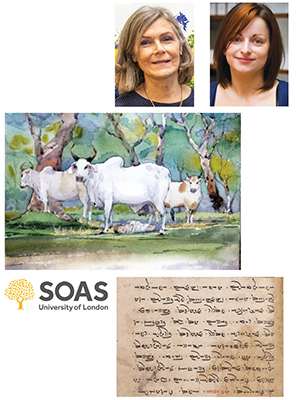
Top: Dr Sarah Stewart (l) and Celine Redard; above: visuals reflecting the course content
"Utilizing a rich visual repository of artifacts, paintings and texts” to unravel Zoroastrian religion, history and culture, the first three weeks of the course draw inspiration from the exhibition "The Everlasting Flame: Zoroastrianism in History and Imagination” that was initially mounted for two months at SOAS in 2013 before it was brought to Delhi in 2016. A mix of videos, long and short articles, audio and practical activities will serve as study material for the course.
An overview of the course content indicates that the first week will introduce Zarathushtra and his teachings. The second week will provide a historical perspective of Iran and explain yasna, the central act of priestly worship. The third week will offer a historical perspective of Zoroastrianism as practiced in India and additionally refer to the influence of Zoroastrianism on world religions, and explain the devotional rites of passage. The last week is dedicated to the study of Avestan language which is "the key to understanding Zoroastrian texts, myths and legends... Today this ancient religion is in retreat with numbers diminishing and the language becoming endangered,” according to FutureLearn.
Those enrolled are expected to stay motivated by using the progress page to keep track of the course completed and assessment scores. On completion of 90% of the course steps and assessments, a certificate is earned. The course gives those who have signed up the option to "learn at your own pace” although a delayed start will prompt them to send you a reminder: "We’re missing you…so we thought we’d share a few tips to help you start the course. Don’t worry about how much you know. FutureLearn is designed for people with all levels of experience – you don’t need to be an expert to join in…”