What Pesi Did: A Surgeon’s Story by Azmy Birdi. Published in 2020 by BUUKS, No 41, Kalaimagal Nagar, Ekkatuthangal, Madras, 600032. Pp: xiv + 138. Price: Rs 200 or USD 10.
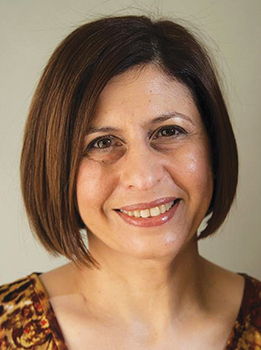
Readers may remember "A first class surgeon” (In Memoriam, Parsiana, January 21, 2019) which celebrated the life of Dr Pesi Bharucha, one of India’s outstanding surgeons and a former director of Breach Candy Hospital, who had died a few weeks earlier at the ripe old age of 98. To coincide with his birth centenary — which fell on September 22, 2020 — his daughter, Dr Azmy Birdi (pictured), who is a specialist in gynecology and a medical educator based in the UK, has published this slim but highly readable volume as a touching tribute to him.
 The book is rich in anecdotes, recollections, conversations and stories, many of which evoke memories not only of a bygone era but also of values which are fast disappearing. Much of the action described in it takes place in Jamshedpur (originally Sakchi) which, in the late 1950s and 1960s, was still quite barren except for the steel plant that Jamsetji Tata had, with remarkable vision, set up some 40 years previously. It was into this landscape that Bharucha landed in 1956 after gaining impressive academic credentials from the British Isles — including Fellowships of the four Royal Colleges of Surgeons based, respectively, in London, Edinburgh, Glasgow and Dublin — and working with distinction in the United Liverpool Hospitals.
It is a measure of the man’s dedication, commitment and professionalism that, within a short while after taking charge — as second in command to the then director, a strict disciplinarian called Col Albert Lasrado — Bharucha became a much sought-after doctor who had earned not only the gratitude but also the affection of the scores of patients who frequented the Tata Main Hospital. So also with his colleagues, as Birdi describes:
"He had the respect and admiration of the hospital staff and, as he treated everyone from the cleaners to the top management with equal courtesy, he discovered the value of team work and synergy … The staff adored Pesi, and he commanded the loyalty of everyone from the doctors to the cleaners and the watchmen.”
His duties included looking after some 10,000 refugees who had been housed in specially designed camps following the violent events in East Pakistan surrounding the birth of Bangladesh. The carnage had sparked communal riots in Jamshedpur and led to an explosive situation. "The overall responsibility (sic) and supervision of the medical care for the migrants was given to Pesi,” as it was again in 1979 when another bout of communal violence broke out during the Hindu festival of Rama Navami with predictable results. For his sterling efforts, both the Bihar and central governments conferred a special commendation on him – one of many awards and decorations to come his way during his glittering career.
If his humanity and sense of duty stood out at all times, the book also reveals a lot about Bharucha, the man. There is a fascinating account of how he, after being "considered a catch” by many eligible women, settled on his life partner, a law graduate called Gool (née Andhyarujina), with a little help from one of the directors of the Tata Iron and Steel Company, Sir Jehangir (Joe) Ghandy. Gool and Pesi set up home together and produced two lovely children, Zarir and Azmy. Gool played a supportive role as Pesi’s career went from strength to strength (among other things, he rose to become superintendent of Tata Main Hospital and the first professor of surgery at the newly established medical school in Jamshedpur as well as a member of the governing council of the Jamshedpur Blood Bank and the city’s Eye Hospital).
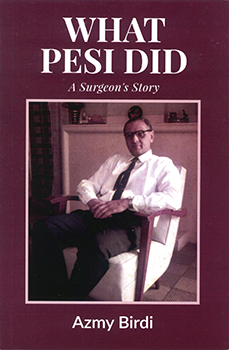 The contributions that Pesi made to the advancement of medical knowledge, training and administrative improvements at the Tata Main Hospital were not insubstantial, and these are recounted with admirable lucidity in the book. But that narration is leavened by references to many amusing incidents which add to the readability of Birdi’s tribute. Arguably the most entertaining of these is a case of ischaemic priapism — a state of prolonged penile erection, as Birdi helpfully explains for those unfamiliar with medical terminology — which was brought in for Pesi’s attention at the hospital one day. The patient, a strapping Pathan, had somehow managed to slip a metal nut over his reproductive organ and was unable to remove it as the organ had swelled prodigiously since. All efforts by the junior doctors to prise out the nut failed, and following increasingly desperate pleas by the patient ("Doctor saheb, méra machine theek kar deejiyé (Sir, mend my machine”), Pesi took control of the situation:
"Pesi looked at the turgid penis, the skin now discolored, and realized that he had to act fast. He wondered about a surgical saw to cut through the metal but this would risk damage to the skin. The quickest and simplest way would be to aspirate the blood from the penis… Using two needles inserted into each corpus spongiosum (the erectile tissue which contains most of the blood), about 50 ml of dark blood was seen, and once the penis was relatively flaccid, the nut was slipped off the shaft. There was an audible sigh of relief in the (operation) theater and the assistant surgeon breathed, ‘Well done, Sir!’”
Pesi’s work encompassed more serious tasks, including dealing with 400 outbreaks of smallpox in and around Jamshedpur in 1974. This was, says the daughter, one of his most arduous assignments but he managed to meet the challenge, working day and night in intolerable conditions, successfully vaccinating entire villages without any concern for personal comfort, much less any expectation of reward or recognition. By any objective standard, his contribution to smallpox eradication would have to rank as one of the highlights of his career. It earned him many honors — which he accepted with equanimity, given his self-effacing nature — including commendations from the World Health Organization and the Government of India, and a fellowship of the Indian Society for Malaria and Communicable Diseases.
When he retired from his job in Jamshedpur in 1980, he was, predictably, inundated with offers of positions in Bombay in recognition of his talents. He accepted a couple of them, first as honorary consultant surgeon at Masina Hospital (1981-85) and then, more significantly, as medical director of Breach Candy Hospital where he worked until 1996. His stint at Breach Candy saw a major expansion of the Hospital’s infrastructure and services, the securing of recognition from the Diplomate National Board for the training and accreditation of postgraduate students in situ, and an overhaul of the Hospital’s record-keeping system. Even after leaving Breach Candy at the age of 76, Pesi continued to put his expertise to good use by advising hospitals in other parts of India.
With restricted mobility following a flawed knee replacement operation and a corneal ulcer in one of his eyes, he had to slow down after a few years. A stroke made his condition worse, but he carried on uncomplainingly, tending to Gool who had by then started developing signs of dementia. He passed away, peacefully in his own bed, on November 28, 2018. "In all the trials and tribulations he endured in the last 10 years of his life,” notes Birdi, "Pesi was a shining example of how to accept events and situations that cannot change. He displayed a perfect understanding of how to really just be content with what he had.”
This is an inspiring and evocative book which will bring back memories of a gentler, more civilized world in which the principles of selflessness and noblesse oblige were the norm and brashness and one-upmanship the exception. The author needs to be commended for putting it together. She could have done with a little more editorial help, but that is a minor cavil. Hopefully, a future edition of the book will address any of the present work’s presentational shortcomings.
VENKAT IYER
Iyer is a UK-based barrister and legal academic.