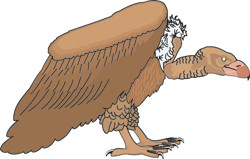
Research conducted by the Bombay Natural History Society (BNHS) and the UK-based Royal Society for the Protection of Birds (RSPB) has shown that the ban on the drug diclofenac imposed by the Indian government in 2006 has been effective. Used mainly for veterinarian treatment of domesticated cattle, the drug caused the virtual decimation of vulture populations feeding on contaminated carcasses across south Asia. The US-based online science journal PLoS ONE, published the results of this research in its May 11 issue, reported Hindustan Times (HT) on May 18, 2011.
With fewer animals being treated with diclofenac, the rate of annual population decline of vultures in the region is expected to slow down considerably to about 18 percent per annum for the oriental white-backed vulture from the current rate of 40 percent, notes the Afternoon Despatch and Courier (ADC) of May 13.
According to HT, the study was restricted to the oriental white-backed vultures since previous studies had established the link between their deaths and the consumption of the drug. "We expect our conclusions concerning this species will also be relevant to the conservation of the other two threatened species in south Asia,” Dr Richard Cuthbert from RSPB and lead author of the study was quoted in HT. Vibhu Mathur, deputy director and head of vulture conservation and breeding at BNHS cautioned, "The ban will be effective and vultures will be safe only when the amount of diclofenac in carcasses is 0.5 percent... We have tested another drug called meloxicam that is safe for vultures and are pushing it as an alternative for cattle.”
However, the illegal use of diclofenac manufactured for humans is rampant in the treatment of domestic animals. BNHS director Dr Asad Rahmani told ADC, "Human formulations are still being sold by some irresponsible companies in large veterinary-sized vials.” He feels that this must be outlawed to make diclofenac use for cattle more difficult and expensive.
In a related development the Uttar Pradesh Forest Department (UPFD) is gearing up for its first ever vulture census in the state, reported Daily News and Analysis (DNA) on April 25, 2011. Though wildlife experts and forest officials are elated at the increase in numbers of the endangered birds, a correct picture will emerge only after the scientific census is completed. Extensive plans for vulture conservation would be formulated after the actual numbers are counted and nesting areas identified.
K. K. Jha, chief conservator of forests, explained to DNA that the census was scheduled to be conducted in May as that is when vultures are hatched. There would be a second round of the census at the year-end to note how many fledglings have survived. The census will identify six species of vultures — white-backed, long-billed, slender billed, griffon, king vulture and white scavenger, all of which are to be found in the state.