As it enters its 80th year, the N. M. Petit Fasli Atash Kadeh has been spruced up
Text and Photos: Parinaz M. Gandhi
Shorn of its luster over the past decades, the golden flame has made a comeback on the Churchgate skyline. Major repairs and renovations over the last year, followed by a fresh coat of paint have succeeded in drawing attention to the Nusserwanji Maneckji Petit Fasli Atash Kadeh as it enters its 80th year on March 21, 2019.
The cubic style architecture of the Atash Kadeh is dominated by the tall cement flue over the sanctum sanctorum that ends in the shape of a flame. Among the few fire temples to have the sanctum sanctorum in the center of the edifice, the imposing structure rests on a high plinth. There are two wide flights of stairs leading to the entrance of the agiary in the front. One end of the driveway faces the residential quarters for a priest/manager. The other leads to the rear entrance of the fire temple which has a well in its proximity.
Portrait of Nusserwanji Maneckji Petit
"Instead of the fire temple looking fresh and happy, it was dingy and dark,” observed Kaiwan Kalyaniwalla, chairman of the Atash Kadeh and a senior partner of the prestigious law firm Maneksha and Sethna. "I took it upon myself as the custodian of the fire on the premises… to see the emperor (the fire being reverentially referred to as atash padshah) sits on His throne magnificently… This is something I wanted to do, hoping more Zoroastrians will come to the agiary.” The sacred fire that was temporarily shifted during renovations was reenthroned in its original abode on January 18, 2019 after three days of religious ceremonies by Ervads Adil Bhesania and Kaizad Kotwal under the guidance of Ervad Asphandiar Dadachanji. Srosh ni ijashni was performed on three consecutive days following which a celebratory jashan marked the completion of the requisite rituals.
Flanked by the Western Railway headquarters on one side and the Bai B. S. Bengallee Girls’ High School on the other, when the agiary was inaugurated in 1940 "it was a residential area with many Parsi owned bungalows. These have been replaced by office buildings,” rues the chairman. Currently there are four or five devotees who daily come to the Atash Kadeh, states Hanoz Patel who has been associated as trustee since the last five years.
Devotees can access the multi-tiered agiary at different levels. The sanctum sanctorum at the mid level can be reached from climbing the main steps in the front or internal stairways. Behind the kebla, separated by a door, is the dais of the main hall where the tables are laid during the Fasli muktads that start on mah Spandarmad, roz Ashtad, according to the Fasli calendar.
The ground level access from the rear entrance leads to a room where the atash dadgah is usually housed. During renovations it served as the abode for the sacred atash adaran fire. Adjoining this room is the urvisgah where the higher liturgical ceremonies can be performed. Facing these two rooms is the main hall where religious and social functions are held. This same hall can also be accessed from the front of the building.
Open to Parsis from the time the Havan gah boi is performed after sunrise until the Aiwisruthrem boi is performed after sunset, three priests, Ervads Firdaus Surti, his father Aspi Surti and Viraf Vimadalal share the five boi duties at the fire temple. The trustees — Kalyaniwalla, Patel, Khodadad Irani and Falee Bilimoria — insist that all the five boi ceremonies be performed to ensure the fire retains the status of an adarian.
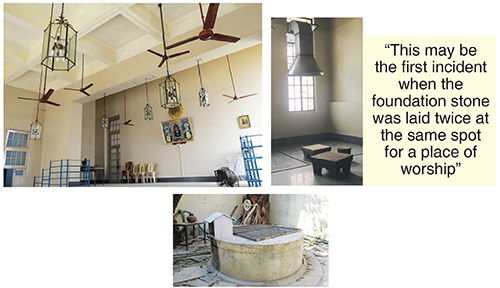
Clockwise from above l: Hall, urvisgah and well at the Fasli Atash Kadeh
Devotees attend Jashn-e-Sadeh function organized at the Fasli Atash Kadeh hall
The sacred fire for this first Fasli fire temple in Bombay had been enthroned at the Atash Kadeh on Fasli New Year, March 21, 1940. This followed the completion of the two-month ceremonies for creating the new alat (religious requisites), states Marzban Giara’s Global Directory of Zoroastrian Fire Temples. Before a large gathering of Zoroastrians, Ervad Framroze Bode was appointed its dastur. Two months earlier Bode had taken the lead in the five-day consecration ceremonies of the varasyaji (albino bull). Later in the evening at the celebratory function, Hamabai Jehangir Mehta (née Petit), the largest benefactor who contributed one lakh rupees towards the Atash Kadeh, was presented a scroll, as was her husband Jehangir.
Two foundation stones had been laid for the Atash Kadeh, both on Jamshedi Navroz, the New Year for Faslis. The first was in 1933 by Meherwanji Mancherji Cama who had offered Rs 85,000 but unfortunately expired in 1935. The second was five years later by Hamabai at a private function on March 21, 1938. "This may perhaps have been the first incident in the Parsi history of Bombay when the foundation stone was laid twice at the same spot for a place of worship with the same objective,” wrote Giara.
It was 34 years after the foundation of the Zarthosti Fasli Sal Mandal (ZFSM) by noted scholar Kharshedji Cama in 1906 that the Fasli agiary was built. With the establishment of the Mandal, a beginning was made to perform rituals according to the Fasli calendar under the guidance of Ervad Khurshedji Pavri at the Vachha Agiary at Fort. Unlike the Kadmi and Shahenshahi calendars that are out of sync with the seasons, the Faslis add a sixth Gatha day, Roz-e-Wahizag every four years to ensure that their New Year is always celebrated on March 21.
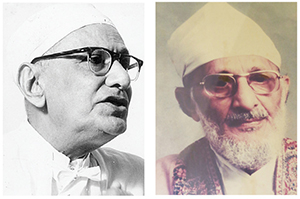
Dasturs (Drs) Framroze Bode (l) and Navrooz Minochehr-Homji
Clockwise from top l: Kaiwan Kalyaniwalla, Hanoz Patel,
Falee Bilimoria and Khodadad Irani
Features of the fire temple
With generous contributions from donors and trustees, over Rs 33 lakhs were incurred on the cost of renovation. Kalyaniwalla related how he would approach any potential donor, convincing him/her that the Fasli agiary is a worthy cause. Although many gave largeheartedly, the funds available could not cover the kitchen area and the restroom for the priest. Due thought and attention have been given to each feature of the fire temple: from the collection box affixed to the wall to avoid possible thefts, to the conveniently designed wash area with sinks for the padyab kusti, as well as the enclosure created for ladies to perform their kusti ritual.
Facing the recently polished white marble latticed kebla at the Atash Kadeh are two prominently placed portraits of Petit and Cama. A full length painting of Zarathushtra by Shiavax Chavda which was badly damaged by water seepage has been restored, though not to its original condition. Photos of Dastur (Dr) Navrooz Minochehr-Homji (the venerated scholar priest who served as the Dastur here for 30 years after Bode resigned) are placed on the wall behind the kebla as also on the stage in the hall.
The many levels of this agiary that contribute to its distinguishing features also mean that there is probability of extensive leakage from the terrace at every level, explained Kalyaniwalla. He referred to the skilled ladies from Rajasthan being assigned the task of re-laying chinis (minute tiles) on terraces. Civil contractor Cyrus Unwalla who oversaw the restoration work volunteered to finance the cost of this chini work, revealed Kalyaniwalla.
"We are very fortunate that Khodu (Irani) devoted himself to the restoration, with regular supervision,” added Kalyaniwalla. Sometimes Irani would even fix the screws if necessary. Beji Vimadalal, as caretaker of the premises, oversees the property with its towering trees and other greenery.
Kalyaniwalla has imbibed his fervor from erstwhile trustee, the late Rusi Sethna, his senior partner at Maneksha and Sethna with whom he would commute to work each day, halting at the Fasli agiary every morning. Rusi’s father Nusserwanji was also a trustee of the Fasli Atash Kadeh. In fact, Hamabai was a close friend of Nusserwanji and a client of their legal firm.
Fruits for the faithful
"To see more footfalls at the agiary” is the earnest wish of Kalyaniwalla. Whilst he is open to suggestions to make optimum use of the Atash Kadeh premises, he is equally determined that "no controversy should come to this religious site.”
Over the last several decades, the hall of the Atash Kadeh has been mainly used by Sazeman-E-Jawanan-E-Zartoshty-E-Irani (The Iranian Zoroastrian Youths Organization in Bombay). They convene 10 functions in a year attended by nearly 150 to 200 Persian speaking Zoroastrians and also assist with other memorial services. Those Iranis who follow the Fasli calendar gladly participate in the six gahanbars and four jashans organized by Sazeman with financial contribution from the Iranian Zoroastrian Anjuman, reported honorary administrator of the Sazeman, Darayush Zainabadi.
For these Iranis it is heartening that there is at least one organization in Bombay that celebrates Maediozarem, Maedioshahem, Paeteshahem, Ayathrem, Maediarem and Hamaspethmaedaem gahanbars in the appropriate seasons like their counterparts in Iran. And then there are the four jashans to mark Khordad Saal (birth anniversary of Zarathushtra) and Zarthost no diso (death anniversary of Zarathushtra), Jashn-e-Sadeh to celebrate the creation of fire, and Jashn-e-Mehergan to celebrate the victory of good over evil. The functions invariably end with distribution of fruits and dryfruits, or sheer o sedab with naan when it is not an auspicious occasion.
Every year Sazeman distributes bilingual (Persian and English) wall calendars listing Fasli and Kadmi mahs and rozs. Different pages of the calendar beseech: "Follow the Fasli calendar which is scientifically most correct.” "Perform your religious ceremonies according to Fasli calendar which is most correct.”
Fervor of the founders
According to Parsi Lustre on Indian Soil, Hamabai (born 1883) was the "granddaughter of millionaire brothers Sir Dinsha and Nusserwanji Petit and has inherited the spirit of benevolence of both these philanthropists... The amount of Hamabai’s charities, both communal and cosmopolitan, reaches a very high figure.” On the death of her mother Bai Avabai in 1907, she inherited jewelry estimated at about Rs 12 lakhs which she sold and donated the proceeds towards the foundation of the Parsi Girls’ Orphanage in Bandra named in her mother’s memory.
Jehangir and (above) Hamabai Mehta Photos: Parsi Lustre on Indian Soil;
(far r): portrait of Merwanji Mancherji Cama at the Fasli Atash Kadeh
Known to be a gusty sportswoman, she was a keen rider and owned race horses. She was also one of the first Parsi lady motorists. Her husband Jehangir K. B. Mehta whom she married when she was 36 was a consummate rider too and the two had toured the world. He was a nephew of Sir Pherozeshah Mehta.
Merwanji Mancherji Cama (1849-1935), founder of the Cama Athornan Institute at Andheri, set apart cash and property valued at Rs 25 lakhs to establish an institution for training of mobeds in memory of his father Mancherji.