We can see the shore!” a man shouted excitedly. Burjor felt too sluggish to drag himself onto the deck of SS Victoria III, about to finish its 19-day voyage from Singapore to Bombay. Most of his fellow passengers ate either beef or pork. He had to sustain himself on coarse rice, potatoes and a thick dal, supplemented with some apples he had bought in Singapore. Drinking water was strictly rationed and he had to sleep in the storeroom with a large bag of grains as his pillow. However, what bothered him most were the rats darting all over the steamer.
Burjor desperately wanted to see his three children — Rustom was nine and Mumai, four, when he had left for Singapore three years earlier to work as a storekeeper for Siganporia Cotton Trading Company. And Ala had been born two months after he had boarded the train to Bombay from Navsari. He had managed to buy gold buttons for Rustom and 18 carat gold chains for the girls.
His legs felt weak carrying the black tin trunk on his head from the Victoria Docks to a distant uncle’s home in Ghogha Street in the Fort where he received a lukewarm welcome reserved for an unavoidable guest. He ate well after many days and drank as much well water as he wanted. He was suddenly assailed by a horrible stench and saw several dead rats in the open drain outside the window.
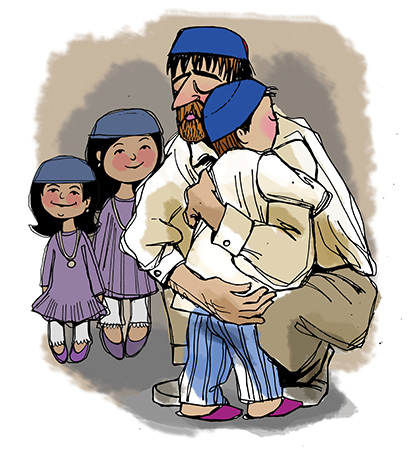
Illustration by Farzana Cooper
"You, had better leave for Navsari tomorrow itself, Burjor,” advised his uncle. "In the last few weeks, a lot of people have fallen ill due to these rats.”
"Rats!” exclaimed a surprised Burjor.
"Yes. There is some flea which bites dead rats and then if it bites you, you fall ill,” explained the grim faced uncle.
Burjor spent one more uncomfortable night with the overpowering stench. Early morning, he carried his tin trunk to the Victoria Terminus railway station and saw a couple of dead bodies being trundled on handcarts. The streets were littered with dead rodents. A barber, with a long beard, invited him into his salon for a haircut and cleaning of the ears. Burjor felt good after the man expertly snipped his hair. The barber then heated coconut oil and poured it into both Burjor’s ears. With a syringe-like object, he sucked out the wax and said, "It seems you have not had your ears cleaned for years!” Burjor nodded with a smile. He could hear much better now.
He had to change trains at Thana, and twice again, before he hired a bullock cart from Surat railway station to Navsari. On December 15, 1896, around dusk, after having endured a journey lasting nearly 27 hours, a horse-driven carriage delivered Burjor to his two storied joint family residence in Seervai Vad, a stone’s throw from the Atash Behram.
Rustom hugged his father and would not let go him. Mumai and Ala stood in a corner and smiled shyly.
"You have become so tall, Rustom!” said Burjor proudly and smiled at his wife Aimai who was celebrating her 30th birthday. Aimai’s pink complexion blushed visibly.
After dinner, Burjor’s many cousins were curious to know about his stay in Singapore and about the contents of the tin trunk. Mumai and Ala strutted around wearing their new gold chains.
"Let him bathe before the well water becomes ice cold. You can talk to him tomorrow morning,” said Burjor’s mother, wearing a black sari signifying her widowhood at the age of 21. Burjor touched her feet and went to bathe. "Jeevto réhjé, dikra (stay well, son),” she blessed him.
After three years in humid Singapore, Burjor began to shiver in the bitter Navsari cold after he had emptied water from a couple of brass vessels over his head. Utterly exhausted, he lay on a huge four-poster and requested his doting children, who had climbed all over him, to let him sleep.
Around midnight, Burjor felt acute discomfort in his left armpit. It was excruciatingly painful to touch. He woke up Aimai who noticed a gland like swelling. At dawn, when the women of the house began to sprinkle water outside the front portico to settle the dust, and the rooster in the backyard started heralding a new day, Burjor was delirious with high fever. His cousins hastily summoned Lal Vaid, an ayurvedic medical practitioner known all over Navsari by the distinctive red turban and the red dhoti he always wore.
The Lal Vaid felt Burjor’s pulse, checked his tongue and the swelling in the armpit which had increased considerably in size, shook his turbaned head and told Burjor’s uncle, "Summon the Dasturji to administer the last rites. He is a victim of plague.” The old Dasturji bent over Burjor and recited the Ashem Vohu in a trembling voice. A tear escaped Burjor’s eye and ran down his face.
It took two able-bodied men to separate Rustom from his father’s corpse, as Aimai sat tearless in a corner, wearing a black sari borrowed from her mother-in-law. Mumai and Ala kept asking their grandmother why their father was sleeping so much, even after sunrise.
Author’s note: In September 1896, a bubonic plague epidemic broke out in Bombay and lasted till the end of 1897 in which a large number of Parsis perished. A superstitious minority attributed this loss to the consecration of the eighth and last atash behram in India — the Anjumanna Atash Behram (1897) — which, they alleged, breached the rule that the total of all atash behrams has to be an odd number.
Berjis Desai, author of Oh! Those Parsis and The Bawaji, occasionally practices law.