Died: Areez Pirojshaw Khambatta, 85, founder chairman and creator of Rasna, the world’s largest selling soft drink concentrate, founder chairman of the traditionalist World Alliance of Parsi Irani Zarthoshtis (WAPIZ), and erstwhile vice president of the Federation of the Parsi Zoroastrian Anjumans of India and president of the Ahmedabad Parsee Panchayat (APP); in Ahmedabad on November 19, 2022 following cardiac arrest.
Variously described as a "protector… guardian… warrior… savior,” nearly every speaker at the memorial meet organized by the APP on November 19, 2022 described Khambatta as a "choost (staunch) Zarathushti.” To celebrate the philanthropic leader’s life, the function started with a jashan in the morning performed by four priests, including Khambatta’s grandson Ervad Arzad, and ended with a gahanbar lunch for the attendees.
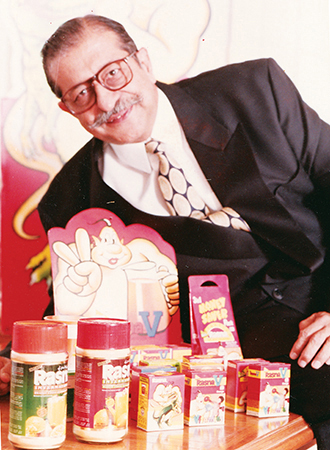
Top: Areez Khambatta with Dasturs (Dr) Firoze Kotwal (l) and Cyrus Dastur;
above (from l): Areez and Persis Khambatta at prayer before Federation meet in 2012;
on the main table with (from l) Khojeste Mistree, Yazdi Desai, Dinshaw Mehta
A condolence message from Prime Minister Narendra Modi read out at the meet described Khambatta as "a determined, courageous and visionary industrialist.” Commending Khambatta’s business acumen and far-sightedness to carry forward a small brand to the international stage, Modi was impressed that he used his wealth for the cause of health, education and social service.
Also shared were messages from two High Priests: Dastur (Dr) Firoze Kotwal of Bombay and Dastur Cyrus Dastur of Surat. He was "a great stalwart who treasured our community above all else,” wrote Kotwal commenting on his "fearless opposition against those who sought thoughtless change in the tradition and practices of our faith…and supporting those who uphold our sacred traditions and practices. Under his chairmanship WAPIZ laid the foundation for a resilient and robust faith.” Having made "Ahura Mazda a partner in his wealth” he gave generously for the cause of the religion and to those worthy and deserving, including the mobeds. "His respect for the high priests was unparalleled,” appreciated Kotwal. Dastur too recalled the respect accorded to him when he was invited to perform Khambatta’s grandchild’s navjote and described the traditionalist as the community’s custodian.
Echoes of these sentiments were expressed by nearly a dozen speakers at the memorial meet. President of the APP, Brig Jahangir Anklesaria (retd) acknowledged that he always looked up to Khambatta "as the man who put me on the right path where service to the community is concerned. He stood by me whenever I needed his help and advice.” His counsel that Anklesaria most valued was: "As long as you are convinced that what you are doing is for the common good and the good of the community and betterment of the religion, don’t think twice what people will say.”
Other co-trustees who had worked with him shared their reminiscences too. During his tenure as APP trustee and president, he helped the Panchayat to considerably augment its funds from the properties owned by it, recalled co-trustee Farokh Kavina. Katy Daruwalla described him as "a man of perfection… Once he had decided on a course of action, he would not rest nor let anyone else, until it was achieved. Punctual and disciplined, he expected the same standards from others too.”
"Brave and capable, he could withstand opposition squarely by the courage of his convictions,” commented Meher Medora, founder of the Zarathusti Awareness Group of Ahmedabad appreciating his financial backing 24 years ago. When he was faulted for giving funds from the Panchayat, he contributed an equal sum from his personal funds. "His motto was: ‘you dare me, I dare you.’ His Midas touch was really great.”
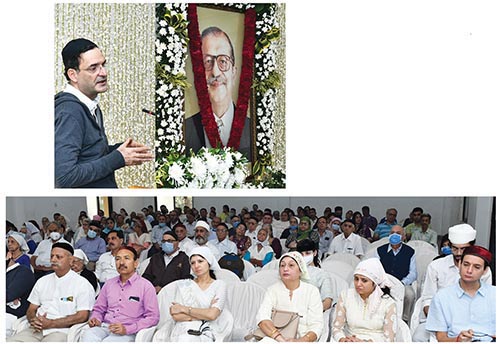
At the memorial meet (top): Piruz Khambatta pays tribute;
above: family (in front row) and Panchayat members
WAPIZ trustees Khojeste Mistree and Anahita Desai traveled from Bombay to attend the memorial meet in Ahmedabad. In 2008 when Yazdi Desai and Mistree became Bombay Parsi Punchayet trustees it was thanks to the "huge moral and financial support of Areez and his family,” acknowledged Mistree who described Khambatta as "a born leader who did not want the voice of orthodoxy to be weakened. He was an outspoken traditionalist…” Known to have donated crores in charity, he had contributed one crore rupees for the inception of WAPIZ.
The birth of WAPIZ followed a tumultuous Federation meeting in Ahmedabad hosted by the APP in 2004. The issue of contention was the formation of a world Zoroastrian body which was opposed by Mistree and Yazdi as it would include overseas Zoroastrian associations that permitted non-Parsi spouses as members. With Khambatta’s support, the move was scuttled.
"He was an orthodox to the core,” reiterated Anahita acknowledging that what helped promote the bonding with Areez is the shared belief "with absolute conviction that the only way to save the community and its identity is to preserve and protect our traditions and religion.” She recalled his oft repeated lines "Jé dharam né chhédsé téné Areez Khambatta nahi chhodsé (he would not spare anyone tampering with religion) for which he came to be known as "the lion of Ahmedabad.” He believed in truth and simplicity. "Diplomacy was not his forte. He lost many friends because of that but he never gave up orthodoxy for anyone.”
He was happy to fly in economy class even while the lawyers whom he funded to fight for the orthodox cause led an opulent life, remarked Anahita. Khambatta had helped finance the Valsad Parsi Anjuman’s litigation costs when Goolrookh Gupta challenged their resolution barring interfaith married women from entering the fire temple or doongerwadi in Valsad. "He was confident of his worth. He did not need a luxurious life to prove his worth.” He sponsored the fortnightly WAPIZ Page in The Free Press Journal that "helped us control the reformists in our community. He could galvanize the community and he led from the front. I wish there were more like him who feel so passionately about our religion and community,” added Anahita.
"WAPIZ was used by him as a platform to spread religious values and strengthen the hands of the priestly class who defended the dakhmenashini system,” co-trustee Homi Ranina stated in a note for Parsiana. To him, "Areez was a warm-hearted individual who always had a kind work for the poor and needy. Charitable as he was, he rightly believed that every member of the community should contribute, however small an amount, to keep our religious institutions alive.”
Blessed with both power and devotion, he used his resources for the good of humanity, stated educationist Dr Armaity Davar. She considered him "a representative of truth. There were no sugar-coated statements from him. He did not seek popularity.” Having been co-students at the Gujarat College from 1954 to 1958, she recalled how he had shown his leadership skills even then when contesting and winning the elections as general secretary of the Students Representative Council.
Karachi born Khambatta’s education was in Ahmedabad’s St Xavier’s School after which he graduated in chemistry and gained further training in flavor technology from the University of Minnesota. He initially joined his father Pirojshaw in his soft drinks business and launched Jafe, an orange drink (after the city in Israel famous for its Jaffa oranges), recalled former APP joint secretary Firoze Davar. To ensure that the population should have access to affordable soft drinks "with 21 vitamins and minerals” he launched Rasna that was able to give multinationals good competition. He started with soft drink packs that could make 32 glasses for five rupees. "Flavor science is like magic. It is pure nakkal (imitation) but for that nakkal you need a lot of akkal (brains),” Khambatta had told Parsiana during an interview (see "Concentrated success,” November 1990).
Ervad Khushru Ghadiali recalled the time when he was dismissed from his job in the education department due to some misunderstanding and how Khambatta’s timely intervention helped save his career. "He was like a coconut, hard from the outside but tender inside,” summed up Ghadiali.
A proud Indian, he cherished his association with the Home Guards where he served as commandant for over two decades, mentioned Naval Daruwalla who was most impressed with Khambatta’s dedication, industriousness and hard work that generated fame, wealth and power which he used judiciously.
Having known him as a family friend, Shirin Kanga related how many Rasna products would be finalized at his home after getting the views of family members who would be asked to bring out their glasses and savor the taste of the drink. Her late husband Navroze had assisted Khambatta in the all-India distribution of the product. Dedicated to his family, Khambatta would take an interest in every detail, even accompanying wife Persis for shopping. A workaholic, he was known to leave home at 7 for office after spending time in prayer. In the Aiwisruthrem gah, Areez, Persis and their three children would be seen standing in the agiary during the entire recitation of the gah, she recalled. He continued to be proud of his athornan legacy.
On behalf of the family, granddaughter Avan wondered, "Why is it that greatness is never embraced when a person is actually alive?” Living in a joint family with her grandparents, she recalled the stories he would share of his official and personal interactions and urge them to note it down for a prospective book on him! And yet he was averse to the family shooting photos or videos on birthdays urging them to enjoy the moment instead of wasting time to capture it for posterity. Despite their occasional differences of opinion she was keen to continue taking inspiration from his life, "his success and his mistakes.”
Among the honors he was conferred were the National Citizen’s Award for outstanding contribution in the field of commerce by the President of India Shankar Dayal Sharma as also the President of India’s Home Guard and Civil Defence Medal, the Paschimi Star, Samarseva and Sangram medals. But most valued by him was the Samman Patra by the finance ministry for being the highest taxpayer of Gujarat.
Founder and chairman of the Areez Khambatta Benevolent Trust as also the Rasna Foundation that have been promoting many philanthropic causes, he has made an impact in the field of women empowerment, subsidized eye surgeries, education, and care of senior citizens.
"We all need to carry his legacy forward,” stated son Piruz, chairman and managing director of Rasna, assuring that "the Khambatta family is behind any good charitable work and project not only within the Ahmedabad Panchayat but punchayets across India helping the Parsi community.” Elaborating on the frequent references to his father as "orthodox,” Piruz stated, "He was the most reformist fellow you could think of. He got a computer and mobile when no one else in Ahmedabad had one. When it came to religion, he believed that if you are half learned you cannot change something that has grown over centuries… We can be modernists, reformists but when it comes to religion it is best to stick to what we are known for so that we stay that way.”
Having worked closely with his father, Piruz mentioned that contrary to the current situation when people want to reduce their days of work from six to three, his father believed in "work, work, work… To always be in the nitty gritty of things, to try new things, lead from the front, to always ensure work is done on time and also ensure that any opposition to work is also met with.” And yet he made time for the country, the community, the family. "My kids say he was a better father than I am,” laughed Piruz.
Khambatta is survived by his wife Persis, son Piruz, and daughters Delna and Ruzan.