The India Region of the World Zarathushti Chamber of Commerce hopes to introduce
three new chapters in its 21st year
Parinaz Gandhi
"WZCC (World Zarathushti Chamber of Commerce) has come of age. We are growing, blooming and here to stay. Let us march forward with ethics,” remarked Behroze Daruwalla at the 20th annual general meeting (AGM) of the WZCC India Region held as a hybrid meeting in Bombay on September 30, 2023. While some members of the Mumbai and Pune chapters were present at the Banquet Room of the West End Hotel there were a few others from Bangalore and Poona who had joined online.
Blessed with "a lot of stalwarts, seniors who are willing to step forward,” she urged the members to bring in the younger generation — children, grandchildren, nieces, nephews — who can benefit from what WZCC has to offer. For youngsters aged 12 to 18 years, there is no membership fee. From 18 years to 21 years, they are expected to pay Rs 1,000 a year, and thereafter the full annual or life membership dues. The only mandate for the global WZCC is "to make the community financially independent and to help the future generations to flourish,” she stressed.
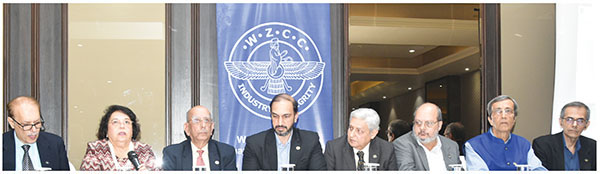

From l, top row: Aspi Antia, Behroze Daruwalla, Adi Siganporia, Zerick Dastur,
Capt Percy Master, Viraf Deboo, Tehmasp Bharucha, Jamshed Mistry;
2nd row: Phiroze Kharas, Percis Dubash, Farrokh Rustomji, Rashna Jehani;
(online, clockwise from top l) Zarine Kharas, Shernaz Siganporia, Sanaya Patell and Cyrus Bharucha
She referred to the two new committees set up by WZCC, the legal committee chaired by Jamshed Mistry, vice chair of the Mumbai chapter, and Zerick Dastur, honorary secretary of the India region, as also the compliance committee under the stewardship of global president Capt Percy Master and a team of professional accountants, lawyers and those familiar with the workings of nongovernmental organizations. "With rules and regulations changing rapidly, we decided to ensure that WZCC does not fall through any cracks, especially with government entities,” Daruwalla added.
While currently the India Region comprises Mumbai, Pune and Bangalore chapters, they are hopeful that by next year WZCC will have representation from Delhi, Ahmedabad and Hyderabad. Dastur stated that the 10 directors heading the India Region held several meetings throughout the year and there has been "a wonderful mix of synergies.” He gave credit to the central administrative office of WZCC and its "ideal chief executive officer Aspi Antia who is omnipresent, ably supported by Ronnie Shrof” as also "the two wise men Phiroze Kharas and Adi Siganporia contributing their rich experience” as erstwhile global directors.
Presenting the accounts on behalf of the treasurer Jimmy Khan who was unwell, Siganporia highlighted the salient features that showed the year ended March 31, 2023 had a surplus of Rs 58 lakhs of which Rs 47 lakhs is to be used for the earmarked purpose of providing loans to entrepreneurs. During the year Rs 1,17,00,000 were given to six entrepreneurs. "The flame of entrepreneurship is still bright and shining,” Siganporia observed. Hopeful that "Vitamin M(oney)” will be forthcoming, he felt "several high net individuals can give us support” to pursue the 36 activities that WZCC has shortlisted. "Many members have not paid their dues to WZCC,” he regretted.
The next global AGM will be held in Poona from January 4 to 6, 2024. The theme selected is "Connecting continents and forging friendships.” Expecting maximum participation from members of the India Region, Viraf Deboo, regional director (India) on the WZCC international board, announced that registrations with four options will commence soon. The inaugural session will be at the Central Park Hotel. The program for the next two days will be at hotel Crowne Plaza. This will include the AGM that will be live-streamed, the Women Entrepreneurs (WE) wing session to be co-hosted by Daruwalla and Zerbanoo Gifford, president of the World Zoroastrian Organisation, Dr Rashneh Pardiwala’s talk on sustainability and the eco system in the corporate world, a fireside chat with a youngster from Nestle in Switzerland, plus some panel discussions and a youth event. The gala night will be at the Turf Club lawns. Those who register will be added on the Delegates’WhatsApp group and thereafter all communication will continue on that forum.
Cheering for chapters
In the absence of Mumbai chapter chair Xerxes Dastur, vice chairman Mistry mentioned that their membership is inching toward the 400 mark and funds are being generated. Honorary secretary of the Mumbai chapter Percis Dubash gave an overview of their activities through the year that included Coffee with WZCC, a networking dinner, a fundraiser, a walk through Bombay Stock Exchange with lessons on how to spread out one’s investment portfolio and decode the budget, another legal heritage walk through the aisles of the Bombay High Court Museum, a webinar on cyber security that gave an understanding of the role of a Virtual Chief Information Security Officer, and a session on the legal and compliance issues for a startup to scale up.
Pune chapter chair Tehmasp Bharucha mentioned that they have around 100 members with a combination of seniors and students, individual and corporate members. Nearly a dozen new members were added during the year. Their committee meets every month to chalk out plans. At the members’ night every quarter they invite experts in the fields of business and finance, wealth management and investments to address them. The youth too are encouraged to conduct events. In memory of Cornelia Sorabji, the first woman to graduate from Poona’s Deccan College and the Bombay University in the late 19th century three educational institutes are planning to convene a joint function.
The eight-year-old Bangalore chapter has 73 members, 15 of whom are youth, stated chapter chair Cyrus Bharucha who had joined on Zoom. Giving an overview of their activities, honorary secretary Sanaya Patell alluded to their efforts to "nurture talent, create leaders and conduct theme building exercises” while erstwhile secretary Zarine Kharas relayed visuals. Their marketplace and winter bazaar as also the Parsi Food Bazaar are popular among the locals. Their session on the dos and don’ts of higher education, career talks, forging important conversations among five inspiring ladies were well attended. Besides connecting over coffee for a session on digital marketing and another on "The entrepreneur in you,” they had a program conjointly with WE on "Women and careers: embracing change.”
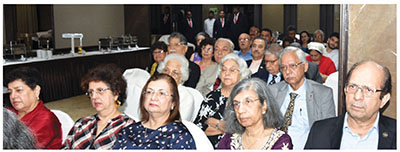
WZCC members attending the India Region annual general meeting
Committed committees
The webinars conducted by WE saw an average attendance of around 70 members and guests from across the globe, reported Dubash. These provide a platform for networking, training programs and workshops on personality and business development as also advisory and mentoring opportunities. "How my hobby turned into my profession,” "The impact of an entrepreneurial woman,” "Son rise — making men strong allies of women for a safer and equitable world,” were some of the subjects explored. In addition to the global Zoom events, each chapter endeavors to conduct at least two/three WE meetings that focus on sustainability and social entrepreneurship.
Youth representative Rashna Jehani reported that their "social media team is up and running.” Their presence on Instagram is led by Anaheez Patel. To introduce those who have completed their schooling to the workings of WZCC, the youngsters conducted a full-day session at the Holiday Programme for Youth. Their session on those who have traversed the offbeat road featured designer Ashdeen Lilaowala and sculptor Arzan Khambatta. In addition to their monthly Chai with WZCC, the youth in Poona held a session with Prof Farrokh Mistree from the University of Oklahoma who offered guidance to those seeking to pursue higher studies abroad.
"Entrepreneurship creates jobs which provide emotional security. Developing a successful business creates wealth and a worthy legacy for the next generation. India has the third-largest ecosystem for start-ups in the world,” stated Kharas when giving an overview of the Business Advisory Committee (BAC) that supports entrepreneurs. Among the 14 individuals assisted over the last few years, six have fully repaid the loans, five are repaying and three are in the moratorium period of six months. Three new applications are in the pipeline. Prospective entrepreneurs are recommended to read three primers. Thereafter the applicant is expected to respond to five basic questions from the BAC based on which the Committee decides whether he/she is worthy of finance or should be mentored to create a business plan.
"There is a need to change the name of Zoroastrian Faculty Network (ZFN)” for it is not only the faculty members who are interacting but also the students who benefit from the series of webinars that are funded by the R. D. Sethna Trust Fund, suggested ZFN core team member Farrokh Rustomji. These webinars that have generated interest even among the youth in Iran are available on their website zoroastrianfacultynetwork.org. The trustees of the R. D. Sethna Scholarship Fund have signed a memorandum of understanding with the Technical University of Denmark and
Sciences Po University of France.
President’s plans
"We cannot build the future for our youth but we can build our youth for the future,” stressed Master, convinced that the way forward for the community was to adopt the timely and universal message of Yasna 28.4 of the Gathas which exhorts: "To follow the path of Asha let us strive, if as a community we want to thrive.”
Giving an overview of the London Conclave in July 2023 which had for its theme "Inspiring conversations in inspiring locations,” Master stated, "One thing we gained from each and every speaker was they were living by the tenets of our religion and giving back to society when they had established themselves in business.” He alluded to the select venues: the Zoroastrian Centre, the Tower Bridge Hotel, the British Parliament, the cruise on the River Thames and the Conference Room at the Lord’s cricket ground. At Lord’s they were privileged to walk down the Long Room, an honor reserved for Test cricketers. Among the dignitaries from whom they learnt about world trade was former British Ambassador Lord Simon McDonald and Paul Schroders, chairman, International Chamber of Commerce that has 200 chambers under its umbrella. Forging networks with different chambers would broaden networking avenues for members, emphasized Master.
At the AGM, Master advocated a strategic plan for the WZCC saying, "There should be a dedicated path irrespective of who takes over as president.” Hoping that the youth come forward to take advantage of WZCC programs, Master remarked tongue-in-cheek to the gathering predominantly of seniors, "Today we can see all youth… As we know, age is only a number.”
"Oodles of goodwill”
"In the collective consciousness of non Parsis there is a favorable image of the community and oodles of goodwill that should give an edge to a Parsi businessperson,” commented chief guest Berjis Desai in his talk on "The Parsi Advantage in Business — How to Maximize.” Although there is no evidence of this, Desai, a solicitor who specializes in transactional and dispute resolution law, maintained that if two proposals are being considered for private equity, "it is likely that the Parsi promoter who plays his cards well will be successful rather than the non-Parsi one. This is the Parsi USP (unique selling point). We should become conscious of this advantage and exploit it for maximum advantage to the community.”
 Briefing the WZCC members on the Sasanian empire when Zoroastrianism was the state religion, with 35% of the world population reportedly being ruled over by Khosrow II, Desai compared it to the dramatic reversal when Khosrow II was overthrown in a coup by his son. His grandson Yazdegird III was the last of the Sasanian kings in 651 CE. After his defeat, conversion by sword by the Arabs reportedly resulted in a large section of the population converting to Islam.
"The new ruling class was accepted very gracefully. It is in our DNA to remain loyal to the ruling establishment when things change irrevocably,” stated Desai. Several generations of Zoroastrians have adopted "the stand of not being rebels but accepting the situation. Even the diehards who came to India to protect the religion, although very different from the natives, their main virtue was humility, accepting the conditions of the local rulers and being very diplomatic that helped in their assimilation.” They knew how not to be obtrusive; they fought loyally alongside the locals when foreign invaders came.
The first Meherjirana whose knowledge of Zoroastrianism is said to have impressed the Mughal emperor Akbar had earned large dispensations of land. The same was the case with the Desais of Navsari who won favors from the Gaikwads of Baroda. From refugees, Zoroastrians became citizens of consequence. This continued with the advent of the British.
Their ethos of hard work, entrepreneurship, desire to innovate was very evident. Realizing their worth the British enticed them to Bombay by granting them land for disposal of their dead; "a useless plot on Malabar Hill where they earlier hunted rabbits.” Once the Parsis came to Bombay, they took to Anglicization very easily with "their flexibility and mental nimbleness in learning a new language. There were no taboos on them nor any central hierarchical structure to restrict them. They enjoyed a disproportionate representation in professional and public service and remained loyal to the British until the last century. With their vibrant entrepreneurship they were able to create a great goodwill for the community” and built massive business empires in shipbuilding, textiles, steel, even opium.
"Our virtues and eccentricities are seen as benign, harmless, robust, good-hearted. We are perceived as litigious and cantankerous too,” observed the legal expert. He referred to one litigant who felt offended when a lawyer approached him with consent terms. He took pride in the fact that he was involved in 158 law suits and was looking forward to the 159th. To those members of the community who are "wrongly pompous and display false notions of superiority,” Desai recommended "the need of the hour is to be relaxed. Judges, administrators, regulators try to extricate a Parsi from a difficult situation.”
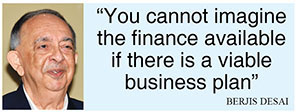
For the youth, more important than capital and finance, are mentoring banks that can guide them to formulate well sustained business plans, opined Desai. Since the WZCC offers loans but doesn’t continue to hold equity in those startups they are funding, he felt that they could consider other structures where fund providers continue to have a soft equity stake. The capital thus generated would help finance projects on a much larger scale. "You cannot imagine the finance available if there is a viable business plan,” he assured the members.
While conceding that the community numbers are declining, Desai remarked, "Our forefather did great things. We may not be able to do that but even if we do good things using our emotional intelligence Parsis may survive much longer than you think.”