Dogs can never ever be on the menu of Parsis and Iranis because of their love for the animals. A dog is a companion, a playmate, a loyal friend and a member of the family. Ehtirám-i-sag, respect for the dog, is an inherent quality among us.
Our dogs bond with us throughout their lifetime and when they die, we wrap them in old sudrehs and recite prayers. Although non-Zoroastrians are prohibited from setting eyes on the body of the deceased, a dog is brought in for sagdid (dog sight). Likewise, the chasni is happily shared with dogs, but not with non-Parsis. Dogs are even fed in commemoration of our dead.
The Vendidad lists several dos and don’ts with regard to the treatment of dogs and warns of dire consequences if the canines are mistreated. But that’s not the reason why our community loves dogs. Canines are given royal treatment in our homes. Strays are also fed. Our love for dogs was manifest during the 1832 Bombay Dog Riots when Parsis successfully forced the British to abandon their plans to cull the city’s pariah dogs.
 Following the outbreak of Covid-19, in May 2020 China announced a new list of livestock that was permitted to be bred and slaughtered. Dogs and cats were not included, though the Dog Meat Festival was due to be held a few weeks later. Dogs were rightfully placed under the category of companion animals.
This gave Beauty Without Cruelty (BWC), an animal rights organization working in India since 1974, reason to again approach the state government of Nagaland to ensure that the rearing of dogs and cats for meat and their consumption is halted. A copy of the FSSAI (Food Safety and Standards Authority of India) order issued by the Union Government clearly states that only ovines (sheep), caprines (goats), suillines (pigs), bovines (cattle), poultry and fish can be slaughtered for their meat, but no other animals.
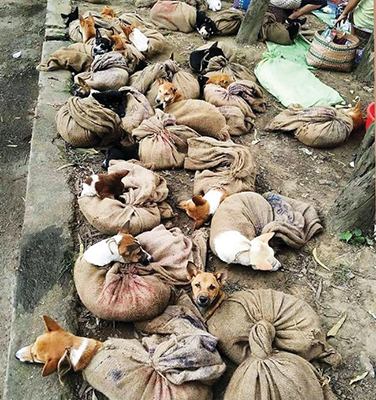
Article 371(A)(ii) of the Constitution of India affords special status to "Naga customary law and procedure,” resulting in the consumption of dog meat. Truck loads of captured dogs secured in gunny sacks with their mouths tied (pictured) were being brought into Nagaland from Assam and West Bengal. In addition, a shoot at sight order was issued to kill dogs found roaming in the streets. As a result, some pets were also shot. A picture and appeal to send an e-mail to the chief secretary was widely circulated by animal activists on WhatsApp.
Within a month of BWC’s last representation, on June 26, 2020 the state cabinet of Nagaland decided "to ban commercial import and trading of dogs and dog markets and also the sale of dog meat, both cooked and uncooked.” In March 2020, BWC came to know that dogs in Mizoram had also been dropped from the list of animals permitted for slaughter.
BWC hopes that this time round the ban in Nagaland and Mizoram will be enforced.
For years, reports of dog meat being supplied to traders in other places such as Calcutta have surfaced. Two years ago dog meat and cat flesh were seized in Madras. A year ago dog meat was found being served in Bangalore. And a year-and-a half back, a Bombay newspaper alleged students from north-eastern states were picking up stray dogs and killing them for consumption. Similarly, cats are also captured and eaten. We therefore need to protect our pets and be alert if we see strays being picked up.
Diana Ratnagar
Chairperson, Beauty Without Cruelty, India