In the item "Cafes and mills” (Events and Personalities, Parsiana, May 21-June 6, 2021), there is mention of a Fellowship given to Jaideep Hardikar who will be writing a history of the Empress Mills, Nagpur.
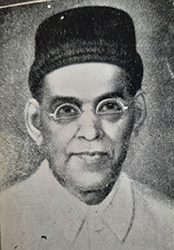
This brought back memories of my mamavaji (maternal grandfather) Darab Kamdin (pictured). He was born into a priestly family with meager income. In school, he accepted double promotions to save money. Later, a German priest in Bombay, greatly impressed by my grandfather’s performance in the St Xavier’s College entrance exam, gave him a scholarship. In later years Kamdin gave an annual donation to St Xavier’s College as long as he lived, and this was continued till the death of his wife Meherbanoo in 1974.
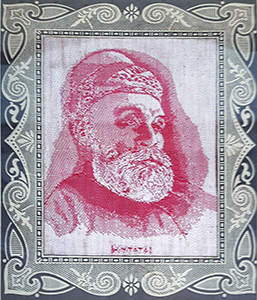
For his first and only job, in 1896 Kamdin was personally interviewed and employed by Jamsetji Tata at the Empress Mills, Nagpur. He was initially hired in the weaving department and became a master of the jaquard weave, using his artistic and mathematical skills. This weave was used for charsas (bed covers) which were termed Nag chhap charsas in recognition of the nag or cobra of Nagpur. Those old-time charsas lasted long and were much appreciated. To honor Tata, Kamdin designed the jaquard loom prototype figuring Jamsetji’s bearded visage (pictured, bottom). One copy of this still hangs in my home. I had an emotional moment on seeing another copy in Navsari’s Tata Museum.
Later, as a manager, whenever Kamdin oversaw the carding department, he would come back with chills and symptoms of a cold. The carding department had huge troughs of water and powerful fans beneath the meshed metal flooring to skim over the water and create humidity, so essential for the cotton thread not to keep breaking in a dry city. Kamdin would wear woolen socks while in the carding department.
Sir Bezonji Mehta was general manager of Empress Mills. He was succeeded by his son Sir Sorabji. After Sorabji’s death in 1938, Kamdin was appointed to the post and remained general manager till his retirement in 1946. By then, Empress Mills had grown to five centers and he had served the company for 50 years.
Kamdin was largely responsible for founding the J. N. Tata Parsi Girls’ High School in Nagpur. He prevailed upon Sir Bezonji to request Tata to fund a school for Parsi and Indian girls. The only other reputed school in Nagpur at the time was St Joseph’s Convent. Once Kamdin obtained the funds to start Tata School, he personally supervised the construction of the building. The façades of the Tata schools in both Navsari and Nagpur are identical.
Kamdin was a director of the Nagpur Electric Light and Power Company (NELCO) for some years. When he realized that the company’s accounts showed it was "sick,” he pulled the concern out of near bankruptcy. A grateful board offered him Rs 1,000 for his excellent work. No, he said. The company can only afford Rs 500, so he would only accept the lower payment!
Thanks to this same combination of integrity and accounting acumen, Kamdin was also treasurer of the Nagpur Parsi Anjuman for decades. They would not let him retire even when he made requests, owing to old age and personal tragedies — the death of five children.
In the words of my late mother (his daughter Rati Kotval), "His life was simple in the extreme. His love for people was deep and genuine, and all his life he truly lived his religion of good thoughts, words and deeds.”