Sir Homi Mody’s sole surviving grandson Jim shares vignettes about his grandfather, father Kali and uncles Russi and Piloo
What Jim (Jamshed) Mody recalls most vividly as a child is the Monaco biscuits spread with marmalade that his illustrious grandfather used to offer him each morning and partake of himself with his tea, before leaving for work. "To this day I still yearn to have marmalade on Monaco biscuits,” said the 64-year-old sole surviving grandson of Sir Homi (Hormusji) Mody while sharing his reminiscences with Parsiana on June 18, 2015 in his third floor office tucked in one of the by-lanes off Colaba Causeway.
Another memory is of sitting in Sir Homi’s room in the Lake Palace Hotel in Srinagar overlooking the majestic Himalayas. The grandfather would point to a particular peak and tell his four/five-year-old grandson, "That is where God lives.” Later, as a teenaged school boy, Jim remembered when he climbed peaks in the august range he felt "I was standing in God’s house.”
Included among the numerous inspiring stories, anecdotes, literary pieces that Sir Homi would relate to his grandson each day were references to the leadership qualities of Napoleon (a favorite with many Parsis), and Alfred Lord Tennyson’s emotive poem, The Charge of the Light Brigade. Jim confirmed his grandfather was a literary person who authored two to three books and as an obscure youngster won an essay competition on "The political future of India.”
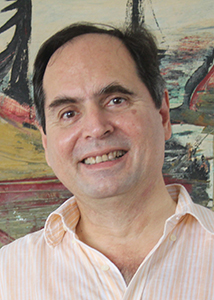
Jim Mody; Photo: Jasmine D. Driver
He was "soft spoken, had a great sense of humor; he was very warm towards me; became my role model and mentor.”
Jim recalls growing up in the family house on 1 Carmichael Road (later "regrettably” sold to the Japanese government for their consulate). "There was a beautiful garden at the back. I used to fly kites there and play cricket. I saw peacocks displaying their plumage.” His navjote was performed at the house which had a prayer room and several godowns.
The family then moved to 11 Carmichael Road where his grandmother Lady Jerbai lived on the ground floor, with his uncle Russi, the eldest of the three sons. Jim’s father Kali, mother Nina, Jim’s late brother Danny (Dinshaw) and Jim resided on the first floor and above them his youngest uncle Piloo and his wife Vina.
Russi was "the most generous person I ever met.” He was married briefly to Silloo Mugaseth. Though they divorced a short time later, "they remained on the best of terms,” notes Jim. Kali and Piloo both married Americans but Sir Homi and Lady Jerbai warmly welcomed their non-Parsi daughters-in-law.
While growing up Jim did not see much of Russi who was based in Jamshedpur, and went on to become the chairman and managing director of Tata Iron and Steel Company (TISCO). But after his retirement, they spent time together in his uncle’s small holiday home in Darjeeling. According to Jim, Russi "had almost no sense of value for money. He did not think of how much he was giving.” When his nephew chided him on his spendthrift ways, the uncle replied, "I don’t have the same attachment (to money) as you have.”
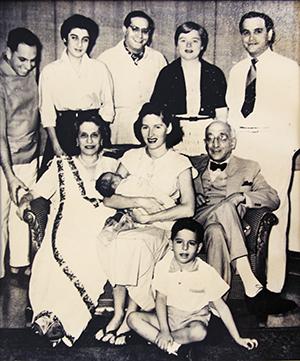
(Standing, from l) Russi, Silloo, Piloo, Vina, Kali;
(seated, from l) Jerbai, Nina holding Danny, Sir Homi and Jim
"People thought him a rich, wealthy man which he was not. Taking from Russi became indiscreet, wanton.” When Russi died, a person claiming to be a reporter from a Bombay financial daily phoned, not to inquire about the man, but rather, ‘What are you going to do with his valuable paintings?’” Jim said he had to fend off numerous antique dealers who believed Russi had many valuable pieces. Sadly, there were "no original paintings worth a dime; no great antique pieces though he had a hugh collection of books. His investments and bonds, etc were good but not that large.” His wealth would have sufficed for him to live comfortably for another "five to 10 years.” There was no "50 to 100 crores” rupees stashed away as people imagined.
People adulated Russi, recalled Jim. On his uncle’s birthday a lakh of people would gather in his garden in Jamshedpur, some on elephants, and insist on taking him around the town on an elephant. "They make a mess of the garden,” Russi used to complain to his nephew. Once a one ton ladoo (sweetmeat) was presented to Russi. "He was literally like a king,” opined Jim.
The nephew had the privilege of attending some of the joint plant committee meetings at TISCO. He noticed that over the years his uncle’s and his co-directors’ "involvement in the meetings grew less and less.” When Jim stayed behind to ask the workers what they thought of the meetings, they felt the gathering had become "more of a charade.” As Russi aged he "relied more on his senior executives who may not have been as enthusiastic as he was.”
A dispute over the leadership succession at TISCO that caused the well-known split between Russi and the House of Tatas, left him "very upset, very bitter. (But) he bore no ill will towards Ratan Tata and had great respect for JRD.” Through the good offices of Dr Jamshed Irani who became the company’s managing director, "a reconciliation was worked out.” At the time of Russi’s death, the Tatas assisted greatly with the funeral arrangements. Russi’s ashes were interred at the Jamshedpur Zoroastrian aramgah at the foot of his mother’s grave as per his wishes. Lady Jerbai resided with Russi and died in Jamshedpur.
From his uncle Piloo Jim learned "how to laugh at myself and not have the last word on everything.” Like Russi, Piloo also drew people towards him. When he was imprisoned during the Emergency declared by the late Prime Minister Indira Gandhi, Piloo turned an inmate who was a pickpocket into his personal valet and got a Pathan to give him massages. He even appropriated a planters chair from the jail supervisor’s quarters and placed it in his cell.
When campaigning in Gujarat for the parliamentary elections from the Swatantra Party, Piloo would enter a villager’s hut or house, locate the most comfortable bed, and without seeking anyone’s consent, go and lie on it. No one was offended and the locals "loved” him for his informality. Copious cups of tea, which Piloo would balance on his amble girth, and glucose biscuits would be on offer. He would then sit in the village square and talk not about politics but economics, and how it impacted the common man.
When a car carrying Jim, Danny and others was returning from Udvada to Bombay in 1976 and met with an accident that killed Danny and left Jim hospitalized, Piloo, who was imprisoned at the time of the Emergency, was granted permission, reportedly at the intervention of Gandhi, to visit his nephew. The Prime Minister was fond of Piloo, stated Jim. At that time Piloo had a beard and his nephew, half-dazed, half-conscious, took time to recognize him.
Recalling his prison days, the jovial politician claimed in a letter he wrote to his nephew: "I never had such a wonderful time in my life. I have to do no work, I don’t need to earn a living. I am well fed.” His only objections were to playing volleyball and taking walks, both compulsory. In exchange for his complying with these requirements he was permitted a western style toilet in place of the Indian one! An R. K. Laxman cartoon published on his release from prison showed a guard trying to drag him out of the jail complex while Piloo was holding on to the prison archway commenting he did not want to leave!
On returning home he insisted on sleeping on the floor as he was used to it, causing his wife "pareshaani (worry).” Due to his sizeable girth, Piloo would go on diets and even stayed at the Jindal Health Farm on the outskirts of Bangalore. When the opportunity arose he would surreptitiously slip away to a nearby dhaba and indulge himself with batata vadas (spicy potato patties fried with gram flour batter). But his weight swings "finally did him in,” said Jim. When Piloo died in Delhi, the first dignitary to arrive at his home to pay her respects was Gandhi. His former prison mates carried his coffin to the Delhi Zoroastrian aramgah, Jim recalled emotionally.
Jim’s father Kali, the most flamboyant of the three brothers, brought Diners Club (DC), the first credit card company to India. As a student in the US and later also he had a wide circle of friends including Alfred Bloomingdale, heir to the Bloomingdale department stores and Frank McNamara, two of the four founders of DC in America. The duo agreed to give Kali the Indian franchise of DC. "It was an uphill battle to get people to understand what it was and to accept it…people thought they would get free dinners” by joining.
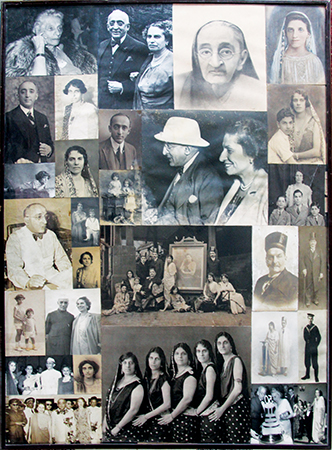
Collage of Mody family photographs
Young Jim was roped in to get some female students at St Xavier’s College to visit textile showrooms and shops posing as buyers and asking to see numerous materials. Then, before asking the salesperson to cut the cloth, the girls would inquire, "Do you accept Diners Club cards?” The response invariably was, "What is that?” The fear of losing substantial sales prompted some to accept the card. In return for the students’ efforts, Jim would treat them to dinner at a restaurant.
The business did well with revolving credit made available by the banks. But Jim said after the banks were nationalized "getting credit became difficult. Rather than find a way around the problem,” his father decided to sell the business to the Aggarwal family of Devidayal Industries whose family member Shamsunder and his wife Perveez in turn sold it to Citibank around 15 years later.
Kali also started "the first public relations firm in India,” named P R India, recalled Jim and also brought the first Tarzan movie to India, Tarzan comes to India, starring Simi Garewal, Feroze Khan and Jock Mahoney as Tarzan. The movie was shot in Mysore.
Jim started out preparing for his chartered accountancy qualification in England but after the car accident did not return to complete the course. He took instead to finance and economics and then market research. Mid-career he switched to practicing psychoanalysis and "helping people in whatever way I can” with mental health issues. He gives talks on the subject. His wife Feroza runs Contemporary Arts and Crafts (CAC), a shop started by Piloo and Vina to assist karigars (skilled craftspersons) sell their products directly to the consumer without the middlemen taking their cuts. His son Cyrus is involved with Feroza’s family’s construction and real estate business, BREDCO Private Limited started by her father, Soli Engineer. Daughter Kavene Lawyer is tending to her son, Zahan, the only great-great-grandson of Sir Homi.