Political considerations caused a six-year delay in commissioning
Tata Power’s expansion plans
Excerpts from Shashank Shah’s The Tata Group: From Torchbearers to Trailblazers. Reproduced with permission from Penguin Random House India.
Here is an example of Tata Power’s frustrating yet committed efforts to expand capacity, and the Byzantine maze of political landmines it had to negotiate. In the mid-1950s, J. R. D. Tata, along with Sir Homi Mody, then director-in-charge of the Tata Electric Companies (TEC, now Tata Power) went to meet Morarji Desai, then chief minister of Bombay state (now divided into Maharashtra and Gujarat). JRD submitted to Desai the Tatas’ projection on power shortage in the coming years. "No there will not be. I have seen to that,” was Desai’s curt reply. JRD rose from his seat to leave. "Where are you going?” asked a surprised Desai. "We have worked out, sir, the demand for electrical power in the coming years. We say it will lead to a power shortage if additional generating capacity is not created. You say it won’t. We do not want to waste your time, leave alone ours,” was JRD’s frank response, leaving Desai quite perturbed.
This was only the beginning of a series of developments before the story would come a full circle. In 1965, Tata Power commissioned its fourth thermal unit of 150 MW capacity at Trombay. In those days, any new project required hard bargaining with the government, often with a quid pro quo in kind. Approvals for TEC’s fourth unit came only after it handed over its transmission lines at Ganeshkind in Poona and the Khopoli Power House to the Maharashtra State Electricity Board (MSEB). Undeterred by these complex situations, and anticipating a rise in the power requirements of Bombay, TEC planned to set up its fifth thermal unit with a capacity of 500 MW at Trombay. It applied for the licence in 1971.
With the MRTP (Monopo-lies and Restrictive Trade Practices) Act implemented, the permission for this expansion had to come from the Central government. A very intriguing development was in the making around the same time. In the general elections of 1971, the fifth since Indian independence, Naval Tata, then chairman of TEC, decided to stand for elections as an independent candidate from the South Bombay constituency. The Shiv Sena was backing his candidature and (its founder leader) Bal Thackeray was supposed to have been the principal campaigner. It was to be a three-cornered election. The Congress candidate was Kailas Narain. The third candidate was George Fernandes, representing the Samyukta Socialist Party. Fernandes was a sitting MP (member of parliament) and had gained immense visibility as a labor leader. Despite his leanings, he respected JRD. A couple of years earlier, in 1969, JRD had personally invited Fernandes to the Safdarjung Road Tata Guest House in New Delhi to request him to lead the Tata Steel workers’ union, an offer that he had declined. The outcome of the elections was surprising. Fernandes lost his deposit with a mere 10.34% of the votes. Unexpectedly, Naval stood second with 40.38%. The Congress candidate won the election with 47.1% of the votes. It was a reassuring moment for the Tatas and Indian democracy that a values-driven private citizen held a good chance to win elections. Yet, the direct and indirect implications of this experiment would soon emerge before JRD and Naval.
It is believed that Prime Minister Indira Gandhi was displeased with the Tatas’ attempt at contesting elections against the Congress candidate. Furious and unforgiving, she is supposed to have told JRD, "So the Tata group wants to set up a front against me?” This was history repeating itself. Nearly 15 years earlier her father, Prime Minister Jawaharlal Nehru, had reacted in a similar fashion. The context was different. JRD was increasingly disillusioned by the Nehruvian approach to socialism, centralized planning and nationalization of key industries. To add to that, during the 1957 general elections, the Communist Party of India emerged as the second largest party in the Lok Sabha. JRD believed that the country needed a credible opposition, and the leftist parties would further damage the prospect of free enterprise flourishing in India.
Around 1959, Chakravarti Rajago-palachari (Rajaji), former Governor General of India, and a Congressman, started a new party in reaction to the Nehru-led Congress’s anti-industry and socialistic approach to governance. In a letter dated May 15, 1961, he sought JRD’s support for the fledgling Swatantra Party: "I request you that even if you help the ruling party with funds for its political and electioneering activities, it would also be just and proper for you to help a party that seeks to build an efficient check on its errors.” Naval asked JRD to exercise caution. He was concerned that public support to Rajaji would earn Nehru’s displeasure. JRD took two full months before sending a positive reply. However, the transparent leader that he was, he communicated his decision to Nehru when he next met him.
On hearing about the Tatas’ support to the Swatantra Party, Nehru blew up, "You have no business to do that.” In order to pacify him and clarify his stance, JRD wrote a detailed letter to the Prime Minister dated August 16, 1961: "We have been perturbed by the total absence of any responsible and organized democratic opposition which we feel is an equally indispensable element of any permanent democratic organization of society… It is indispensable in the national interest that an effort should be made to displace the Communist Party as the second largest in the Parliament… We have therefore come to the conclusion that in addition to continued support to the election funds of the Congress, we should also contribute, although on a lower scale, to the funds of the Swatantra Party.”
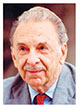
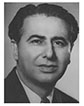
Clockwise, from top: J. R. D. Tata, Naval Tata, George Fernandes, Morarji Desai, Jawaharlal Nehru
In a letter dated August 18 Nehru responded, "You are of course, completely free to help in any way you like the Swantantra Party. But I don’t think that your hope that they will emerge as a strong opposition is justified…”
In 1975, when Naval was following up for permissions, the response was hostile, to say the least. Madhav Godbole, Maharashtra’s power secretary, threatened to take over TEC’s assets. He even explored with the Western and Central Railways if they could make their own arrangements for power. The response was in the negative. Finally, Naval personally went to meet Godbole and presented his case with facts and figures. But Godbole (literally meaning the one who speaks sweetly, in Marathi) wouldn’t yield. This agitated Naval so much that he reacted with an emotional outburst, "Even if I have been adopted into the Tata family from a Parsi orphanage, Mr Godbole, I cannot liquidate the assets created by my ancestors.” This mollified Godbole a bit and he agreed to consider the application. The quid pro quo this time was that TEC’s distribution network in Kalyan, Thane and Ulhasnagar was to be taken over by the government.
The threat of nationalization was looming large over most private firms. When energy sector companies like Burmah Shell, Esso and Caltex were nationalized in 1976 as Bharat Petroleum and Hindustan Petroleum respectively, the Tatas were concerned that the government would forcibly take over Tata Power. As a precautionary measure, the Tata Power offices were moved out of Bombay House and relocated in Nirmal Building at Nariman Point, a kilometer away. When the threat ebbed, the company moved back to Bombay House and the Nirmal Building office space was given to Tata Consultancy Services.
Despite these efforts, the Central government’s approval wasn’t coming. The indirect implication of Indira’s ire resulted in the permission for the fifth thermal plant of Tata Power getting delayed by full six years, till the Emergency was lifted and the Janata Party had come to power. In an interview with Hindustan Times on January 1, 1977, a couple of months before the Emergency was lifted, JRD had appreciated the Emergency era for the "bold step” it had taken for the economy, the success in reversing inflation and the discipline it inculcated in industry and society at large. He was impressed that throughout the Emergency the trains ran on time. This earned him the indignation of the new Prime Minister of India — Desai — who rode to power in March 1997 with the Janata Party-led coalition on the anti-Emergency plank.
Top: Tata Power plant, Trombay Photo: tatapower.com
In an exciting turn of events, the approval of TEC’s fifth thermal plant was now before the new industries minister — Fernandes, who had secured fewer votes than Naval in the previous elections. Fernandes’ first reaction was to turn down the proposal. It was Viren Shah, chairman of Mukand Iron and Steel Works, who pleaded on behalf of the Tatas. He emphasized that the new power plant would not make JRD or Naval richer by a rupee. Instead, it would supply additional power to thousands of small and medium enterprises of Bombay. Fernandes was quite convinced. Yet, he explored whether a government undertaking was willing to take up this project. P. Ramachandran, union energy minister, declined the proposal that the National Thermal Power Corporation could take up this project. Fernandes is believed to have called Maharashtra chief minister Vasantdada Patil to check whether the MSEB would be interested. The rapid response was that no state electricity board had the ability to take up the project.
Finally, Fernandes himself called Naval to find out if Tata Power was still interested in proceeding with their six-year-old application. Overwhelmed at the prospect of the project finally seeing the light of day after a 75-month wait, Naval’s response was a resounding "Yes.” When Fernandes suggested that a senior executive could come to his office to complete the formalities, Naval, the company chairman, himself landed in Delhi the next day. Business historian Gita Piramal mentions the conversation that followed in Fernandes’ Udyog Bhavan office. When Fernandes asked him the reason that had caused the delay in gaining a clearance for the project, Naval remained silent. With a smile on his lips, he raised his hand with the thumb rubbing the index finger. When Fernandes further asked the level at which money was demanded, Naval continued to smile but didn’t utter a word. Having understood the situation, Fernandes cleared the proposal. It also sent a strong signal to the government machinery that the Tatas were willing to wait, or even let go of business opportunities, but were not willing to grease the palms of decision makers in Delhi.
With the decks cleared, India’s first 500 MW thermal plant with multiple-fuel-burning capability was commissioned at Tata Power’s Trombay complex in 1984. With its 152 m chimney, it was twice the height of the Qutub Minar. Only Japan had a similar-sized unit in all Asia at that time. India joined the league, 13 years later.