Akshat Irani’s family were pioneers
in the Gujarati film industry
Kashmeera Sambamurthy
If you are a good actor, people will notice you irrespective of whether you are or not from a film family. If you aren’t one, it is highly doubtful that you will stand a chance,” explained actor Akshat Irani in an interview with Parsiana this January 29.
With a good amount of assignments piled up, Irani just finished shooting for a Hindi web series that will soon be aired on a new over the top (OTT) platform, Rapcheek. "I have three more Gujarati films in my kitty. Two of them are rom-coms (romantic comedies) and the other one is a drama. I have workshops going on. The current one that I am attending is in preparation of a movie I am doing, Jesu Jordaar,” said the 27-year-old. The web series he was a part of, Zindagi Reset stresses how people commit mistakes in life, and bounce back.
He has shared screen space with Hindi and Bhojpuri actors like Milind Gunaji, Ravi Kishen, Akhilendra Mishra and Rajesh Khatter, in an untitled film that will be releasing this year. He also shot for Sunday nights which is a festival film. "Just five days of shooting is left for my untitled Hindi film,” stressed Irani. "We are still deciding on its name.”
Irani hails from a family that is an admixture of theater and film artistes. His father is the legendary Gujarati artiste Firoz Irani, actor, writer, producer and director. His 543 roles as the main villain in Dhollywood (Gujarati language cinema), also known as Gollywood, cemented his position in the field of Gujarati cinema. Akshat, who made an entry into Dhollywood with Mister Kalaakar (which was released on November 15, 2019) as the lead hero, had his father direct the movie which included veterans like Manoj Joshi.
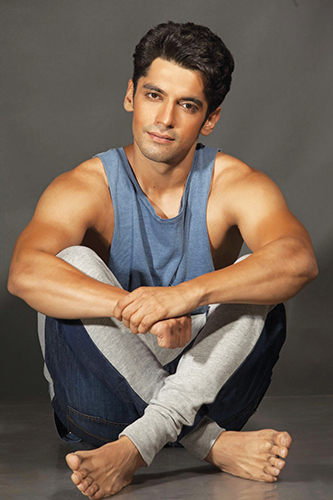
Akshat Irani; below r: poster of Mister Kalaakar
Gujarati cinema saw a period where it flourished extensively, especially between the 1960s-1980s. But the industry that churned out around 1,000 films saw a major decline in viewership. The number of new films dropped shockingly below 20. This is probably owing to the popularity of other language films, mainly Hindi. "But, since the last seven years, Gujarati cinema, which mostly catered to the rural demand, is seeing a shift towards the urban sector.” He believes the stories are striking and the audience engaged. The market is growing, the budgets are improving "but yes, Bollywood is way ahead,” he adds. "To be honest, a lot still needs to be done,” Akshat noted.

The first taste of stardom Akshat experienced was when he was mobbed and could not exit the theater. The audience who connected with the character he portrayed became his instant fans. Clicking pictures and standing at the podium where he had to smile for two hours was humbling, he said, and made him appreciate that people liked his work.
It was through his grandfather Faredun Irani, a veteran Parsi director and founder of the Parsi theater, Shri Laxmi Kalakendra in Bombay, that the seeds of acting, direction and production in the family flowered. The senior Irani arrived in Bombay at the age of nine. Though the drama troupe came to a standstill after the death of Akshat ’s grandfather around 40 years ago, all the members succeeded in creating a niche for themselves. Illustrious artistes from the Irani family include Akshat’s aunt, Aruna Irani, a veteran Bollywood actress who started her career starring in a series of Gujarati plays, Adi Irani of Bollywood movie fame, Indra Kumar Irani, producer and director who has churned out hits like Beta, Raja, and serials such as Masti and Dhamaal.
Conversations, mostly about films, dominate the family table. A Bollywood superstar and a neighbor of 20 years, Akshay Kumar, mentored and helped Akshat bag the role of an assistant director for the Bollywood flick Patiala House in which he played the lead.
The community is quite liberal in terms of members entering the movie industry. "The famous Parsis/Iranis are quite supportive about being a part of movies. My parents were quite encouraging of my decision to be an actor, but they made it clear that I should complete my education first… You can easily go astray if you aren’t well disciplined. It is a very irregular life, timing wise.” You may have an off on Mondays, or work Sundays. "One has to choose wisely and decide what is important. It is not advisable to attend all the film parties but only the ones which make sense.”
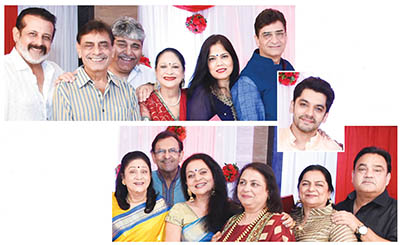
Top, from l: Adi Irani, Ratan Irani, Pradeep Suri, Chetna Suri, Dawn Irani, Indra Kumar Irani
Inset: Akshat Irani; above from l: Aruna Irani, Firoz Irani, Kamakshi Irani, Bina Kumar, Asha Irani, Balraj Irani
Akshat stated he has always had an open and neutral mindset towards the Zoroastrian community. "I don’t think like, ‘Oh! You are an Irani, I am a Parsi.’ Since my mother Kamakshi is a Gujarati, we celebrate festivals of both faiths and are quite open to various faiths and belief systems.”
Back in the 1980s, whenever the presence of a Parsi was necessary in a movie, they were mostly stereotyped for their accent and the outfits they donned. And yes, the characters evoked laughter. Thankfully, as Akshat says, that perception has changed. Their talent transcends stereotypes.