More than 300 years after his demise, Rustam Maneck Seth is remembered
as a leading broker for foreign traders at the Mughal court
Marzban J. Giara
In the 17th century Surat was a flourishing port where European traders came for business. Rustam Maneck Seth was the chief broker of the English, the Portuguese and the Dutch factories at Surat. He was also the commercial agent and interpreter at Surat of the Portuguese viceroy at Goa in addition to being the political representative there of the Portuguese government. The nawab of Surat (governor of the Mughals) being hostile to the English, the latter approached the Mughal court at Delhi in 1660 for permission to build their factory. They took Rustam to plead their case which he did successfully. Emperor Aurangzeb gave the English a piece of land, in addition to granting permission to build their factory. Rustam was commissioned by the nawab of Surat in 1700 to defend a Muslim merchant from Surat whose ships had been seized by the Portuguese in Goa. He skillfully mediated between different interests and political powers [the Parsi community, the nawab of Surat, the English East India Company (EIC) and the Portuguese viceroy of Goa].
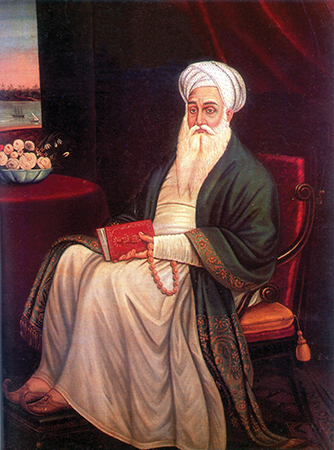
Rustam Maneck Seth: beneolent benefactor
Rustam was always willing to help everybody, irrespective of their religion. The well he dug at Hajira, near Suvali in 1699 is famous even today for the digestive property of its water. In his first raid of Surat in 1664 the Maratha leader Shivaji carried away booty worth about Rs 15 crores (Shivaji and his Times by Jadunath Sarkar). Rustam’s help to the inhabitants of Surat at that time was widely appreciated. He was regarded "universally as the greatest benefactor of that city.” His name is kept alive there even today by naming the locality where he lived as Rustampura where he owned nearly all the properties. His most notable service to his own community was his successful attempt to get the jizya tax imposed on Parsis by Aurangzeb removed in 1672.
His family rendered valuable services to Surat and the citizens have perpetuated their memory by naming Nanpura, another locality of Surat, after Nanabhai, son of Rustam’s second son Bomanji, and Farampura after Rustam’s eldest son Framji. The Nowroji Hill at Mazgaon in Bombay is named after his youngest son who bought it between 1725 and 1730. At first the hill did not yield much, but later on its quarries made the family one of the richest in Bombay. Rustam’s three sons were among the five founding members of the Parsi Punchayet of Bombay.
Rustam was appointed the chief broker of the EIC in 1700. He had advanced a large sum of money to the English factory at Surat which its officials did not want to repay. Born in 1633, a descendant of Mobed Neriosang Dhaval, Rustam died in Surat on July 31, 1719 (some sources say 1721) at age 86 without recovering his money. His sons took up the claim but the English brought pressure on them to forego it. At the instance of the British, the nawab of Surat imprisoned Framji, attached the family house and fined him Rs 50,000. Bomanji went to Bombay to obtain justice, as the governor was headquartered there, but was ordered not to leave the island instead. Nowroji, the youngest but the ablest and the most spirited of the brothers, seeing that the claim would never be entertained by the English officials in India, thereupon went to England on the man-of-war Salisbury in 1723 to plead his case before the Court of Directors of the EIC. He was the first Parsi and the first Indian of note to go to England from India. He was rewarded with a dress of honor and an award of Rs 5,46,790. His portrait adorns the wall of Manekji Sett Agiary at Fort, Bombay.
The Parsi savior
In his article "Rustam Maneck: The benevolent broker,” (Parsiana, July-August 1995, scholar Dr Homi Eduljee wrote: "Rustam underwent the navar ceremony in 1675 at the advanced age of 42 years. Although he never practiced as a priest, because of his priestly lineage and initiation he took a leading part in the priestly affairs of Navsari and Surat. When the Iranshah was brought to Navsari n 1419, the priests of Sanjan and Navsari came to an agreement regarding the division of priestly duties… For about 250 years this arrangement worked well, but then dissension broke out…
"Rustam was married to a lady named Rattanbai and had three sons… According to the Persian poem Kisseh-i Rustam Maneck, written by a priest, Jamshid Kaikobad, Rustam was a very kind-hearted, charitable man who delighted in doing good and in relieving the distress of all communities. He had roads repaired; built bridges over streams; encouraged the cultivation of wasteland and had gardens with fountains laid out. He built a hall in a garden for the Parsis to use for marriages and religious ceremonies. He had built wells in Surat and in the villages to provide pure water, and also watering-troughs for cattle…
"Two incidents in Rustam’s middle age enhanced greatly his reputation amongst the Parsis of Surat. When in 1664 Shivaji made a sudden assault on Surat, the city was poorly fortified and the cowardly Mughal governor put up no defence at all. The Marathas entered the city and for four days they looted it and set the houses on fire. The rich merchants were caught and tortured till they handed over their wealth; many of the ordinary people were held as hostages until they were ransomed. The Kisseh-i Rustam Maneck tells us that some Parsi men were taken as hostages and their families, not being able to raise the ransom, came to Rustam Maneck for help. He paid Shivaji or his officers a sum of Rs 10,000, and also gave food and clothing to the families.”
Regarding the tax imposed by Aurangzeb on all non-Muslims, Eduljee expands: "Most of the Parsis of Surat were weavers and hence were among the poorer classes. They came to Rustam and begged him to relieve them of their distress (paying the jizya tax). Rustam agreed to pay for the poorer Parsis every year. One estimate is that he paid Rs 5,000 every year on their behalf.”