Zoroastrians who migrate to the West face a cultural challenge
Text: Dr Yuhan Sohrab-Dinshaw Vevaina • Photos: Jasmine D. Driver
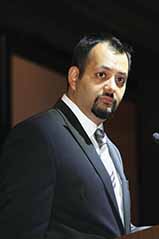
"Thinking with Zoroastrianism in the 21st Century,” was the subject of the Khorshed F. Jungalwala Lecture delivered by Dr Yuhan Sohrab-Dinshaw Vevaina at the XVI North American Zarathushti Congress in New York in August 2012. Beginning with this issue Parsiana will be reprinting the talk in three instalments with the permission of the lecturer and FEZANA Journal that published the contents in its Fall 2012 issue. This paper addresses the issues of conservatism and changes that have been embraced by modern Zoroastrians in their march forward.
To find an amicable solution to divisive socioreligious issues like interfaith marriages and disposal of the dead, members of the community need to study the past for only then would they be able to appreciate the present and prepare for the future, believes Vevaina. Till recently scholars have failed to provide the community with readable books and attractive websites, making members depend on inaccurate, misleading information in circulation, regrets Vevaina in the first instalment. In the second instalment he cites historical instances of interfaith marriages, conversion and sharing of religious duties between males and females during different eras to show the prevalent diversity. The final instalment addresses the distinct practices amongst the Zoroastrians of India and the Zarathushtis of Iran and the different modes of disposing the dead to reinforce that Zoroastrianism is primarily a religion that has historically experienced a great deal of diversity in terms of both beliefs and practices.
This lecture series was instituted by the Federation of Zoroastrian Associations of North America (FEZANA) to honor the memory of Jungalwala who was a member of the FEZANA Historic Research and Preservation Committee, a director of the Zoroastrian Education and Research Society and the chair of the FEZANA Publication Committee. Active in organizing conferences and seminars, Khorshed and her husband Dr Firoze were founders of the Zoroastrian Association of the Greater Boston Area (ZAGBA). The Jungalwala Lecture Series is administered by the FEZANA Education, Scholarship and Conference Committee chaired by Dr Lovji Cama.
• • •
As a scholar of Zoroastrianism, I am often asked: "What made you go into that field?” I sometimes jokingly reply that I was young and foolish or just a plain masochist, but the real impetus for my fascination with studying the history of Zoroastrianism largely came from my early experiences as an immigrant who had to learn to articulate meaningful responses to the hard questions of identity. I suspect that similar immigrant experiences might be the case for many of the older members of the community living in North America. For those born here, you have probably had to listen to mom and dad regale you with their immigrant stories ad nauseum! When our family moved to the US in the late ’80s we settled in a small, almost exclusively white, rather xenophobic town in Massachusetts where few had even heard of Zoroastrianism. That was quite a shock after living in South Bombay where I had never had to explain what a Parsi was or what a Zoroastrian believed. Identity was a given and could be lived without a need for consistent self-definition when socially interacting with others.
I had grown up amongst family and friends, two minutes from my maternal grandparents’ flat, with perhaps the most culturally prestigious and socially privileged identities that a child could have in urban India. But here we were, an immigrant family in the US, and all of a sudden, literally overnight, our cultural capital as Parsis/Zoroastrians was almost totally depleted. There are only so many questions about riding magic carpets, tigers and elephants to school that one kid can take! Those early days were very trying emotionally but I do remember one afternoon that we attended a ZAGBA lunch and Khorshed and Firoze Jungalwala welcomed us into the Greater Boston community, and so, for me to have been asked to speak and now publish in her honor is a genuine privilege!
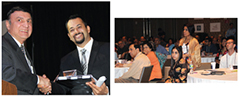
Beyond my desire to honor Khorshed’s memory, the reason that I bring up this story is that it is all too familiar. Many, if not most of us, who came to North America from Iran, India, Pakistan, the UK, East Africa, Australia, New Zealand, or the Far East have had similar experiences of having to find our way in a new land with little of the cultural, community and institutional support that we relied upon and took for granted in the old countries. When I spoke earlier about the "cultural capital” that we possess as Zoroastrians, I should have mentioned that we as a community earned the interest on that capital over 25 centuries of hard work and tireless dedication! Put simply, the Zoroastrian religion, as one of the world’s oldest living religions confers upon us contemporary folk a legacy that is so old that it is actually quite hard to fully grasp. I want to put this in historical perspective. By the time King Darius (reigned 522-486 BCE) had his stonemasons carve his imperial inscriptions in Old Persian (the grandfather of Farsi) at Persepolis, Bisotun and Naqsh-e Rostam, Zoroastrianism as a religious tradition was already about a thousand years old! The consequences of this extreme antiquity for members of the living communities is that while we are the beneficiaries in terms of cultural prestige — old is gold after all — we also have to constantly grapple with reconciling the beliefs and practices of a profoundly ancient and enigmatic religion with our contemporary identities, diasporic experiences and modern sensibilities.
Now it is hardly shocking for me to state that self-identified liberals, moderates and conservatives have different relationships with our shared Zoroastrian past, present and future. I often hear people on both sides of the great ideological divide — typically inter-marriage and conversion — criticize and demonize their counterparts on the other side all the while claiming that their values are worth following. Also, the values they so publicly espouse are always curiously in line with that of Asho Zarathushtra himself, so they must be true! I also often hear and read about the long laundry list of problems, crises and controversial issues that plague contemporary Zoroastrian communities such as: inter-marriage; conversion; disposal of the dead; low birth rates; late marriage; no marriage; lack of adequate pastoral counseling or spiritual guidance from priests; gender inequality in the priesthood; lack of a recognized priestly body; aging communities; apathetic youth who don’t speak Persian or Gujarati; an increasing loss of religious piety and ritual praxis; socioeconomic and religious discrimination and persecution in Iran; declining Parsi privilege and the loss of a shared sense of community in India; and linguistic, cultural, and, of course, culinary differences between Zarthoshtis in Iran and Parsis in India! Did I leave out anything major? My absolute personal favorite of all these anxieties happens to be effeminate Parsi mama’s boys with no ambition!
All of these issues are viewed by us as constitutive of our increasingly globalized Zoroastrian present. Depending on your values or viewpoint you might see some of these flashpoints as deeply destructive for traditional Zoroastrian identities as you understand them. Or, conversely, you might view some of these issues as opportunities for creating new, emergent forms of a progressive Zoroastrianism in the 21st century. It is not my place to adjudicate who is right and who is wrong, who is "authentic” or who is not, or even to advocate for this fundamental belief system or that set of core values. Nevertheless, Zoroastrians often ask me what they should believe. As an academic with a doctorate, I am the worst type of doctor! One you definitely don’t want sitting next to you on a plane when you experience chest pains, since my professional ethics allow me to diagnose cultural symptoms but not prescribe medication in any heavy-handed manner. Some of you might find that disappointing, others will undoubtedly breathe a deep sigh of relief, and still others will remain skeptical of my claims.
From my vantage point as an academic who studies the history of Zoroastrian communities through the centuries and having listened to endless dining table controversies in a Parsi home, I am in a unique position to provide members of the community with some much-needed historical perspective. I find that many of these hot-button issues are quintessentially modern whereas others, in some cases the "big” ones, are actually not as new as people often think. Meaning, we have been grappling with them and debating amongst ourselves for centuries concerning such topics as conversion, disposal of the dead, cultural adaptations in diaspora, etc. It is these internal debates amongst pre-modern Zoroastrian communities, which I find so captivating and which may also potentially serve as meaningful frames of reference for nuancing our contemporary arguments, which will ultimately decide our collective futures as increasingly diverse globalized communities. As a scholar of the history of Zoroastrianism I tend to subscribe to the view that understanding your past makes your present clear, and hence you can then make the future that you desire. But how does one do that?
In philosophical terms, agency — the capacity of agents to act in their respective worlds — is largely determined by one’s understanding of self. In my opinion, one of the biggest stumbling blocks for us Zoroastrians, to navigate modernity as successful cultural agents, is the utter lack of an established or commonly accepted body of historical knowledge of our shared heritage. This makes addressing mixed audiences of liberals and conservatives rather challenging for us academics at the best of times and it makes it equally difficult for you all to confidently articulate to those you encounter what we as a community actually believe beyond just pithy maxims like "good thoughts, good words, and good deeds.” In 1826 the Frenchman Anthelme Brillat-Savarin, in his book on the disease gout wrote the immortal lines "Dis-moi ce que tu manges, je te dirai ce que tu es (Tell me what you eat and I will tell you what you are).” All Zoroastrians should be able to relate with that gem! The same goes for what we all learn. Tell me what you read and I will tell you who you are! Unfortunately, many of the Zoroastrians whom I encounter, despite their high degree of education in our increasingly globalized world, are not really readers of Zoroastrian literature; and the level of religious literacy is often quite varied even between family members. Likewise, numerous dedicated people in the various associations often express their frustrations to me about a general lack of interest and motivation on the part of their fellow-community members to invest time and financial resources in reading and learning about their heritage, culture or religion, especially when what they encounter does not match with their pre-existing ideas and values. And even when some do make the effort, I observe that people typically cite information they found on the web or chain emails most of which are patently inaccurate, intentionally misleading, typically polemical, and often based on totally outdated sources and long-discarded theories. I don’t want people to think that I am simply being an elitist or a snob and singling out the consumers of knowledge.
We in academia — the knowledge producers — have largely failed the community by not providing the Zoroastrians reading public with engaging and accessible materials in the way of readable books and attractive websites. And when community members do read the books that we academics write they are more often than not quite shocked and utterly dismayed by the wildly divergent claims made by the respective authors, thus adding to a sense of insecurity about what to believe and whom to believe in. This state of affairs is especially acute when one has to give an account of oneself and one’s religious beliefs, cultural identity and ethnic origins in North American public life with questions like: What is Zoroastrianism all about? What do Zoroastrians believe? How is Zoroastrianism different from other religious traditions? Where does it come from? etc.
I strongly suspect that the survival of our shared Zoroastrian identity is the most basic hope and desire that brought people to the Congress and makes people read this piece. Just survival however is not, in my opinion, enough if a basic knowledge of our shared past and common heritage is at risk of being largely forgotten or totally reinvented with the personal views of certain public figures with Zarathushtra complexes presented as historical "truth.” A commitment to continuing to educate ourselves about our shared heritage and to then make informed choices, as good Zoroastrians are enjoined to do, is, in my opinion, the only way to continue to meaningfully inhabit our Zoroastrian identities in the contemporary world. To be continued
Yuhan Sohrab-Dinshaw Vevina is currently a Lecturer in the Department of Religious Studies at Stanford University. He received his MA in 2003 and his PhD in 2007 from the Department of Near Eastern Languages and Civilizations at Harvard University where he served as a Postdoctoral Fellow in the Undergraduate Core Curriculum and as the Lecturer on Old Iranian from 2007-2009. He was a Fellow of the National Endowment for the Humanities from the National Council for the Humanities in 2010. He teaches a number of courses related to ancient and late antique Iran.